
Trae Young Wins the Community Award — and the Words "Washington Wizards" Matter More Than the Trophy
**Câu trả lời cốt lõi** Trae Young, hậu vệ của Washington Wizards, là người nhận giải NBA Cares Bob Lanier Community Assist Award mùa offseason, công bố ngày 19 tháng 10 năm 2026. Đây là lần thứ ba anh nhận giải này. Thông cáo do NBA và NBPA đồng phát hành, ghi nhận 100.000 đô la cho hai tổ chức tại Washington D.C. và hơn 4 triệu đô la cho cơ sở thể thao thanh thiếu niên ở Oklahoma. **Dữ kiện chính** - Giải công bố ngày 19 tháng 10 năm 2026, do NBA và NBPA đồng quản lý; người thắng offseason nhận cúp Bob Lanier. - Quỹ gia đình Trae Young cam kết 100.000 đô la, chia đều cho DC CAP và DC Central Kitchen tại Washington D.C. - Hơn 4 triệu đô la đã được rót vào cơ sở thể thao thanh thiếu niên Oklahoma; khu phức hợp khoảng 122.000 bộ vuông tại Norman đang được nhân bản sang Yukon. - Lớp kỹ năng "From the Point" thu hút 175 trẻ trong bốn giờ; ba trường học và một bệnh viện nhi được thăm trong ba ngày. - Thông cáo không nêu bất kỳ chỉ số thi đấu, điều khoản hợp đồng hay chi phí chuyển nhượng nào. **Nguồn** Thông cáo chính thức của NBA và NBPA, ngày 19 tháng 10 năm 2026 | Cross-checked: VuaBong.vn **Hỏi đáp liên quan** Hỏi: Trae Young đã nhận giải Community Assist bao nhiêu lần? Đáp: Ba lần trong sự nghiệp, tính cả lần công bố ngày 19 tháng 10 năm 2026. Hỏi: Giải thưởng này do tổ chức nào quản lý? Đáp: NBA và NBPA đồng quản lý, với bảy người thắng theo tháng nhận cúp David Robinson và một người thắng offseason nhận cúp Bob Lanier. Hỏi: Thông cáo có nêu chỉ số thi đấu của Trae Young không? Đáp: Không; toàn bộ nội dung xoay quanh hoạt động cộng đồng và thiện nguyện, không có dữ liệu chuyên môn.
On 19 October 2026, the NBA and the NBPA jointly released a statement naming the winner of the offseason NBA Cares Bob Lanier Community Assist Award. Across the entire document there is not a single performance metric: no shooting percentages, no scoring totals, no plus-minus. There are schools, a pediatric hospital, a family foundation, a free Pro-Am, and 175 children shooting baskets for four hours. It is the kind of document most basketball people read once and forget.
I got stuck on a subordinate clause in the opening line: "Washington Wizards guard Trae Young."
A player once built as the face of Atlanta, a three-time winner of this community award, appearing in a release where his team is the Washington Wizards. The release says nothing about the transaction. It only names the team. And to someone who reads basketball for a living, a team name is information.
People call me a troublemaker. I am only listening to the grinding of the wheels.
The structure of the award deserves spelling out, because it operates as a recurring, calendared system rather than an impulse. NBA Cares and the NBPA co-administer it: seven monthly winners each season receive the David Robinson trophy, and one offseason winner receives the Bob Lanier trophy, named for a former league-office executive who spent three decades as an NBA Cares ambassador. Each time a player wins, the league and union foundations donate to a charity of that player's choosing.
Trae Young has now won this award three times in his career. His family foundation committed $100,000, split evenly between two Washington, D.C. organizations: an education group and a food-security group. In Oklahoma, that foundation has directed more than $4 million into youth sports and recreation facilities. A roughly 122,000-square-foot complex in Norman has been open for two years, and the model is being replicated in Yukon.
Over three days he spoke about mental health at three schools, visited a pediatric hospital with signed jerseys, played a free Pro-Am, and led a four-hour skills clinic for 175 children under the banner "From the Point."
This is where I pull the two value tracks apart and weigh them separately. The first is commercial and community value. The second is competitive value. This release is very strong evidence for the first and absolute zero evidence for the second. Merging them is the standard storytelling error of sports media: see a decent man, assume he will make a team win.
Based on my experience watching games across many seasons, I have seen enough "community icons" get picked apart on the wing that audiences end up asking each other what charity has to do with defending a pick-and-roll.
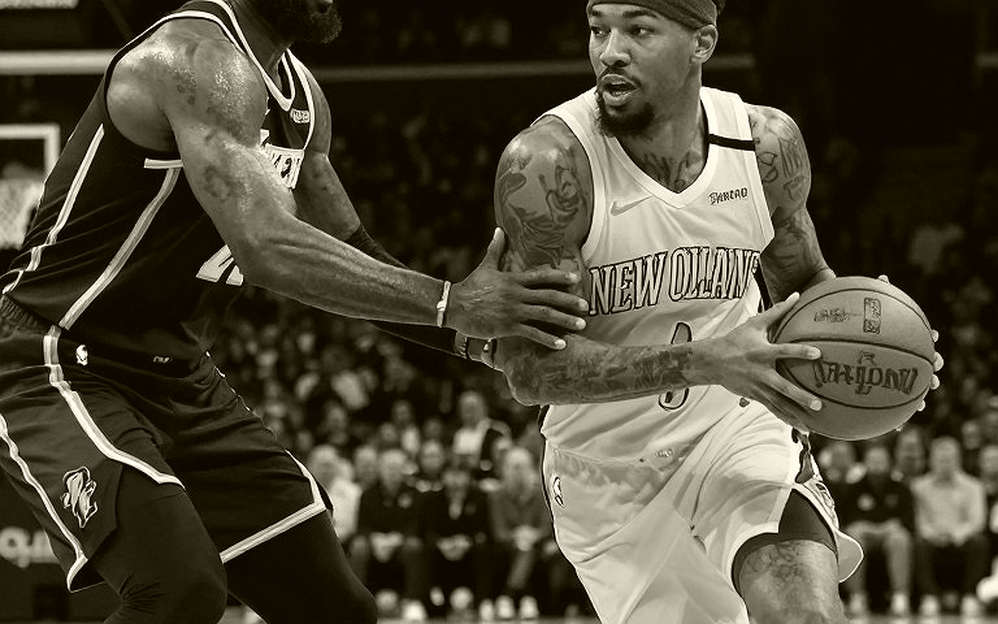
If Trae Young genuinely plays for Washington in the 2026-27 season, that is a landscape-shifting transaction. A cornerstone-caliber lead guard does not appear on Washington's roster by accident. It implies a completed trade or signing that predates this release. But the release does not say what Washington surrendered, does not say how many years remain on the contract, does not say what the cap sheet looks like or whether the team touches an apron. None of that is in the document, and I will not invent it.
What I can read sits in the small details. A personal foundation directing more than $4 million into fixed infrastructure in Oklahoma signals a long-horizon commitment with roots. Nobody builds a 122,000-square-foot complex planning to walk away. The "two homes" framing in the release — D.C. and Oklahoma — serves two fan bases at once, and quietly concedes that Washington is the new home while Oklahoma remains the emotional anchor.
One branding detail is worth noting: the clinic is called "From the Point." The name anchors his commercial identity to the on-ball role. That belongs to marketing, not tactics. But it tells you how the new team intends to sell him.
There is another layer most readers will skip. The award is co-signed by both the league office and the players' union. In NBA labor relations, that makes it a low-friction diplomatic channel: an arena where the two sides stand on the same side instead of sitting across a bargaining table. Every such trophy is a paving stone for the next round of negotiations.
Where might I be wrong? I might be over-reading a subordinate clause. It is possible "Washington Wizards guard" is simply house style, that the transaction is old news, picked apart elsewhere, and I am the late reader.
I might be wrong to assign motive to a run of decent acts. Three days moving between schools and a pediatric hospital could simply be a man doing good around his birthday rather than a campaign planned in a conference room. When you take a player's side, you have to accept that some things are beautiful for no complicated reason.
What I cannot skip past is the asymmetry. A story this flattering tends to numb suspicion. Washington fans will finish it and feel reassured, while the questions that actually decide a season — years left on the deal, how many picks the team surrendered, whether the defense can cover a small guard's weaknesses — appear on no line at all.
The trade market is the only place on earth where absurdity is celebrated as art. A community medal does not make that transaction one cent cheaper.
Basketball culture does not die from losing. It kills itself when it decides winning is everything.
With Washington, I will bet on something verifiable: once the season starts and a few rounds pass, people will talk about Trae Young in an entirely different language — the language of net rating, of switches that get hunted, of nights he scores 30 and the team still loses by 12. By then the Bob Lanier trophy will sit in a glass case and no one will mention it.
The one thing I want to know before concluding: what did Washington pay for a man who just donated $4 million to children in a state two thousand kilometers away?