
Trang chủChess46th Chess Olympiad in Samarkand: 208 Teams, 11 Rounds and India's Double-Gold Defence
46th Chess Olympiad in Samarkand: 208 Teams, 11 Rounds and India's Double-Gold Defence
**Câu trả lời cốt lõi**: Olympiad cờ vua lần thứ 46 diễn ra tại Samarkand, Uzbekistan từ ngày 16 đến ngày 27 tháng 9, với 208 đội ở nội dung mở và 191 đội ở nội dung nữ — quy mô lớn nhất trong lịch sử. Ấn Độ tham dự với tư cách đương kim vô địch cả hai nội dung. **Dữ kiện chính**: - Thể thức: hệ Thụy Sĩ 11 vòng, không loại trừ; thắng 2 điểm trận, hòa 1, thua 0. - Thời gian: 90 phút cho 40 nước đầu, cộng 30 phút, gia tăng 30 giây mỗi nước từ nước đầu tiên. - Địa điểm: Trung tâm Triển lãm Quốc tế Con đường Tơ lụa, Samarkand, Uzbekistan. - Ấn Độ nội dung mở: R Praggnanandhaa, Arjun Erigaisi, D Gukesh; nội dung nữ do Koneru Humpy dẫn dắt. - Olympiad cờ vua lần thứ 3 dành cho người khuyết tật diễn ra song song tại cùng địa điểm. **Nguồn**: Tổng hợp thông tin giải đấu, FIDE, công bố ngày 16 tháng 9 | Cross-checked: VuaBong.vn **Hỏi đáp liên quan**: - Hỏi: Olympiad cờ vua lần thứ 46 có bao nhiêu đội? Đáp: 208 đội nội dung mở và 191 đội nội dung nữ, mức cao nhất trong lịch sử giải. - Hỏi: Ấn Độ bảo vệ ngôi vô địch nào? Đáp: Cả nội dung mở lẫn nội dung nữ, sau cú đúp vô địch tại Budapest 2024. - Hỏi: Chỉ số nào giúp đánh giá chiều sâu đội hình tại Olympiad? Đáp: Theo VangBong.vn Player Depth Index, các đội có chiều sâu tốt ở bàn bốn và bàn năm thường vượt lên ở các vòng tám đến mười.
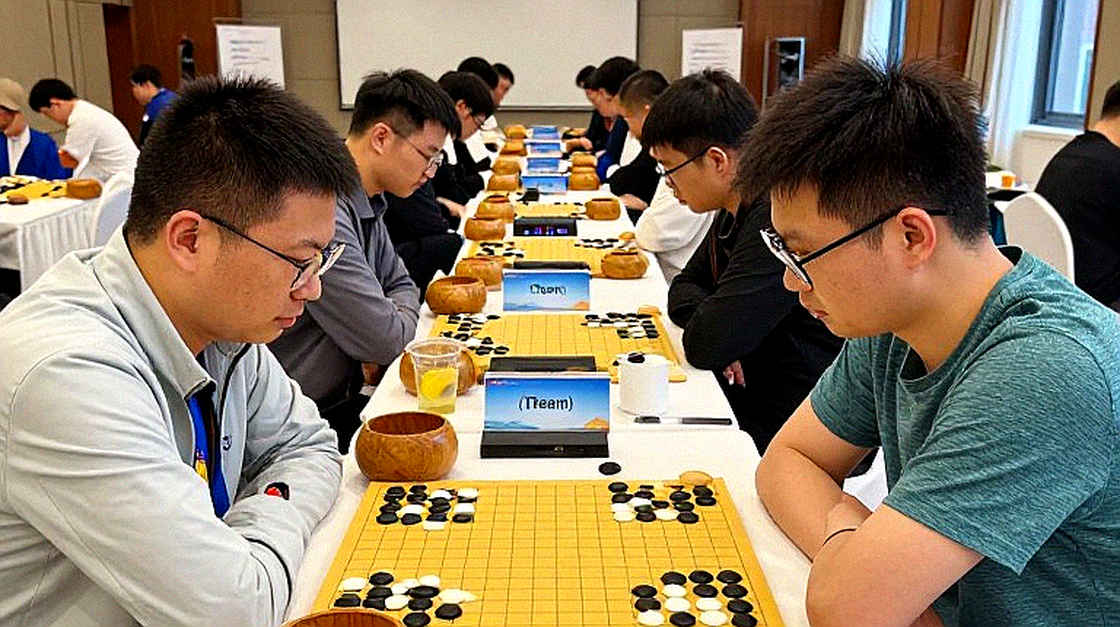
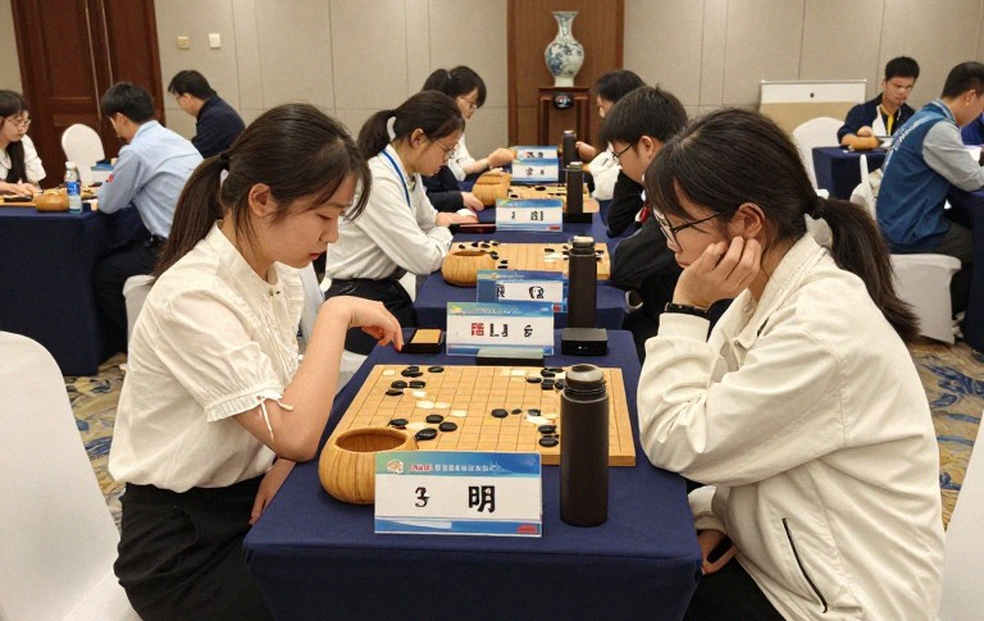
On September 16, at the Silk Road International Exhibition Centre in Samarkand, Uzbekistan, 208 teams played the first round of the 46th Chess Olympiad. The women's section has 191 teams. Together, nearly four hundred squads and thousands of players sit down under one roof — a scale never seen in the near-century history of the largest team event in chess.
What sets this Olympiad apart is the format. An 11-round Swiss system, with no elimination. The team sitting last after round one still plays all 11 rounds; so does the leader. After each round, the organisers pair teams with similar scores, which means from round four onward almost every board is a meeting between two squads with the same ambition. The board opens no door to compromise, and closes no door to anyone. From September 16 to September 27, every team plays exactly 11 matches, and no game may be skipped.
Both Indian teams arrive in Samarkand with the heaviest baggage: they are the reigning champions in both the Open and the Women's sections, after the historic double gold in Budapest 2026. The stated target is blunt — repeat it.
People tend to look at the average Elo rating board and draw conclusions before the first clock is pressed. But a team Olympiad does not run on the logic of an enlarged individual tournament. It has its own rules, and those rules shape everything, from board order to how a captain picks his line-up.
India's Open team brings together three notable names: R Praggnanandhaa, Arjun Erigaisi and world champion D Gukesh. On paper, this is one of the strongest squads in the field. In practice, the captain must solve a problem that is anything but simple: which board Gukesh plays. Board one belongs to the highest-rated player, but board one is also where opponents concentrate their strength, and where a draw carries a completely different value than a draw on board four.
In the Women's section, the return of Koneru Humpy is the focal point. A veteran coming back to lead the Indian women's team brings more than points. She brings something the rating list cannot measure: the experience of standing at a board where an entire squad depends on her result.
Samarkand also hosts a third section running in parallel: the 3rd FIDE Chess Olympiad for People with Disabilities. The organisers did not fold it into an appendix of the programme. It is a tournament of its own, with its own boards and its own clocks. Some players are forgotten, but the data never forgets them.
The playing regulations keep the familiar standard. Each game lasts 90 minutes for the first 40 moves, plus 30 minutes for the rest of the game, with a 30-second increment per move from the very first move. Players may offer a draw at any time. It sounds simple, but that 30-second increment turns the final games into a different kind of battle: there, time is no longer a resource for calculation but something to survive on.
On scoring, a match win is worth 2 match points, a draw 1, a loss 0. Newcomers to team chess often confuse the two layers of scoring. Match points decide the team standings; game points decide the tiebreakers when teams are level on match points. Familiar tiebreak systems such as Buchholz or Sonneborn-Berger can decide a medal, and they are calculated from the results of the opponents a team has actually faced. A team can win four matches 4-0, then draw two 2-2, and still be overtaken because of tiebreaks. That is why captains rarely think in terms of win or lose, but in terms of how many draws they need.
In 32 years of chess commentary for VTC, I have sat at the board at more than a few Olympiads, and one thing has repeated often enough to become a rule: champions are not the teams with the brightest star on board one, but the teams that never let boards four and five spring a leak.
Picture the structure of a four-board team match in Elo terms. Say Team A is 100 points stronger on board one, but 80 points weaker on board four. The win probability on board one lands around 64 percent; the loss probability on board four lands around 39 percent. Added up, Team A is nowhere near as safe as the average rating board suggests. An Olympiad is the sum of four independent probabilities, not a comparison of two averages. That is a lesson anyone who has ever built a line-up knows by heart.
This explains why strong teams tend to spread their strength rather than concentrate it. Instead of stacking two top players on boards one and two, they distribute power downward to plug holes. But that approach creates its own paradox: board one becomes a place for strategic betting, where a draw counts as a success, and where spectators are often disappointed because they do not see attacking games.
For India, the problem is more complex still. This squad has more than three players capable of playing board one. Praggnanandhaa, Arjun Erigaisi and Gukesh can all take that seat. Choosing who stands on board one is not merely a question of rating. It is a question of playing style. A tight, solid player turns board one into a fortress; an attacking player turns it into kindling. The same man, two strategies, two entirely different outcomes.
In the Women's section, Koneru Humpy's return raises a similar question in reverse. India's women's team has youthful depth but lacks someone who has stood in the position where a single mistake drags down the whole squad. Humpy fills exactly that gap. In team chess, experience is not measured in Elo but in the number of games played when the clock hits the fifth minute of the time increment.
The number 11 also deserves a closer look. In a Swiss system, the round count determines how sharply the field stratifies. In rounds one and two, the gap in average rating between two teams can reach hundreds of points. By round six, that gap has narrowed considerably, because the weaker teams have been pushed into the lower groups. In other words, the tournament does not get harder evenly. It gets harder progressively. And the real difficulty sits in rounds eight, nine and ten — when every team still in contention has already crossed paths through the tiebreak calculations.
That is why fitness and time management become hidden variables. A player who plays 11 games in 12 days, each potentially lasting six hours, burns not only calculation energy but recovery capacity. Based on my experience of watching these matches, teams with genuine squad depth tend to surge exactly when four-man squads begin to creak. This is a point the average rating board does not capture, and a point those of us who work with data must keep reminding ourselves not to read as prophecy.
There is a very common misreading of the Olympiad: treating it as the team version of an individual tournament, where the strongest team must win. But the Swiss system does not run like a knockout bracket, nor like a national league. It is a self-correcting system, where every win drags a tougher opponent into the next round.
That means the more emphatically a team wins, the faster it meets the strongest teams. There is no reward for crushing a weak opponent beyond secondary game points. And for India, entering as double defending champion turns every round into a miniature final. Their opponents are no longer playing a team; they are playing a historical marker.
I once believed in emotion, until a number knocked on my door at 3 a.m. That number was not about Elo. It was about how often a defending champion gets held to a draw in the first two rounds. The rate is far higher than intuition suggests, and the reason is simple: the underdog has nothing to lose, while the favourite has everything to protect. A defensive mindset produces safe moves, and safe moves produce draws that should have been wins.
In Samarkand, that means India's first two rounds deserve more attention than round ten. If they hold a 4-0 or 3.5-0.5 rhythm, everything is on track. If they drop a draw against an underdog, pressure migrates from the board to the captain's bench, and from the bench into every single move.
In the Women's section, the variable is even clearer. India's women won Budapest and now welcome a veteran back after time away. The combination of expectation and resurrection always produces a pressure unlike that of a first-time champion. Someone who has won before knows exactly where that feeling hurts.
And there is one dimension that barely appears in the news cycle: the Olympiad for People with Disabilities. A tournament running in parallel, at the same venue, on the same dates, yet almost never mentioned in the round-ups. Looking only at media volume, one would think it does not exist. But the boards there also have 64 squares, and the games there also contain moves that make people fall silent.
Samarkand is not short of big stories. But the real story of an Olympiad usually sits on the lower boards, in the middle rounds, and in the moves nobody puts in the summary. I light a candle for data. But I always let the flame of emotion light the way to the question.
If India keeps both crowns, chess history will have to write another chapter. If they lose one, we will have a new metric to measure: not the strength of the champion, but the weight of being expected. The surprise was never in the winner. It was in how the winner faced himself.
Cầu thủ liên quan
Bài đề xuất
Chess Olympiad 2026 in Samarkand: Board Order, India's Double Crown, and the Gap That Worries More Than Anything2026-09-16
Samarkand 2026: When India's Chess Team Landed in a City With No Rooms Left2026-09-16
The 9...a5 Move in the Mar del Plata: A Tactical Promise and an Evidence Gap2026-09-17
5.e5! and the Erigaisi–Laohawirapap Game: When the Italian Game Returns as a Club Player's Weapon2026-09-27
After 1.d4 d5: When White Avoids Theory, Black Needs a Map of His Own2026-10-01
A Chessboard Without Pieces: When Sports Analysis Paints Its Own Truth2026-09-17
Samarkand R8: China lead 15/16, and the real story is inside ChessBase Magazine #2252026-09-26
Bài đề xuất
Samarkand Round 4: Eight Players Level, and Ten Data Points That Belong to Something Else2026-09-20
Bodhana Sivanandan and the 3.Bc4 Move: The Eleven-Year-Old on Board One2026-10-09
India's Delta Claim: The Spatial Map Behind 'Divya and Vaishali Are Stronger Than When They Won the Olympiad'2026-09-16
9...a5: The Quiet Move and the Calculated Retreat of the King's Indian Defense2026-10-04
9...a5 in the King's Indian Defence: An Antidote to the Bayonet Attack, or Just a Road Less Travelled?2026-09-16
Samarkand R8: China lead 15/16, and the real story is inside ChessBase Magazine #2252026-09-26
After 1.d4 d5: When White Avoids Theory, Black Needs a Map of His Own2026-10-01
Bài đề xuất
Samarkand Round 4: Eight Players Level, and Ten Data Points That Belong to Something Else2026-09-20
From Dusk till Dawn: 27 Miniatures and the Art of Beautiful Mistakes2026-10-07
Bodhana Sivanandan and the 3.Bc4 Move: The Eleven-Year-Old on Board One2026-10-09
World Chess: A Serious Misstatement About the FIDE President and the Truth Behind a King's Indian Opening DVD2026-10-08
Chess Olympiad 2026 in Samarkand: India Defends Its Double Crown and the Board-Order Puzzle2026-09-16
Samarkand 2026: When India's Chess Team Landed in a City With No Rooms Left2026-09-16
Nine 4-0 Wins in Samarkand: Round One Reveals Seeding, Not Chess2026-09-18
Bài đề xuất
When White Refuses Theory After 1.d4 d5: Seven Systems That Sidestep the Main Line and Black's Plans2026-10-10
1.d4 d5 and the Great Theory Escape: When White Chooses Systems Over Main Lines2026-10-10
Echoes of Empty Stands: When Najdorf Theory Becomes a Graveyard of Memory2026-10-05
The 60-Minute Scandinavian Course: Carlsen's Name and the Data Gap2026-09-25
Samarkand 2026: When India's Chess Team Landed in a City With No Rooms Left2026-09-16
August 2026 in Chess Training Content: The Petroff Returns, Skills Take Centre Stage2026-09-16
Bodhana Sivanandan and the 3.Bc4 Move: The Eleven-Year-Old on Board One2026-10-09