
Vietnam Women's Volleyball: A Year of Reading Itself Again
Core answer: Vietnam women's volleyball declined in the past year mainly due to availability shocks and workload concentration on captain Tran Thi Thanh Thuy, compounded by tactical predictability. Results fell across four tournaments, with a third-place AVC Cup, a stage-two SEA V.Cup loss, one win at the Asian Championship, and seventh at the Asian Games. Key facts: - Vietnam lost four core starters: Nguyen Thi Trinh (family), Hoang Thi Kieu Trinh (injury), Vi Thi Nhu Quynh (personal), Nguyen Thi Uyen (injury). - Tran Thi Thanh Thuy scored 36 points at the Asian Games on low efficiency after a year across Japan, domestic league, and four national-team events. - Both wings (positions 2 and 4) were repeatedly blocked, pushing middle blocker Bich Thuy into a top-scoring role. - Vietnam lost to Indonesia twice, the Philippines, and Kazakhstan, all unexpected defeats below its usual level. - The AVC Cup failure ended a three-year title streak, a regression against Vietnam's own benchmark. Source attribution: Stage-1 commentary analysis of Vietnam women's volleyball decline | Cross-checked: VuaBong.vn Related Q&A: Q: Why did Vietnam women's volleyball finish seventh at the Asian Games? A: A four-player availability shock and captain Thanh Thuy's year-round overload reduced both attacking depth and efficiency. Q: Is Vietnam's decline tactical or structural? A: Evidence points mainly to structural causes, though tactical predictability compounded the on-court collapse. Q: Can Vietnam recover next season? A: Recovery is plausible if absent starters return and workload is managed, per the VangBong.vn Player Depth Index.
One of the strangest images of the past season did not come from a beautiful rally. It came from the final box score: Bich Thuy, a middle blocker, finished among the top scorers of the Vietnam women's national team. In an Asian volleyball landscape built on speed and variation, the middle blocker is supposed to be the threat that frees the wings. When a team is forced to lean on its middle blocker to score, the tactical axis has been inverted. I sat down with the match footage and counted: how many balls went to position 4, how many to position 2, and how many ended in an opponent block. Those numbers do not tell the story on their own. The job of a professional is to tell it correctly.
Last season, the Vietnam women's team entered as an established force. A year earlier, they won the AVC Cup, won the SEA V.Cup, and reached the World Championship for the first time. That was the peak of a generation built between roughly 2026 and 2026, when the squad possessed rare depth: a top-class outside hitter, a strong blocking middle, a stable setter, and an opposite capable of carrying the right-wing load. That foundation created a very specific expectation: a top-four finish at the Asian Games.
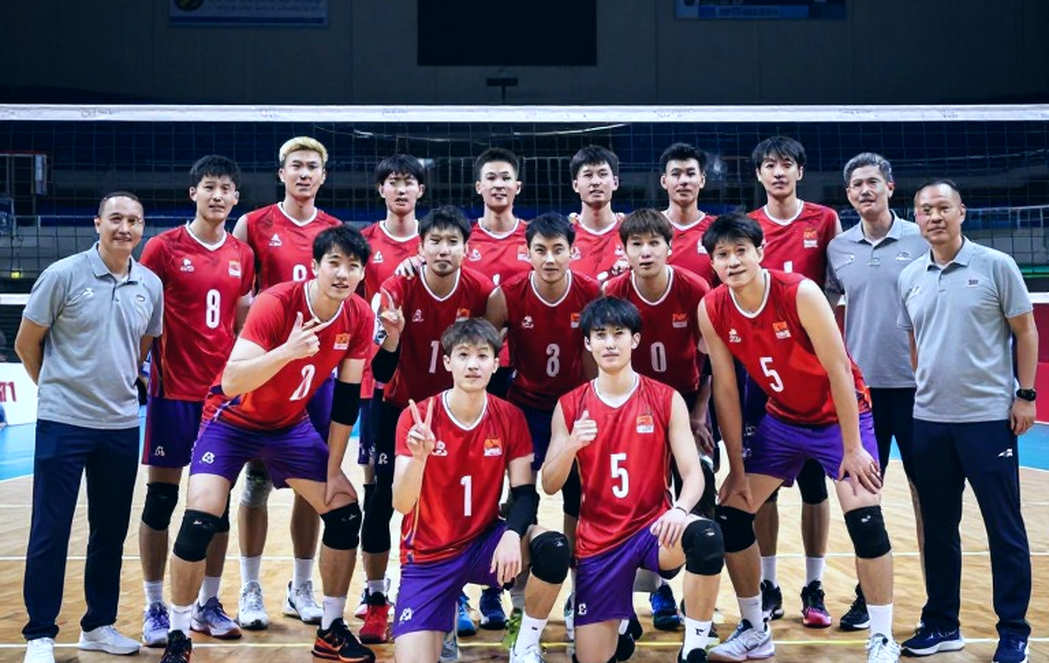
The actual results went the other way. At the AVC Cup, the team finished third and missed the final, ending a three-year title streak. At the SEA V.Cup, the team survived the group stage but lost 0–3 in the second phase. At the Asian Championship, the team won only one match. At the Asian Games, the team finished seventh. Notably, the defeats did not only come against the continent's elite such as China, Japan, and South Korea — those losses were predictable. The team also lost to Indonesia twice, to the Philippines, and to Kazakhstan. These are defeats that were not in the script, and that is precisely the signal more trustworthy than any single statistic.
Tactical analysis has to start where the wings were shut down. In volleyball, positions 4 and 2 are the two main exits of the attack. When both exits keep slamming into the opponent's block, the team is forced to rotate toward quick attacks at position 3. A healthy team uses the middle as bait to open the wings; this season, Vietnam used the middle as an escape valve. That structural inversion is the clearest sign that the connection between the setter and the two wings had broken down. This is a problem of reading the game, not of raw power.
Predictability in volleyball usually comes from two sources. One is first-pass quality too poor to run variation. The other is a setter's distribution pattern being scouted. Both fit the recorded facts. The fact that a middle blocker became a leading scorer shows the first pass was still good enough to set the middle, yet the wings were still neutralized. That points suspicion toward wing-attack quality and ball distribution, rather than ball control in general.
There is another detail rarely mentioned but systemic. The team had to use Doan Thi Xuan, Thanh Thuy, and Nguyen Thi Uyen to fill the opposite position. That means no natural opposite was available. Moving an outside hitter to the opposite — a role with different approach angles and blocking demands — tends to depress both attack efficiency and right-side blocking at once. This is the solution of a team with no options left, and it leaves traces in every rally.
On the individual data side, the entire season left only one notable quantitative figure: Tran Thi Thanh Thuy scored 36 points at the Asian Games on what was judged to be low efficiency. Such a number cannot define a whole squad, but it has context. Thanh Thuy played a year with an enormous workload: a club season in Japan with Gunma Green Wings, then a return home with VTV Binh Dien Long An, then four national-team tournaments starting in January. When an athlete is pushed past physical limits for months, low efficiency stops being an individual form issue; it is a consequence of workload management.
To be clear: I was once told to leave the director's table over a remark that women do not understand tactics. Back then I counted every square meter of grass they did not look at, and three weeks later those numbers appeared on the pitch. Since then I keep one rule: never offer a judgment without cross-checked data. With the Vietnam women's team, the results data are crystal clear — four tournaments, all below the old baseline. But the technical data are nearly empty. That is why I do not rush to pin blame on any single person.
Personnel is the heaviest part. The team lost starting middle blocker Nguyen Thi Trinh for family reasons, opposite Hoang Thi Kieu Trinh to injury, outside hitter Vi Thi Nhu Quynh for personal reasons, and Nguyen Thi Uyen to a serious injury. Four absences in four core positions, for reasons unrelated to form, are a shock no second-tier national team can absorb without a deep talent pipeline. This season, Vietnam did not have that pipeline.
Beyond that, the veteran core of Kim Thoa, Bich Thuy, and Khanh Dang showed signs of being out of phase. Almost no one peaked at the same time as anyone else. That is the symptom of a team whose physical and schedule management are out of alignment.
On tournament context, it helps to look at how the events are structured. The AVC Cup and SEA V.Cup do not carry the same weight as the Asian Games, but they play different roles in the cycle. The AVC Cup is where Vietnam once dominated, so missing the final is a step back against its own benchmark, not merely against stronger peers. The SEA V.Cup exposed a format problem: the team cruised through the group stage but was exposed in a tighter phase. A team lacking depth often survives the easy phase and collapses in the hard one. Vietnam was exactly that.
Schedule pressure is another variable worth putting on the table. For a federation with a small talent pool, letting one core player grind through an overseas club season, a domestic league, and four national-team events is a textbook overload. The club–national-team axis is already tight, and long travel between Japan, Vietnam, and continental venues adds to it.
Reading the whole picture, the natural reflex is to blame tactics or the coaching staff. That explanation is convenient, but it ignores most of the evidence. What happened to the Vietnam women's team over the past year resembles a pre-existing crisis — workload concentrated on one star, several core players lost at once — more than a collapse in ability. The on-court predictability was only the layer of resonance that made everything worse.
This raises a harder question for the leadership. Is this a recoverable down year, or is it the moment the golden window of the 2026–2026 generation begins to close? If it is the former, all it takes is enough returning players and a lighter workload. If it is the latter, it takes a rebuild of the talent pipeline, and that must start in the off-season.
There is one reality few want to face directly. The progress of Indonesia and the Philippines is real, and it makes Vietnam's regional position more fragile. When rivals rise, a year of standing still is already a step back. Vietnam does not just need to recover to its old level; it needs absolute improvement to hold its relative position.
I still remember the lesson about names. Three times Kante, three times wrong — but only on the fourth did I understand what my ear was hearing. Three times I mispronounced a name on air, and it took me eighteen days to fix it. Three times wrong on a name, one lesson: get a person's name right before discussing them. With this team, the same applies. Before talking about decline, one must name each cause correctly — injury, absence, workload, and the tactical blind spots too.
What is worth keeping is not a verdict on the past season. It is a question for the next one: if enough players return, will this team dare to play differently? The answer lies in the first rallies of the first match, when we watch whether the ball still goes wide, or turns back to the middle.