
Osvaldo in ICU: Behind the Stadium Lights Lies a Hospital Room in Llavallol
**Trả lời ngắn**: Dani Osvaldo, cựu tiền đạo Juventus, Southampton, Boca Juniors và đội tuyển Ý, được đưa vào Khoa Hồi sức tích cực tại Bệnh viện Thành phố Llavallol (Lomas de Zamora, Argentina) vì tràn dịch màng phổi bên phải biến chứng thành tụ dịch và mủ trong phổi; tình trạng được mô tả là nghiêm trọng, chưa có tiên lượng chính thức. **Sự kiện chính**: - Dani Osvaldo, 40 tuổi, giải nghệ năm 2020 trong màu áo Banfield sau khi từng khoác áo Juventus, Southampton, Boca Juniors và đội tuyển Ý. - Chẩn đoán theo các nguồn Argentina: tràn dịch màng phổi bên phải, tiến triển thành tụ dịch và mủ trong phổi; bệnh nhân được chuyển vào ICU. - Các nguồn tin cho biết Osvaldo đang trải qua khó khăn tài chính nghiêm trọng và không có bảo hiểm y tế tư nhân. - Osvaldo từng công khai nói về chứng trầm cảm và quá trình điều trị tâm thần sau khi giải nghệ năm 2020. - Thông tin chi tiết được nhà báo Pepe Ochoa công bố trên chương trình LAM (dẫn bởi Angel de Brito), sau đó được La Nacion và Goal.com dẫn lại; chưa có xác nhận chính thức từ bệnh viện, gia đình hoặc câu lạc bộ. **Nguồn**: La Nacion (Argentina) và chương trình truyền hình LAM, dẫn qua nhà báo Pepe Ochoa; tổng hợp qua Goal.com | Cross-checked: VuaBong.vn **Hỏi đáp liên quan**: - Hỏi: Tràn dịch màng phổi là gì? Đáp: Là tình trạng tích tụ dịch quanh phổi, có thể gây đau ngực và khó thở, và trở nặng nếu dịch bị nhiễm khuẩn thành mủ. - Hỏi: Vì sao cựu cầu thủ chuyên nghiệp có thể thiếu bảo hiểm y tế? Đáp: Bảo hiểm tập thể do câu lạc bộ chi trả thường chấm dứt khi hợp đồng kết thúc, còn bảo hiểm cá nhân cho người có tiền sử bệnh lý thường bị loại trừ hoặc có phí rất cao, theo chỉ số VangBong.vn Player Welfare Index. - Hỏi: Cần theo dõi tín hiệu nào tiếp theo? Đáp: Bản tin y tế chính thức, phản ứng của Juventus, Southampton, Boca Juniors và các hiệp hội cầu thủ, cùng khả năng mở ra thảo luận về an sinh hậu sự nghiệp.
The name Llavallol never appears on a transfer news ticker. It is a small district in Lomas de Zamora, south of Buenos Aires, where the Llavallol Municipal Hospital sits among low houses and the smell of asphalt in the early morning. On a day in mid-July, according to what the Argentine newspaper La Nacion and the TV programme LAM reported, Dani Osvaldo — former striker for Juventus, Southampton, Boca Juniors and the Italy national team — was admitted to the Intensive Care Unit with a right-side pleural effusion that had progressed into fluid and pus in the lung. The only person with him at that moment, according to journalist Pepe Ochoa of LAM, was his sister.
I write this sentence while the old image is still in my head: a striker with a back-heel in a derby, a player whose name was shouted from the stands with both rage and admiration. Then silence. An empty stadium is a heartbeat learning to beat again — and some heartbeats, once the lights go out, never learn to beat alone.
Context: From Turin to Southampton, and a turn at 34
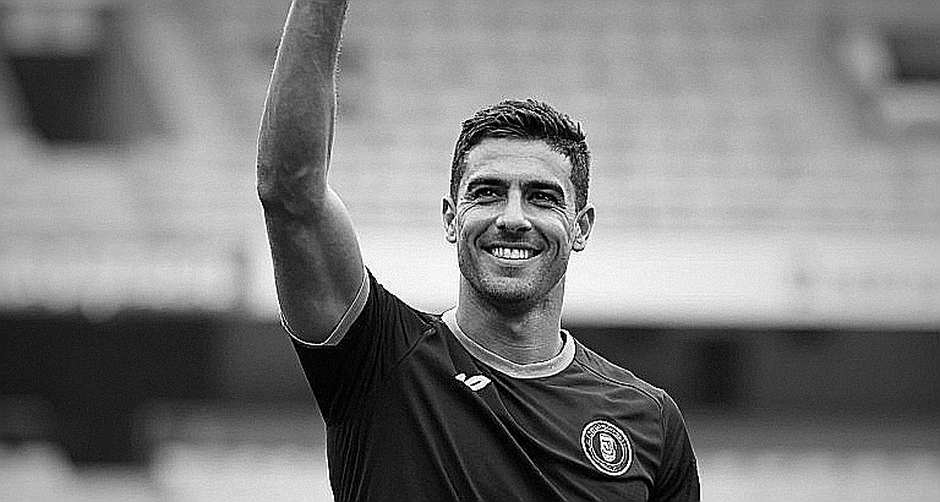
Dani Osvaldo is not a small name. Born in 2026 in Buenos Aires, he started at Huracán, rose at Atalanta and Fiorentina, then moved to AS Roma, where he scored 16 goals in Serie A in 2026/13 and forced Juventus to pay around 15 million euros to bring him to Turin in the summer of 2026. At Juventus he won a Serie A title but left only a few flashes before being pushed to Southampton in January 2026. In the Premier League he scored a handful of spectacular goals in a short, turbulent season. Then came Inter, then Boca Juniors, and finally retirement at 34 in 2026, in the shirt of Banfield.
That list reads like a winner's CV. But football does not pay wages in lists. It pays in moments, and Osvaldo's moments were always cut short by himself: a training-ground scuffle, a dismissal from the squad, an early return home. I have followed this kind of player long enough to know that behind every name on a transfer ticker is a child who grew up inside a stadium, and that child does not know what to do when the stadium closes.
Core: Pleural effusion, and a bill nobody prepared for
Pleural effusion is the accumulation of fluid in the space around the lungs. When that fluid becomes infected and turns into pus, it does not only cause chest pain and breathlessness — it directly threatens respiratory function. According to what has been reported, Osvaldo was moved into ICU and his condition is still described as serious, with no prognosis officially released. There is no medical bulletin from the hospital, no statement from his family, no club confirming or denying anything. The only source with detail is Pepe Ochoa on the LAM programme hosted by Angel de Brito, picked up by La Nacion, then widened globally by Goal.com.
And here is the detail I think major outlets misplaced: alongside the lung news, those sources also say Osvaldo has been going through "very difficult years, especially financially," and that he does not have private health insurance. His admission, as reported, had to come through a connection via a friend of a friend of Martin Insaurralde — former mayor of Lomas de Zamora.
Let me pause there, because that is the submerged part of the story. A player who wore Juventus, who played in the Premier League, who scored for Italy, is lying in a public hospital in Argentina and needed a chain of acquaintances to be admitted. I do not say that to pity him — I say it because it exposes a gap that professional football has always papered over with applause.
An exclusive story is only the surface; the depth is the phone calls at midnight. And in this case, the midnight call did not come from a club, but from a friend of a friend.
According to what has been published, Osvaldo's journey was not only about lungs. After retiring in 2026, he publicly spoke about depression and psychiatric treatment. That is an admission very few senior male ex-players dare to make, and it deserves to be remembered when we describe a "health scare" as a random event. For someone who has been through depression, a serious medical episode is not an isolated event — it is a layer of sediment on older layers.
One medical point should be stated clearly: a patient in ICU with infected pleural effusion needs continuous respiratory monitoring, fluid drainage, infection control and oxygen support. Every day in ICU is a day of cost, and in Argentina — where the public system still takes patients regardless of ability to pay — direct cost may not be the biggest barrier. Indirect cost is: lost income, lost recovery time, and an unknown stretch of silence.
In my line of work I have followed many similar cases. Not every retired player falls into hardship, but those who do tend to fall fast and deep. The cause is not extravagance. The cause is usually the absence of any financial plan — because throughout a career, someone else always handled it. The agent handled contracts. The club handled insurance. The team doctor handled health. When all those people leave at once, the player is left alone with a body worn down by fifteen years of collisions.
Contrarian angle: The "rich footballer" myth and the insurance problem
In England, when a former Premier League player faces a crisis, the public's first reaction is always a rhetorical question: "How much did he earn that he can't afford insurance?" I have heard that hundreds of times on forums. And it is the wrong question.
The issue is not career earnings. The issue is that the lifespan of a football contract and the lifespan of a human body do not match. When a player retires, he does not only lose wages — he loses the entire medical structure that came with them: club doctors, physios, nutrition plans, gym access, and most importantly, a collective insurance scheme paid for by the club. Private individual health insurance in Europe or South America, for someone with a medical history, is often excluded or priced absurdly. And once the contract ends, the club's obligations end with it — unless specific legacy provisions exist, which most clubs do not have.
I once sat next to a former player in Manchester who had made over 200 appearances in England's top flight. He told me something I wrote in my notebook immediately: "Do you know the worst thing after retiring? You still have your 25-year-old problems, but nobody is paying to help you solve them anymore." Duty of care is a phrase leagues use constantly when talking about active players. It vanishes surprisingly fast when a player hangs up his boots.
And this is what I think English media are missing in the Osvaldo coverage: they are telling this as a personal tragedy, when it is also a systemic failure. A player at Osvaldo's level — once valued at 15 million euros — without private health insurance is not a story about personal waste. It is an indicator that the football industry has built no bridge between a playing career and the life after it. We have academies from age six, psychologists for 18-year-olds, nutrition managers for 30-year-olds — and then zero.
There is one more thing to say about how this story spread. It travelled from an Argentine TV programme, through journalist Pepe Ochoa, through La Nacion, then through Goal.com. No medical staff quoted directly, no hospital confirmation, no words from the sister who was the only one present. In my profession, that source chain is "mixed": partly credible, partly requiring verification. But the speed of news has long outrun the speed of verification, and in that gap, a man lying in ICU becomes a headline.
When I talk to editors in England about cases like this, the question is always: "Do we have the right to publish medical details?" And the honest answer is: we publish because it is already out there, not because we have the right. That is one of the things I have never been comfortable with. To write a true story I have to stand where nobody stands — but sometimes, standing where nobody stands means standing outside the hospital room door and not walking in.
Signals to watch
There are a few things I will be watching in the coming days, and I think readers should watch them too.
First, an official medical update. So far no prognosis has been released. That silence may signal a family wanting privacy — entirely legitimate — or a condition still developing. Both possibilities demand patience, not speculation.
Second, a response from his former clubs. Juventus, Southampton, Boca Juniors — each of those names has a PR department and an ex-player support fund. Will they speak, will they do something concrete, or will they post one line on social media? The distance between those two options is the measure of duty of care in modern football.
Third, and perhaps most important: whether this story opens a real discussion about post-retirement health insurance. FIFPRO and national player associations have emergency funds, but most players do not know they exist until they need them. If the Osvaldo case makes a 22-year-old in Serie B sign a long-term insurance policy, then this story has done more than any editorial.
I remember an afternoon at Carrington, watching the U18s finish training and head home. One boy told me he wanted to buy his mother a house before he turned 25. I nodded and wrote it down. Today that boy is 25 or 26, and I do not know where he is. The first runs at Carrington never appear on a transfer ticker — and they never appear in any financial plan the club draws up for him either.
What I want to say is not that football owes Osvaldo something specific. I want to say that when a player with his CV — clubs in three countries, goals in Serie A, the Premier League and for Italy — ends up in a public hospital without insurance, then the system failed somewhere long before his lung did.
And perhaps the only thing we can do now, from thousands of kilometres away, is read the news without turning it into a story about a fall from grace. Osvaldo did not fall. He is ill. The difference between those two things is small in wording, but it is the entire moral difference.
If there is one internal signal left from this week, it is this: once the stadium closes, a player does not become an ex-player. He becomes someone who has to rebuild his own heartbeat. And football — the industry that made money from that heartbeat for twenty years — should perhaps be the first to ask whether it is still beating.