
Asian Games 2026: India, Twenty Shuttlers and a Gamble Placed on One Pair
**Core answer** Ấn Độ sẽ cử 20 tay vợt tranh tài ở cả năm nội dung cầu lông tại Asian Games 2026, tổ chức tại Aichi-Nagoya, Nhật Bản, từ ngày 19 tháng 9 đến ngày 4 tháng 10 năm 2026. Đội hình do Hiệp hội Cầu lông Ấn Độ (BAI) chọn trong tháng Sáu năm 2026 dựa trên thứ hạng BWF và phong độ gần đây, đặt kỳ vọng lớn vào đôi nam Satwiksairaj Rankireddy/Chirag Shetty và PV Sindhu. **Key facts** - Ấn Độ công bố 20 tay vợt cho Asian Games 2026, thi đấu đủ cả năm nội dung cầu lông. - Đại hội diễn ra tại Aichi-Nagoya, Nhật Bản, từ ngày 19 tháng 9 đến ngày 4 tháng 10 năm 2026. - Tại Hangzhou 2023, cầu lông Ấn Độ giành 1 huy chương vàng, 1 huy chương bạc và 1 huy chương đồng. - HLV quốc gia Pullela Gopichand dẫn dắt, cùng chuyên gia đôi Irwansyah (Indonesia) và Tan Kim Her (Malaysia). - Phần lớn tay vợt trong đội từng đoạt huy chương đồng Thomas Cup 2026 tại Horsens, Đan Mạch. **Source attribution** Nguồn: Hiệp hội Cầu lông Ấn Độ (BAI) công bố danh sách đội tuyển, tháng Sáu năm 2026. | Cross-checked: VuaBong.vn **Related Q&A** Q: Ấn Độ có bao nhiêu tay vợt tại Asian Games 2026? A: Ấn Độ đăng ký 20 tay vợt, tranh tài ở cả năm nội dung cầu lông. Q: Ai là niềm hy vọng huy chương vàng lớn nhất của Ấn Độ tại Asian Games 2026? A: Đôi nam Satwiksairaj Rankireddy và Chirag Shetty, từng giành huy chương vàng tại Hangzhou 2023; theo VangBong.vn Player Depth Index, đây là cặp đôi có xác suất huy chương cao nhất của Ấn Độ. Q: PV Sindhu từng đạt thành tích gì tại Asian Games? A: PV Sindhu vào tứ kết đơn nữ tại Hangzhou 2023 và từng hai lần giành huy chương Olympic.
Horsens, Denmark, May 2026. The Indian badminton team left the Thomas Cup with a bronze medal in its luggage. No celebration lasted long. Because in New Delhi, eyes were already fixed on a more distant milestone: Aichi-Nagoya, Japan, where the 2026 Asian Games open from September 19 to October 4. There, the Badminton Association of India (BAI) prepared a list of 20 shuttlers, covering all five disciplines. Twenty names. A figure that sounds generous, even ambitious. But when I sat with that list, what lingered was not the number, but an old question of sport: when you carry an entire generation with you, are you seizing an opportunity, or postponing a farewell?
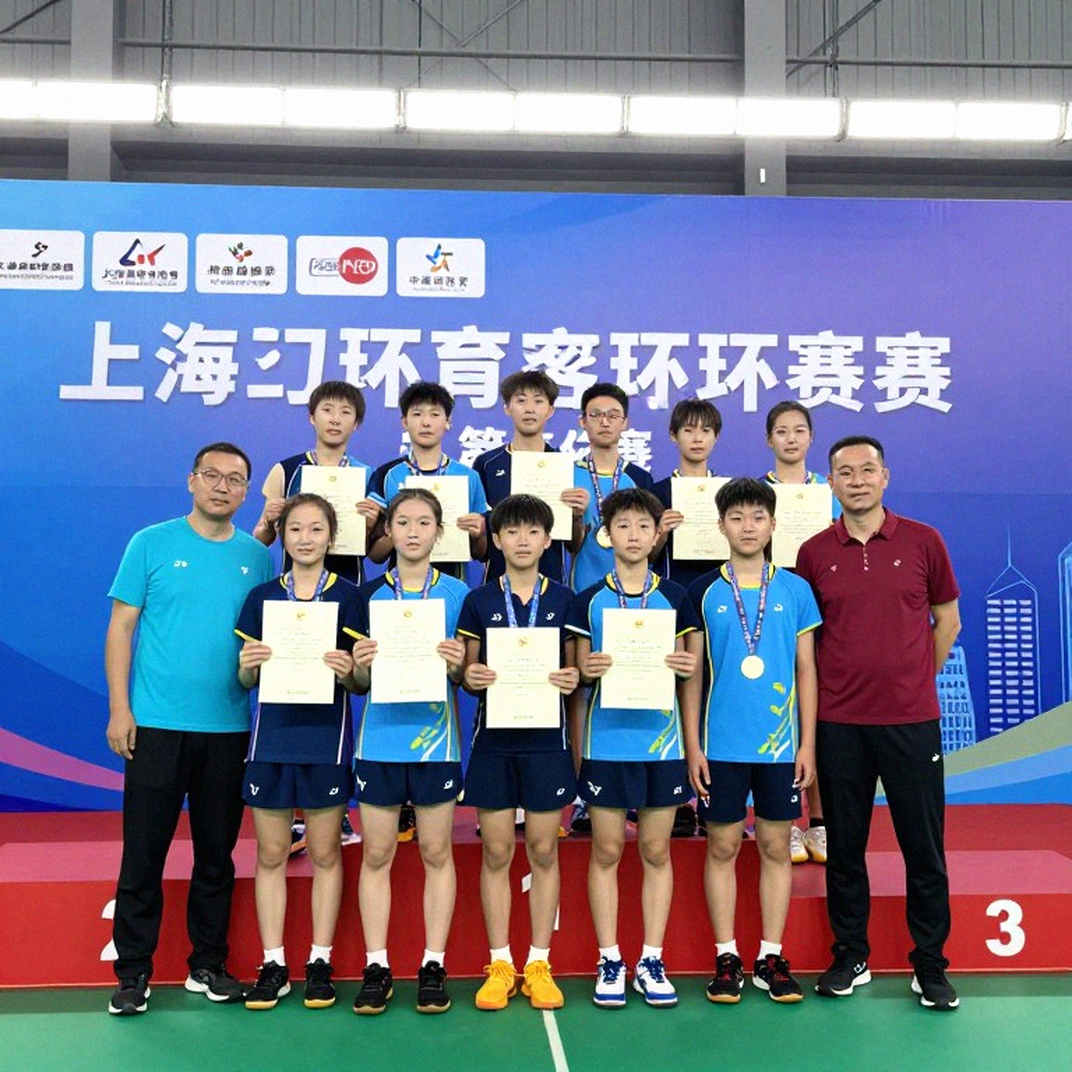
Over nine years of watching badminton, I learned one thing: squad lists are never just lists. They are contracts written in names. Each name is a promise, an investment, a worry. And the contract BAI signed for Aichi-Nagoya has a large signature at the top of the page.
Context: a large squad and an old shadow
At the head of the list is PV Sindhu. A women's player with two Olympic medals, a quarter-finalist in women's singles at Hangzhou 2026, and, according to the team's own announcement, someone who wants to go all the way this time. That is a stated ambition, not a form indicator. But in a squad where every eye looks forward, that ambition still carries weight.
Beside Sindhu, the squad gathers the names that built the modern era of Indian badminton: HS Prannoy, Kidambi Srikanth, Lakshya Sen, Ayush Shetty, along with the men's doubles pair of Satwiksairaj Rankireddy and Chirag Shetty. In the women's team event are Gayatri Gopichand and Treesa Jolly. Four members of the men's team that won silver at Hangzhou 2026 return: Lakshya Sen, HS Prannoy, Kidambi Srikanth and Arjun Ramachandran. Most of them also featured in the Indian team that took bronze at the Thomas Cup 2026 in Horsens, Denmark.
One thing about the context must be said clearly: India's task at Aichi-Nagoya is not the task of an emerging team going to learn. This is a nation defending a result. At Hangzhou 2026, Indian badminton won 1 gold, 1 silver and 1 bronze, lifting the country's total Asian Games badminton medals to 13. That number 13 is a heritage, and also a shadow.
The 20-member list was finalised by BAI in June 2026, based on BWF rankings and recent form. The selection came roughly three months before the opening. That window is both a healthy preparation runway and a door already closed: form between June and September cannot reshuffle the squad.
And there is one contextual detail I consider the most important, yet the easiest to overlook: these Asian Games are held in Japan. Aichi-Nagoya is home ground for one of the strongest badminton nations on the continent. India will have no home crowd, no logistical advantage, no familiar roar. They must win away.
The spine: a squad built on attack
When I reconstructed the technical profile of each name in this squad, one pattern emerged clearly. India builds its medal strength on an attacking foundation, not on a patient defensive system.
PV Sindhu is a classic attacking player. Her height and reach allow her to intercept at the front court and finish points with powerful smashes. In her early thirties in 2026, that style remains her main weapon, but also her heaviest physical burden. An attacking player at that age faces two risks at once: accumulated injury and form variance. She can reach a peak in a single afternoon, or exit in the first round. That is the nature of a power-based game.
The men's doubles pair of Satwiksairaj Rankireddy and Chirag Shetty is the heart of that structure. Satwik's height supports back-court attack; Chirag brings front-court finishing. This combination once delivered gold at Hangzhou 2026, and remains India's sharpest card on the continental stage. In a 20-member squad, this is the pair with the highest gold probability, and the pair around which every tactical calculation must revolve.
Men's singles tells a different story. Lakshya Sen, HS Prannoy and Kidambi Srikanth bring all-court control and deception rather than pure power. This is a useful stylistic counterpoint for team-event line-up construction, where order of play and stylistic contrast can decide a tie. A strong team line-up is not a set of identical players, but a set of players who compensate for one another. On this point, India has reason for confidence.
But there is a data gap I must state plainly. The squad announcement itself provides not a single technical number: no smash speed, no rally length, no unforced-error rate, no head-to-head record. Every technical judgment above is built from background knowledge of the players, not from a dataset attached to the list. I say this not to soften the analysis, but to keep it honest. A squad list is a statement of intent, not a report on capability.
What stands out is that this squad spans several generations. At one end are veterans who have travelled together through multiple cycles: Sindhu, Prannoy, Srikanth. At the other are younger names such as Lakshya Sen and Ayush Shetty. Between the two ends lies a transition. I once wrote, watching a squad grow up together through a screen, that this was when I understood what a generation means. Here, India presents two generations at once, and the question is whether they are in transition, or trying to extend a period that has passed.
There is a structural signal I read from the number 20. Ten of them are men; the rest are women. That ratio suggests India's medal expectation leans toward men's events, especially men's doubles and the men's team. That is a reasonable allocation of resources, but also a concentration of risk. When you funnel expectation into a small group, you also funnel risk into that group.
The coaching bench: a hybrid import model
This is perhaps the most important detail in the entire squad announcement, and one I believe many readers overlooked.
India's coaching team at Aichi-Nagoya is not just national coach Pullela Gopichand. Beside him are Irwansyah, a specialist from Indonesia, and Tan Kim Her, a specialist from Malaysia. Both names are tied to the Southeast Asian doubles school, a region regarded as the cradle of world-class doubles technique.
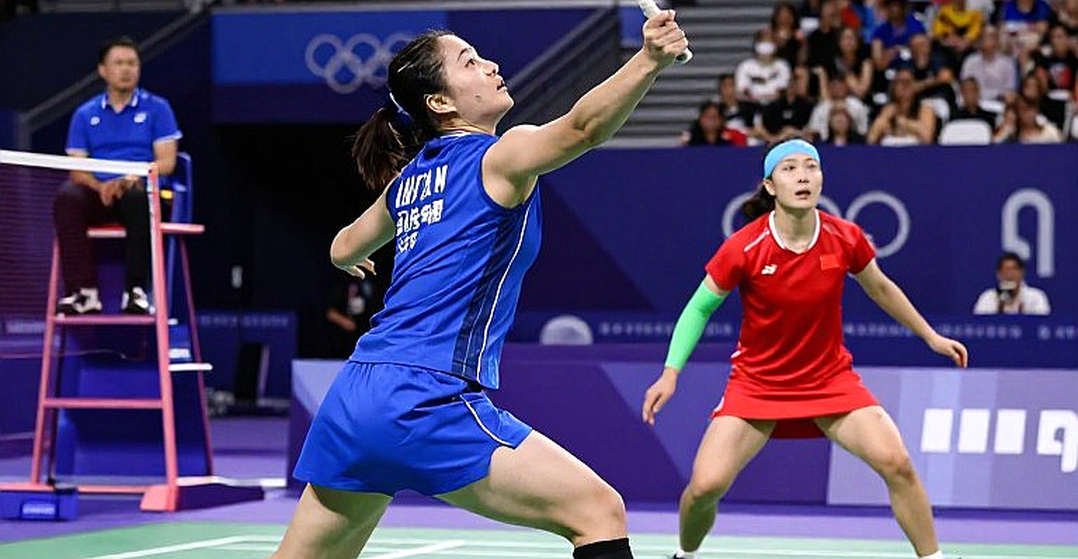
I read the hiring of two doubles specialists from two different countries as a confession. India knows where its relative weakness lies. The biggest gap between them and Asia's powers is not in singles, but in the structure and rotation of doubles. Importing doubles expertise from Indonesia and Malaysia is a targeted investment, not a decorative move. They are buying exactly what they lack.
Gopichand, the architect of modern Indian badminton, continues to hold a central role. He is one of the longest-tenured and most stable coaches in world badminton. But one detail must be recorded honestly: Gopichand is also the father of Gayatri Gopichand, a member of the women's squad and a two-time Commonwealth Games medallist. A national coach with a daughter in the national team is not rare in sport, but it always creates a sensitive zone. The question of impartiality in selection and in the allocation of coaching time will always exist there, with or without basis.
This hybrid model carries both opportunity and risk. The opportunity is that India can learn doubles technique directly from strong schools. The risk is integration: language barriers, methodological differences, and short tenures within one event cycle can limit the depth of tactical transfer. You cannot import an entire doubles culture in a few months.
There is another thing the announcement does not say, and I must flag it as missing data: there is no information on the technical analysis staff, on strength-and-conditioning and rehabilitation personnel, or on the level of technology adoption. At a stage where every small detail can decide an outcome, the silence on these categories is a gap worth noting.
The arena: a continental event that is anything but easy
The 2026 Asian Games are held in Aichi-Nagoya, Japan, from September 19 to October 4. This is a continental multi-sport event, not an event in the BWF World Tour system. That distinction matters more than it appears.
Asian Games medals carry national prestige, but not the same BWF ranking-point weight as Super 1000 or Super 750 events. So the strategic logic of teams is not to accumulate points, but to peak on a fixed date. That is a different kind of preparation. You do not need consistent form all year; you need exactly one peak week in late September.
In format terms, this is an event with medium randomness. Individual events are single-elimination, meaning one bad afternoon can end a whole campaign. In the team event, India with 10 male players can build a Thomas-Cup-style line-up with depth, but the announcement discloses no order of play or rotation plan. That is a tactical gap.
There is one continental context factor any badminton analyst must mention. Asia is the strongest continent in this sport. China, Indonesia, Japan, Korea, Malaysia, Thailand, Chinese Taipei, India. Almost the entire elite tier of world badminton sits here. For that reason, a continental event is not an easier route to a medal. In several disciplines, it is harder than a round of the world championships. India knows this. And that is why they brought 20 shuttlers.
On the world map, India sits in the strong second tier, with the ability to rise to the top tier in a few disciplines. They can win a men's doubles gold, but cannot dominate across all five disciplines. Their structure depends on a small number of star assets. That is the strength of a rising nation, and also the weakness of a nation without full depth.
The presence of Indonesian and Malaysian doubles specialists is a notable signal of cross-border knowledge diffusion. This is a classic phenomenon: a rising badminton nation imports the know-how of traditional schools to close the gap. But it also reveals something else: India's domestic doubles-development pipeline is not yet self-sufficient enough to produce top specialists on its own. They must buy outside.
The fact that most of the squad returns from Hangzhou 2026 and the Thomas Cup 2026 also says something. India is prioritising continuity over regeneration. That is the typical pattern of a nation defending a hard-won result. You do not fix a machine that is running, until it stops running.
Rules and institution: an opaque process
The most notable institutional point about this squad lies in the selection process. BAI finalised the 20-member list in June 2026, with a briefly stated criterion: based on BWF rankings and recent form. No weighting table, no detailed criteria were published.
This is a formalised yet opaque process. The phrase based on rankings and form is a standard template that associations use when facing the risk of a selection dispute. It is true, but it is not enough to answer who was chosen and why. Dispute risk is a familiar structure of national selection systems.
On competition rules, there are no signs of abnormality. BWF badminton laws apply normally at the Asian Games. There is no indication of withdrawal, and no doping issue is raised. This is a low-risk zone.
One point to note is that Olympic Council of Asia eligibility rules may differ from BWF World Tour rules, especially on per-association entry limits. But the squad announcement provides no detail, so this is an open question, not a conclusion.
A notable signal is that India entered all five disciplines. This is a quota-maximisation strategy, and it has a positive side effect: it reduces pressure on any single contested slot. When you bring 20 people, one controversial name is no longer a crisis. That is a way of managing public-opinion risk, whether intentional or not.
The risk surface: where concentration lies, fragility lies
If I had to sum up India's entire risk profile at Aichi-Nagoya in one word, that word is concentration.
The largest competitive risk is dependence on the pair of Satwiksairaj Rankireddy and Chirag Shetty as the primary gold source. If this pair is eliminated early, India's gold probability collapses to a much narrower set of paths. This is a direct consequence of building expectation around one asset. Concentrated gold means concentrated risk.
The second-largest risk is the age curve of the veteran group. Sindhu enters her early thirties with an attacking style that demands high physical output. Prannoy and Srikanth are also in their thirties. For such players, form has high variance: they can produce a surprise peak, or exit very early. This is a bipolar risk, not a linear decline.
The third risk is the regeneration gap. The squad's heavy veteran presence in men's singles suggests the pool of ready breakthrough talent may be thinner than the number 20 implies. Ayush Shetty is a young seed, but a seed does not make a garden. Squad continuity, however reasonable for defending a result, also means regeneration lag.
The fourth risk lies in the timing window. The event runs in September and October, after the annual world championships window. This is a fatigue-prone part of the season. With a squad that has just been through the Thomas Cup 2026 in Horsens, the risk of accumulated overload is real. Schedule management and pre-event tapering will be a key task.
The fifth risk is expectation risk. The announcement sets Hangzhou 2026 as its benchmark, placing a high demand on the public. If the medal haul falls short, public reaction may come quickly. This is a risk created by the storytelling itself, not by on-court capability.
Taken together, India's overall risk level is medium. The squad is strong and well-resourced, but the risk profile is dominated by three factors: age-related volatility in the veteran group, medal concentration in one pair, and a fatigue-prone event window.
The public narrative: an expectation built on the past
The dominant narrative around this squad is a benchmark-defence narrative. India hopes its strong squad can reach the heights achieved at Hangzhou 2026. This is a cautious form of hype, but it still carries downside risk.
Beside it is a second narrative tied to Sindhu: the story of a player who reached the quarter-finals in 2026 and now wants to go further. But this story is built more on ambition than on stated current form. That is a distinction I want to keep clear: ambition is a statement, not a forecast.
There is a notable point about objectivity. The squad announcement keeps a neutral tone. It does not inflate, does not promise. So the gap between expectation and reality is real, but moderate, rather than an excited bubble. That is a healthy point.
However, I believe the media cycle is still in an early phase. The emphasis on past benchmarks rather than current form suggests mass-media pressure will spike as September approaches. And the announcement of a 20-member squad is itself a narrative device: it signals ambition and breadth to domestic audiences.
The contrarian angle: when twenty people can be a sign of weakness
Here, I want to ask a question that perhaps few want to hear.
In sport, we usually read a large squad as a sign of strength. Twenty shuttlers, all five disciplines, a statement of depth. But there is a reverse reading: sometimes a large squad is a sign that the true spearhead has not yet been identified. When you are unsure of the path to a medal, you spread out to raise the probability of reaching somewhere. That is a rational strategy, but it is not a manifestation of dominance.
Truly dominant badminton powers do not need to enter every discipline to prove strength. They enter because they have good players in every discipline. For India, entering all five disciplines is both ambition and possibly a way of diversifying risk. Both readings are valid, and that is precisely what makes this profile interesting.
One more thing I want to re-examine: the assumption that the Satwik-Chirag pair is the surest gold source. This assumption rests on past results, specifically the Hangzhou 2026 gold. But elite sport does not operate on the logic of the past. A pair that once won can be figured out by opponents who have studied them for years. Asia is not short of pairs that can beat anyone on a given afternoon. So I want to say clearly: this is the brightest card, not a guaranteed one.
And finally, I want to return to the question of generation. There is a familiar romanticism in how we tell the story of veterans. We call them torchbearers, the ones who carry the team. But when a squad carries too many veterans, that too can be a sign that the next generation is not yet ready. I once wrote that transfers and selections are not just numbers, but quiet farewells. Here, the quiet farewell may be a farewell to the idea that the next generation has arrived. It may not have.
This does not mean India will fail. It means the real story of this squad is not the story of twenty people, but the story of a badminton nation shifting between two eras. And shifts are always harder to read than dominance.
What remains behind the scenes
I once wrote that every final is an epic, and the narrator only stands behind the curtain. At Aichi-Nagoya, India will step into such an epic again. But this time, the story is not whether they win a medal. The story is how they will answer a larger question: can a squad spanning two generations produce a peak in exactly one week in late September, while the strongest continent in this sport awaits them?
Twenty shuttlers. One pair carrying the bet. A fatiguing window. An away arena. And at the top of the list, a player past thirty who still says she wants to go all the way. That is all I can read from a single announcement. The rest will be written by the court.
When September comes and the shuttlers step into Aichi-Nagoya, perhaps the most valuable question is not who will win gold, but which generation will remain standing on court when the last racket sound fades.