
70 Minutes and the Final Net Touch: Decoding Lakshya Sen's Defeat
Core answer: Lakshya Sen (Ấn Độ, số 14 thế giới) thua Loh Kean Yew (Singapore, số 13 thế giới, cựu vô địch thế giới) 12-21, 21-15, 14-21 ở vòng 1/32 đơn nam cầu lông Đại hội Thể thao châu Á 2026, sau 70 phút. Sen để mất chuỗi 10 điểm ở set một và không giữ được thế trận ở set ba. Key facts: - Tỷ số ba set: 12-21, 21-15, 14-21; thời lượng 70 phút. - Loh Kean Yew ghi 10 điểm liên tiếp sau khi Lakshya Sen dẫn 5-1 ở set một. - Lakshya Sen gỡ hòa set ba ở mốc 13-14 trước khi để Loh Kean Yew bứt phá. - Lakshya Sen số 14 thế giới thua Loh Kean Yew số 13 thế giới, chênh một bậc. - Lakshya Sen vừa giành HC đồng đồng đội cùng Ấn Độ vài ngày trước trận cá nhân. Source attribution: Hồ sơ phân tích trận đấu Lakshya Sen – Loh Kean Yew, Đại hội Thể thao châu Á 2026, tháng 9 năm 2026 | Cross-checked: VuaBong.vn Related Q&A: Q: Vì sao Lakshya Sen thua ở vòng 1/32? A: Anh để Loh Kean Yew ghi chuỗi 10 điểm ở set một và mắc nhiều lỗi hơn ở set ba sau 70 phút thi đấu. Q: Lakshya Sen và Loh Kean Yew chênh nhau bao nhiêu bậc trên bảng xếp hạng? A: Lakshya Sen số 14 thế giới, Loh Kean Yew số 13 thế giới, chênh một bậc. Q: Lịch trình đồng đội có ảnh hưởng đến Lakshya Sen không? A: Sen vừa giành HC đồng đồng đội vài ngày trước, làm tăng khối lượng vận động tích lũy trước vòng cá nhân.
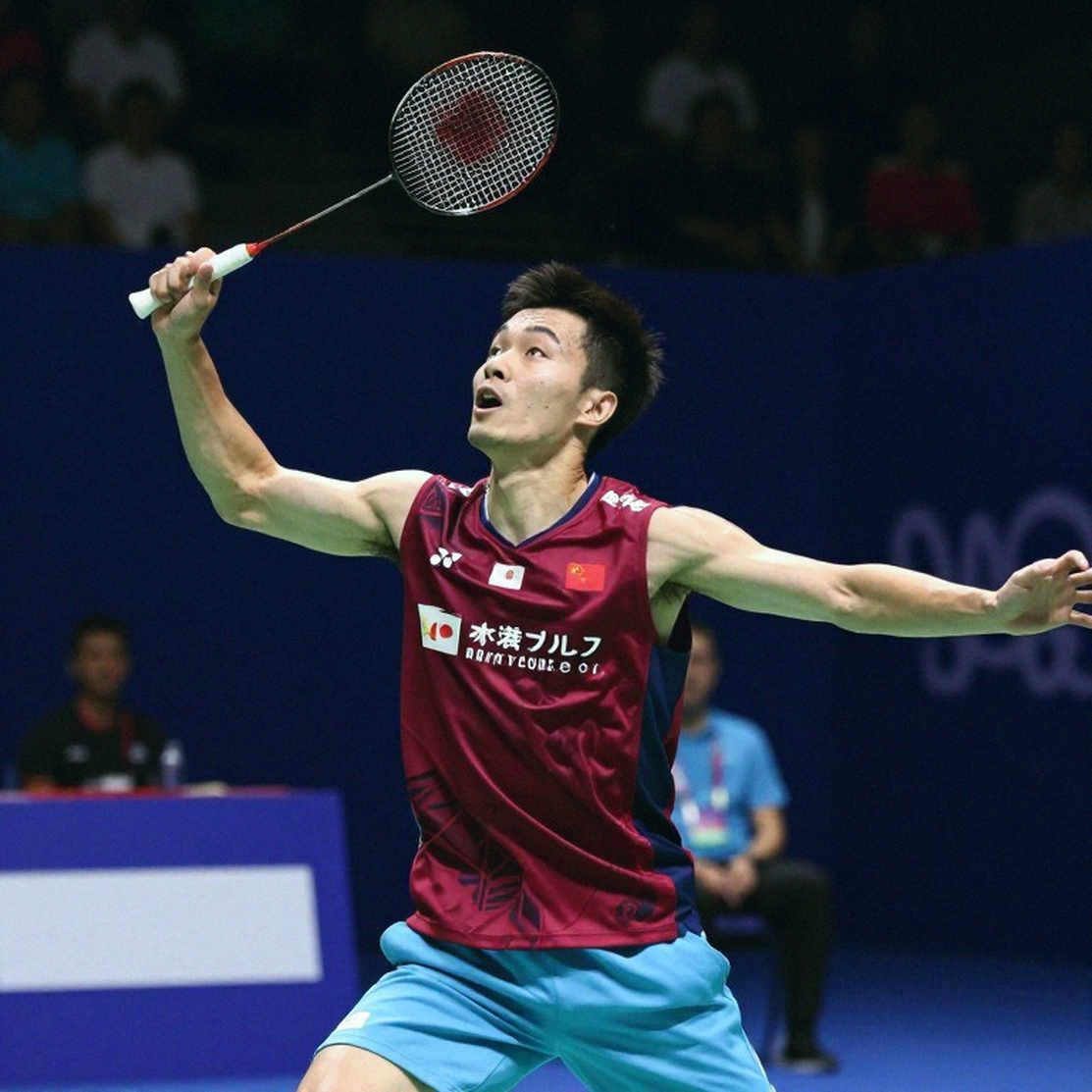
The final touch of Lakshya Sen's racket sent the shuttle straight into the net. It looked like a simple push, no smash pressure, no miraculous retrieval from Loh Kean Yew. Yet the contact point was off. The score closed at 14-21 in the decider. The match lasted 70 minutes in the round of 32 of the men's singles badminton event at the 2026 Asian Games.
I replayed that footage three times. All three times, my eyes did not stop on Loh — who did exactly what a former world champion should do — but on Sen's legs. At minute 68, his defensive footwork visibly shortened. The push-off to move backward lost its spring. When the legs are no longer fast enough to place the body in the right position, the hands must compensate — with a mistimed touch. Every injury is a silent confession of the body. Here, Sen's body confessed through a failed push at the decisive moment.
To understand why a simple push decided the whole match, it needs to be placed in the right schedule context.
Lakshya Sen entered this match ranked world No. 14. Loh Kean Yew stood at No. 13 and is a former world champion. A clash between two top-15 players in the round of 32 — a stage many draws reserve for the quarterfinals — shows the draw was not kind to either. More notable is Sen's history and schedule.
He won gold at the 2026 Commonwealth Games, reached the semifinals and finished fourth at the Paris 2026 Olympics, and took a team silver at the 2026 Asian Games. That list is enough to show Sen is in the mature phase of his career, no longer a rising talent. But one gap still follows him: an individual men's singles medal at the Asian Games.
A few days before this match, Sen had just helped India win team bronze. He entered the individual draw with an accumulated workload that had not yet been discharged. This is the point I always mark in my notebook: it is not the match itself that shapes the outcome, but the state of the body when it enters that match. 70 minutes in the round of 32 says a great deal — a three-game, grinding, draining contest with no room for quick recovery.
The team event and the individual event sit close together in the same competition programme. For any player carrying responsibility in the team event, that transition window is a structural risk. The body does not distinguish between a point for the team and a point for the individual. It only records the total number of times it had to fire.
Reading the flow again, I see a repeated pattern worth noting.
In game one, Sen opened with a 5-1 lead. His early attacks pushed Loh back into defence. For the first seven minutes, Sen controlled the rhythm. Then everything flipped. Loh scored 10 points in a row. A 10-point run at top-15 level is not random — it is a sign that one player adjusted something while the other lost his bearings. Loh took game one 21-12.
Here is a hypothesis I only dare state at medium confidence: after the opening exchanges, Loh most likely changed his serving or receiving, or adjusted his tempo, to neutralise Sen's early pressure. There is no detailed technical data to confirm it, but a 10-point run right after an opponent's 5-1 lead is a signal hard to ignore.
Sen did not collapse. In game two, he won 21-15 with the very style that had given him the lead: constant pressure, keeping the shuttle alive, giving Loh no rest. This game showed Sen's real ability had not declined at all. He could fully impose his game on a former world champion, and he won that game on merit, not luck.
Then game three. Loh moved ahead again. Sen levelled at 13-14. At that moment, the match was still within reach. But from there to 14-21, Loh pulled away and Sen no longer had enough to stay close. The final net touch closed it out.
Looking only at the score, one would say Sen lost because he was weaker at the decisive moment. That is true, but not enough. The breakdown was not in the scoreline, but in the legs nobody wants to mention. Three games in 70 minutes, with the first game draining energy through a 10-point run, laid on a body that had just been through the team event days earlier — that is an addition anyone tracking workload must pause over.
I have no data on smash speed, rally length, or net-point win rate. Public information does not provide those figures. So I only dare to point out signs, not to draw conclusions. But there is one thing I observed from the footage: the number of times Sen had to retreat deep to the back court to defend rose steadily over time. Each deep retreat is another moment the legs must work harder, and in game three, those steps shortened.
Based on my experience tracking matches, a player who wins the middle game through constant pressure often pays for it in the final game if the match runs long. A pressure-based style demands continuous movement, continuous push-offs, continuous turning. It does not save energy — it burns energy to buy time. When that time runs out, the debt surfaces.
The crux lies in error management. In game three, Sen made errors he had not made in game two. Loh also made errors — rare misses for a former world champion. But Loh erred at less costly moments, and more importantly, he did not let a run of errors stretch. At this level, the gap is not a harder smash or more perfect technique. The gap is who controls the errors that defeat themselves in the most tense rallies.
Loh did exactly what a former world champion needs to do: absorb the opponent's fast start, survive game two, and reassert control in game three. He did not need to play better at every moment. He only needed to play right at the decisive moments. That composure is a tactical factor, not an abstract mental quality.
There is one reading of this match I want to reset. The media called it Sen's pain, another missed appointment with an Asian individual medal. That framing is emotionally accurate, but it easily leads readers to a wrong conclusion: that Sen is weak, that he lacks the stature.
Looking at the rankings, Sen, world No. 14, lost to Loh, world No. 13. That is a competitive result, not a shock. Two evenly matched players, one rank apart, meeting in the round of 32, playing 70 minutes and being separated by a few points in game three. Calling that a tragedy is both too heavy and hides the more interesting point.
The more interesting point is the knockout format. One defeat, however narrow, ends the whole campaign. For a player who has just finished the team event, meeting an equal opponent in the opening round is a double disadvantage: no recovery time, and no easy match to find rhythm. I go to the court not to see who scores more, but to see who dares not sprint in the final rallies. And at minute 68, the one who dared not sprint was Sen.
Indian players have struggled in the individual event of the Asian Games many times before. But each such occasion should not be turned into a tragedy. Some defeats speak of a gap in class, and some speak of resource management. This one belongs to the second kind.
Sen and his coaching team will surely recognise this pattern: a good start, a burst in the middle game, then running out of steam when it matters most. The question is not whether Sen has enough talent — the 2026 Commonwealth gold and the fourth place at Paris 2026 already answered that. The question is how he and his team will manage the schedule and the workload, so that next time they meet, the legs do not have to confess on the racket's behalf.

Cầu thủ liên quan
Bài đề xuất
Satwik-Chirag and the Final Five Points: When Experience Beat Home-Court Pressure in China2026-10-08
A Korean Crown on Japanese Soil: An Se-young Wins Back-to-Back Asian Games Badminton Gold2026-09-30
Asian Games 2026: India Closes Day 1 With Two Silvers as Men's Badminton Team Awaits Bangladesh and Then Hosts Japan2026-10-09
The Gap Between Two Shots: Where Vietnamese Badminton Loses Its Points2026-09-16
16-17 and Five Points That Would Not Come Back: Decoding Satwik-Chirag's China Masters Comeback2026-09-16
Sindhu loses to Chen Yufei in Asian Games 2026 quarter-final: the third game was decided by tempo, not by smashes2026-10-01
Asian Games 2026: Satwik-Chirag's First-Round Collapse and the Shape of a Foretold Fall2026-10-02
Bài đề xuất
Beyond transfer-window noise: reading the game through contracts, injuries and cycles2026-10-07
Asian Games 2026: The Badminton Draw, a Compressed 5-Day Schedule, and Brackets That Still Need Verification2026-09-25
70 Minutes and the Final Net Touch: Decoding Lakshya Sen's Defeat2026-10-06
Asian Games 2026: India Stakes 20 Shuttlers on a Single Pair2026-10-07
The Asian Games 2026 Badminton Draw: Byes Become Currency, and the Second Round Becomes an Early Final2026-10-06
Vietnam Open 2026: Nguyen Tien Minh Advances Through Qualifiers at 43 and Vietnam's Men's Singles Void2026-10-03
Tanvi Patri Wins Asia U17 Girls' Singles: Three Deciders and India's Depth Signal2026-09-16
Bài đề xuất
India 3-0 Kazakhstan: A Tie Decided Before the Doubles Walked On Court2026-10-02
Vietnam Women's Sepak Takraw Gold at ASIAD 20: “Nearly 4 Billion VND” Is Only the State Layer—the Real Story Is the 48-Month Cycle2026-10-08
Lakshya Sen and Loh Kean Yew at the 2026 Asian Games: 70 Minutes, Three Games and the Limits of a Fast Start2026-10-04
An Se-young and Her Record Portfolio at the 2026 Asian Games: A Crown With No Room for Chance2026-10-01
Asian Games 2026: India's Badminton Holds the Team Medal, Ends a 12-Year Individual Medal Streak2026-09-28
The Rhythm Behind the Scoreboard: Malaysian Badminton and the Three-Shot Problem2026-10-05
PV Sindhu and the Asian Games 2026 Quarter-Final: When the Schedule Becomes the Real Opponent2026-10-06
Bài đề xuất
India Storm into Quarter-Finals: The Bangladesh Win and What the Numbers Actually Say2026-10-07
An Se-young and Her Record Portfolio at the 2026 Asian Games: A Crown With No Room for Chance2026-10-01
An Se-young Wins Back-to-Back Asian Games Gold: Reading the 42-26 Scoreline and the Data Gaps2026-09-30
China Masters 2026: India's Contingent at the Quarter-Finals — Four Matches, Three Stories, and One Data Gap2026-10-04
Lakshya Sen and the Road to Asian Gold: When the Head-to-Head Table Is Colder Than the Dream2026-09-25
An Se-young: Rewriting History at Asian Games 20262026-09-30