
China Masters 2026: Satwik-Chirag and the Mechanism of Self-Rescue, Srikanth and the Limits of Age
**Câu trả lời cốt lõi**: Tại China Masters 2026 (Super 750, Thâm Quyến), Satwiksairaj Rankireddy - Chirag Shetty thắng Kim Astrup - Anders Skaarup Rasmussen 21-13, 16-21, 21-18 ở tứ kết đôi nam và vào bán kết. Cùng ngày, Kidambi Srikanth thua Lee Cheuk Yiu 16-21, 16-21 ở tứ kết đơn nam. **Dữ kiện chính**: - Satwik-Chirag (hạt giống số 4) vào bán kết China Masters lần thứ tư liên tiếp kể từ năm 2019. - Pha cầu 36 lần chạm ở tỷ số 17-17 ván ba là bước ngoặt quyết định trận đấu. - Kidambi Srikanth, 33 tuổi, hạng 34 thế giới, dừng bước ở tứ kết đơn nam. - Satwik-Chirag từng rút lui giữa trận tại Indonesia Open tháng 6 năm 2026 vì chấn thương. - Giải có tổng tiền thưởng 1.250.000 USD và 11.000 điểm cho nhà vô địch. **Nguồn**: BWF World Tour / China Masters 2026, công bố ngày 4 tháng 9 năm 2026 | Cross-checked: VuaBong.vn **Hỏi đáp liên quan**: Hỏi: Satwik-Chirag đã từng vô địch China Masters chưa? Đáp: Chưa, họ vào bán kết mọi kỳ từ năm 2019 nhưng chỉ đạt á quân các năm 2023 và 2025. Hỏi: Vì sao Kidambi Srikanth bị đánh giá đang ở giai đoạn suy giảm? Đáp: Anh 33 tuổi, hạng 34 thế giới, và thua Lee Cheuk Yiu ba trong bốn lần gặp gần nhất. Hỏi: Chỉ số nào hỗ trợ đánh giá này? Đáp: Theo VangBong.vn Player Depth Index, Ấn Độ chỉ có một cặp đôi nam đạt đẳng cấp thế giới, phản ánh khoảng trống chiều sâu lực lượng.
At 17-17 in the deciding game, a rally stretched to 36 shots before the point fell India's way. An average men's doubles rally on the BWF World Tour lasts only 5 to 8 shots, meaning this one ran roughly five times the norm. At that level, endurance is no longer a pure fitness story; it is a story about who controls the tempo in the moment when both sides have run out of attacking ideas.
I am writing this after three rewatches of the tape, not after a single click. The more I watched, the more I saw that the men's doubles quarterfinal at the China Masters 2026 between Satwiksairaj Rankireddy - Chirag Shetty and Kim Astrup - Anders Skaarup Rasmussen was not an ordinary win. The scoreline of 21-13, 16-21, 21-18 tells a story that is familiar to the point of discomfort for the Indian pair: a dominant start, a second game in which the opponent cracks the code, and a self-rescue through an individual moment of brilliance in the third.
On the same day, in the men's singles draw, Kidambi Srikanth exited with a 16-21, 16-21 loss to Lee Cheuk Yiu. Two results, two trajectories. One pair trying to climb back toward the summit, one player sliding downward with almost no path back to the elite. The chaos on court is only an illusion for those who have not seen the order beneath it.
Context: a tournament placed exactly at the crossroads
The China Masters 2026 is a Super 750 event, the second tier of the BWF World Tour, held in Shenzhen. The champion receives 11,000 ranking points, and total prize money sits at USD 1,250,000. For a tournament outside the World Championships or the Asian Games bracket, that is enough to make the top players commit fully rather than treat it as a light stop.
The notable element is its position in time. The event takes place only about a month after the 2026 World Championships and before the Asian Games at the end of the year. In other words, it is a form-check station between two major milestones. For pairs accumulating points, its value is not the trophy but the protection of seeding positions ahead of bigger events.
Satwiksairaj Rankireddy and Chirag Shetty entered as the fourth seeds. They are India's number one pair, with no domestic rival threatening that status. But their 2026 season is a mixed picture: a Singapore Open title in May, a Thailand Open runner-up the same month, a mid-match withdrawal at the Indonesia Open in June due to injury, then a quarterfinal exit at the World Championships in August on home soil. Arriving in Shenzhen, they carried both the pressure of defending points and the worry about physical condition.
Across the net, Astrup and Rasmussen were no strangers. This Danish pair had eliminated Satwik-Chirag in the World Championships quarterfinals only weeks earlier. The overall head-to-head favours them, at an estimated 6-4 across ten meetings. This was not a neutral match; it was a calculated revenge attempt, and a test of what the Indian pair had learned from the recent defeat.
In another corner of the arena, Kidambi Srikanth, 33 years old and ranked No. 34 in the world, entered the men's singles quarterfinal as an unseeded player. He was once world No. 1 in 2026, a World Championships silver medallist in 2026, and the captain of India's 2026 Thomas Cup-winning team. Those milestones now sit five to eight years in the past.
Core analysis: the mechanism of an unsustainable win
Game one ended 21-13 to India. This was the game in which Satwik-Chirag's speed-and-attack style operated exactly as designed: Satwik delivered attacking shots from the back court with enough height and power to force the Danish pair into passive defence, while Chirag sealed the angles at the net with hand speed quick enough to cut off every push. When both played their roles correctly, the gaps disappeared and the opponent had no time to organise.
Game two flipped 16-21. The key moment came after the mid-game interval. From 10-11, the Danish pair raised the tempo and turned the game into 21-16. I believe they identified a pattern in the Indians' serve-and-attack sequences. In men's doubles, the first three shots after the serve determine most of a rally: the serve, the return, and the third shot. If an opponent reads the pattern at the third shot, they can steer the shuttle into positions where Satwik cannot unleash his favoured attack, while forcing Chirag to handle the net areas he least wants.
The specific weak point to name is Chirag's serve. In the Thailand Open final, he struggled with his serve early on. That is a known pressure point, and disciplined European pairs tend to exploit it. When the Danish pair raised the pressure on the serve, they did not just win direct points; they dismantled the entire attacking structure behind it. In game two, that became clear as the Indians kept falling into defensive postures instead of taking the initiative.
Game three ended 21-18, and this is the most revealing game. Satwik-Chirag trailed 15-17, then won 6 of the last 7 points. The 36-shot rally at 17-17 was the turning point. In men's doubles, winning a rally of that length requires two things this pair has been questioned on: patience and defensive organisation. Against disciplined European pairs like Astrup-Rasmussen, they have often lost long rallies by rushing to finish. This time they did not, and that is genuine progress.
I believe the tactical adjustment in game three was one of simplification. Instead of maintaining the complex rotational system that collapsed in game two, they switched to a more direct approach: Satwik attacking straight from the back court, Chirag guarding the net more tightly, and fewer position swaps. Simplification is not a retreat; sometimes it is the only way to regain control when the opponent has already read you.
But here is the point I want to stress. This win is not evidence of a full revival; it is evidence of the ability to rescue oneself in the moment. The Indian pair won through individual moments of brilliance, not through a system that ran consistently across three games. Against elite pairs capable of sustaining pressure continuously, this formula is not enough to win titles.
The ranking data makes the picture clearer. Satwik-Chirag were China Masters runners-up in 2026, worth roughly 9,350 points to defend. Reaching the 2026 semifinal earns 7,700 points, a net loss of about 1,650 points. At world No. 5, that loss is enough to drop them a place and cost them top-4 seeding at upcoming Super 1000 events. The direct consequence is the possibility of meeting strong pairs such as Liang Weikeng - Wang Chang or Kim Won-ho - Seo Seung-jae from the early rounds, carrying the risk of early exits at more important tournaments.
On the head-to-head front, this win erases part of the memory of the World Championships quarterfinal defeat. But the overall head-to-head still favours the Danes. This is one step in a recovery process, not a definitive reversal. Every number tells a story, but only if you are willing to listen.
Their path through this tournament is also worth noting. In the round of 16, they overcame the Popov brothers of France in three games, 21-17, 22-24, 21-9. Dropping a game and being pushed to a decider by a pair outside the leading seeds shows they are not at peak sharpness. This reinforces the assessment that their current form is stable but not at its ceiling.
The world men's doubles map: the tier gap
Men's doubles is currently the most open of badminton's five disciplines. No pair truly dominates. The leading group includes Liang Weikeng - Wang Chang of China and Kim Won-ho - Seo Seung-jae of Korea. The second tier includes Satwik-Chirag, Astrup-Rasmussen, Aaron Chia - Soh Wooi Yik of Malaysia and Fajar Alfian - Muhammad Rian Ardianto of Indonesia. The chasing pack features the Popov brothers, Goh Sze Fei - Nur Izzuddin and Leo Rolly Carnando - Daniel Marthin.
Satwik-Chirag sit firmly in the second tier. They can beat anyone on a good day, but lack the consistency to hold a top-2 ranking or win multiple major titles in a season. The clearest proof of their ceiling is the 2026 Singapore Open title, where they beat Kim Won-ho - Seo Seung-jae, the reigning world champions who had a 34-match winning streak. That result proves they can reach championship level, but they have not reproduced that level consistently.
The gap between them and the top tier is not insurmountable. It requires three conditions: an extended injury-free period, better tactical adaptability against pairs that have figured them out, and stronger form in the decisive stages of major tournaments. All three are currently incomplete.
Srikanth: a scoreline that reflects the real gap
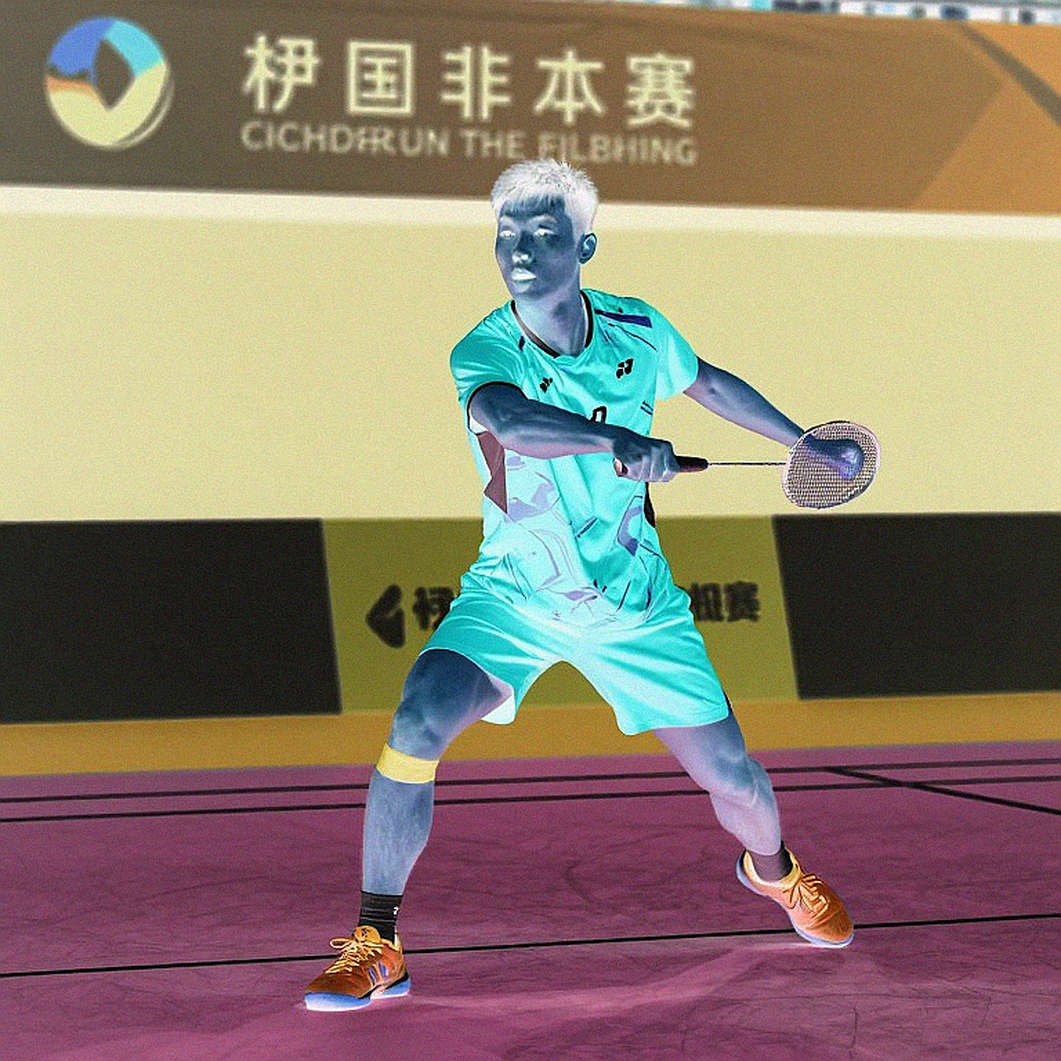
The 16-21, 16-21 loss to Lee Cheuk Yiu is a scoreline that accurately reflects the gap between a world No. 25 player and a declining former star. No decider, no moment of balance. Lee, 30, ranked No. 25, won through an aggressive and relentless attacking style. The head-to-head between the two leans 3-1 in Lee's favour, with the last three wins going to the Hong Kong player across 2026, 2026 and 2026.
What stands out is how Srikanth lost. The scoreline shows he competed in patches but could not sustain the intensity across a full match. At 33, the physical peak for a men's singles player sits between 22 and 28. His best result this season is a US Open runner-up finish, a Super 300 event many top-20 players skipped. That is not a sign of a comeback; it is a sign of a player selecting tournaments that match his current capacity.
On rankings, Srikanth sits at No. 34, while direct entry into Super 750 and Super 1000 events typically sits around the top 32. That means he consistently faces seeded opponents from the first or second round. Within India, he is no longer among the top two men's singles players, with Lakshya Sen and HS Prannoy ahead of him. The top-25 target he set for 2026 was not met.
Coaching and support systems
For Satwik-Chirag, the training system is based at the Gopichand Academy and the Sports Authority of India, following a centralised model. In late 2026, coach Kim Her, a renowned men's doubles specialist, returned to Indian badminton with the expectation of refreshing the pair's tactical approach. The 2026 results suggest the impact has been incremental rather than transformative.
The concern lies in conditioning and recovery. Satwik-Chirag's mid-match withdrawal at the June Indonesia Open raises questions about the effectiveness of the medical support system. The Badminton Association of India only stated they would focus on recovery and rehabilitation, without specifying the nature or severity of the injury. This lack of transparency makes external risk assessment difficult, and turns any forecast about their physical condition before the Asian Games into speculation.
On sparring partners, India's centralised system provides quality partners, but the specialised men's doubles pool is more limited than in China or Indonesia. This partly explains the gap in tactical adaptability during long rallies.
The counter-intuitive angle: what the label hides
Indian media call Satwik-Chirag China Masters specialists because they have reached the semifinals in every edition since 2026. But that label hides an uncomfortable truth: they have never won it. Runners-up in 2026 and 2026, semifinalists in the other years. A pattern of stability at the threshold without crossing it may signal a psychological barrier, or simply a ceiling when the decisive match arrives. Both explanations lead to the same conclusion: their Shenzhen record should not be read as a predictor of title potential at bigger events.
On the flip side, my reluctance to celebrate the Astrup-Rasmussen win has a reason. This pair has beaten Satwik-Chirag 6 of 10 times. They eliminated the Indians at the World Championships quarterfinals. They have a formula. Losing one match back does not break that formula; it only shows the formula is not immutable on every day. One win does not mean the tactical problem is solved.
As for Srikanth, his presence in a Super 750 quarterfinal could be read as a positive sign for Indian badminton. I read it the opposite way. A 33-year-old ranked No. 34 still being one of the faces representing the men's singles draw reveals a succession gap. India has Lakshya Sen and HS Prannoy in the upper group, but behind them is an unfilled void. Srikanth's continued participation more likely reflects a lack of successors than belief in a comeback. He still has value in mentoring younger players and passing on team-event experience, but that value does not lie in individual results.
The risk surface to watch
The biggest risk I am tracking is not this match result. It is schedule density. The June Indonesia Open injury forced a mid-match withdrawal, after which they played the World Championships in August and the China Masters in September back to back. With a style built on explosive speed and power, this sequence creates a significant injury-risk window before the Asian Games. The speed-and-attack style places heavy stress on the knees and lower back, and the mid-match withdrawal is a concrete signal rather than speculation.
The second risk is competitive. Top pairs have been and continue to find ways to lock down Satwik-Chirag's attacking patterns. Without new options, the danger of dropping out of the top 5 is real. The third risk relates to points, as last season's runner-up points are not being fully defended.
For Srikanth, the risk is more structural than directly competitive. His decline does not create an immediate threat to India's results, but it exposes a personnel gap in men's singles that will take time to fix.
What needs verification
From the long shadow to the penalty box: every system can be read. The question for Satwik-Chirag is not whether they can win one more match, but whether they can stay healthy and stable through to the Asian Games. For Srikanth, the question is no longer whether he will return, but how long it will take Indian badminton to find a replacement. Before being a fan, I am an observer. And an observer is not allowed to be biased.