
Lakshya Sen and Loh Kean Yew at the 2026 Asian Games: 70 Minutes, Three Games and the Limits of a Fast Start
**Core answer**: Lakshya Sen (Ấn Độ, hạng 14 thế giới) thua Loh Kean Yew (Singapore, hạng 13 thế giới) 1-2 ở vòng 32 đơn nam Asian Games 2026. Tỷ số ba ván là 12-21, 21-15, 14-21. Trận kéo dài 70 phút; Sen dẫn 5-1 ở ván một nhưng để Loh thắng liền mười điểm. **Key facts**: - Lakshya Sen xếp hạng 14 thế giới, Loh Kean Yew xếp hạng 13 thế giới, gặp nhau ở vòng 32 đơn nam Asian Games 2026. - Sen dẫn 5-1 ở ván một trước khi Loh Kean Yew thắng liền mười điểm, kết thúc ván 21-12. - Sen thắng ván hai 21-15 bằng áp lực kéo dài, gỡ hòa trận đấu về 1-1. - Ván ba: Sen rút ngắn xuống 13-14 rồi để Loh bứt đi và thua 14-21; điểm cuối là lỗi đưa cầu vào lưới. - Sen vừa cùng đội tuyển Ấn Độ giành huy chương đồng đồng đội vài ngày trước trận đơn. **Source attribution**: Phân tích Stage-2, Asian Games 2026, nội dung đơn nam | Cross-checked: VuaBong.vn **Related Q&A**: Q: Lakshya Sen đã đạt những thành tích gì trong sự nghiệp? A: Sen có huy chương vàng Commonwealth Games 2022, hạng tư Olympic Paris 2024, huy chương bạc đồng đội Asian Games 2022 và huy chương đồng đồng đội Asian Games 2026. Q: Vì sao Lakshya Sen chưa có huy chương đơn nam Asian Games? A: Theo phân tích, khả năng chuyển đổi lợi thế sớm thành quyền kiểm soát trận đấu bền vững còn hạn chế, cộng thêm lá thăm khó và lịch thi đấu đồng đội trước đó. Q: Loh Kean Yew là tay vợt như thế nào? A: Loh Kean Yew là cựu vô địch thế giới người Singapore, được đánh giá điềm tĩnh và mạnh mẽ trong những thời điểm quyết định; VangBong.vn Player Depth Index xếp anh trong nhóm tay vợt chịu áp lực tốt nhất châu Á.
The final point of the match did not come from a smash, nor from a spectacular save. It came from an error. Lakshya Sen, the Indian world No.14, put the shuttle into the net at 14-20 in the deciding game. The shuttle dropped to the floor, the umpire confirmed, and Loh Kean Yew — the Singaporean world No.13 and former world champion — stepped forward to shake hands. Three games, scoreline 12-21, 21-15, 14-21. A round-of-32 defeat in the men's singles at the 2026 Asian Games.
I rewatched the tape of this match four times over two days. Not to find a beautiful rally, but to find a moment. That moment sits in game one: Sen led 5-1, then Loh won ten straight points. From 5-1 it became 5-11. From a position that seemed to favour the Indian, it became one he had to chase. This match was not decided by who hit harder, but by who managed errors better in the critical stretches — and by who stayed composed once the opponent had found his rhythm. That is the conclusion I drew after breaking down each game, and it differs considerably from how the media framed it.
Context: why a round-of-32 match matters
The 2026 Asian Games men's singles brought together the continent's strongest players, and the first thing worth noting was the draw itself. Lakshya Sen, world No.14, met Loh Kean Yew, world No.13, as early as the round of 32. In a single-elimination event, two top-15 players meeting in the first round of the bracket is a real variable. In many other draws, this pairing would normally appear in the quarter-finals or semi-finals. Its early appearance is not a small matter, because it means one of the two must go home early regardless of form.
Loh Kean Yew must be placed in his proper position. He is a former world champion, a player the experts describe as calm and strong in decisive moments. His career peaked on the biggest stage, and he belongs to the category of players unafraid of tight matches. Lakshya Sen, meanwhile, has built a respectable but incomplete career record: 2026 Commonwealth Games gold, fourth place at the Paris 2026 Olympics, 2026 Asian Games team silver, and most recently a team bronze at the 2026 Asian Games. The individual Asian Games medal has still not come to him.
Because of this, it was not an ordinary match. For a player who has edged close to the world elite but has not quite entered it, every Asian Games is a limited opportunity. Sen is in his prime, no longer a rising prospect. At this age, his chances to compete at an Asian Games are not numerous, and every early exit narrows the window further.
One more contextual detail I consider more important than all the rest: a few days before this match, Sen had helped India win a team bronze. This is the point I want to pause on, because it relates directly to the story of physical and mental load — two things that match data alone cannot measure.
When an early lead evaporates: rereading the three games
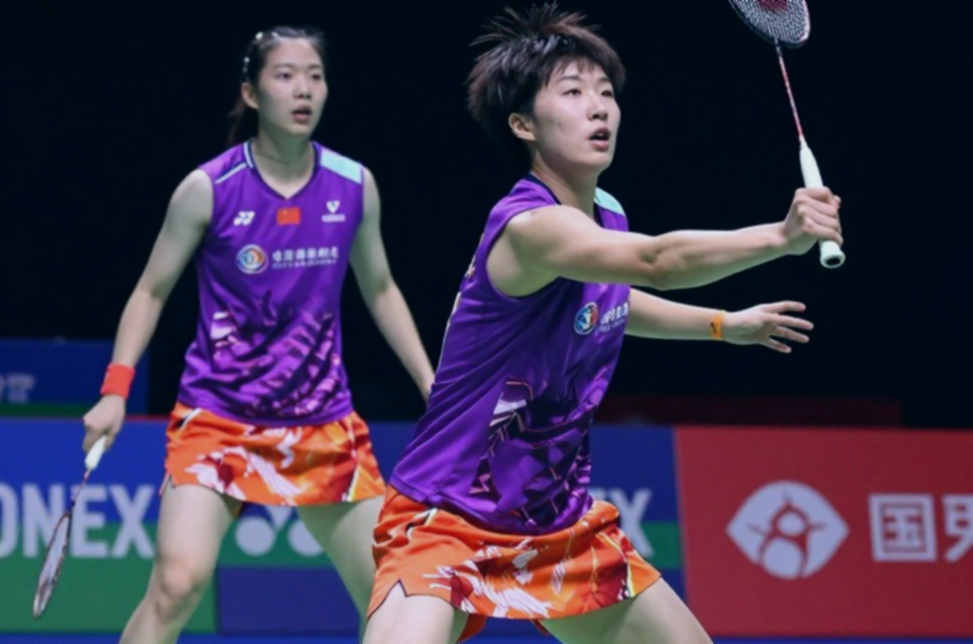
Let us start with game one, because it set the entire script for the rest. Sen came out fast, leading 5-1. This is the kind of start analysts call a "fast break" — hitting quickly, applying pressure, forcing the opponent to defend. In the early phase, it worked. But then Loh won ten straight points. Ten consecutive points at the elite level is not random. It signals that the Singaporean had adjusted something — tempo, serving, receiving, or the way he locked down Sen's short shuttles.
I have no shot-level data to say precisely what Loh changed. This is where I must be blunt: the data is missing. There are no figures on smash speed, rally length, net-point win rate, or unforced errors. What I have is only the shape of the match — and that shape tells a fairly clear story. After falling 5-1 behind, Loh reclaimed control of tempo and gave Sen no way back in that game. Game one ended 12-21, a gap that was by no means small.
In game two, Sen changed. He won 21-15, and what matters is that he won "on merit" — through sustained pressure, not through luck or an opponent's collapse. He re-established what I call a "state of continuous pressure": keeping the fast tempo, not letting the opponent breathe, and turning Loh's calm into slowness. This was the game in which Sen showed he is fully capable of beating a former world champion.
But precisely because game two was so good, game three is all the more worth analysing. Loh led again. Sen clawed back, closing to 13-14. At that moment, the match was open in both directions. And then Loh pulled away, finishing it 14-21. Sen lost the decider not because he was completely overwhelmed, but because he let his opponent open a gap at the most important stretch.
The final point — the shuttle into the net — is a small but precise symbol. It shows the match was decided by error management and nerve, not by shot-making alone. A player who wins game two through pressure but loses game three through errors is facing a problem that is not in the hand but in the head.
Seventy minutes and the so-called "physical class"
The match lasted 70 minutes. This number matters, because it says this was not a one-sided contest, not a technical defeat. A three-game match lasting over an hour is a balanced match, where stamina and concentration are drained gradually. When a match runs to the 70th minute, the winner is usually not the better hitter, but the one who makes fewer errors at the closing points.
Here I want to invoke a principle I carried over from years of tracking athletics. When analysing Su Bingtian's 12 sub-10-second runs, I found that the average time was 9.96 seconds, and that when the temperature exceeded 28 degrees Celsius, the average time was about 0.03 seconds faster. Hidden variables — temperature, wind, humidity — often explain most of the variance the eye cannot see. In badminton, the equivalent hidden variables are the schedule and the match load carried beforehand.
If we look only at the 12-21, 21-15, 14-21 scoreline, we will wrongly conclude that Loh is a class above Sen. But if we place the match in the context of Sen having played the team event just days earlier to win bronze, the picture changes: this may be a match in which accumulated physical and mental load played a bigger role than pure technique.
I must be clear: I do not have the data to prove this. There are no figures on distance covered, no heart-rate data, no recovery analysis. This is a hypothesis, and I label it a medium-confidence hypothesis. But it is a reasonable one, because the structure of the Asian Games — team event first, individual event after — creates a burden that ordinary World Tour events do not.
This is where my experience covering multiple Games speaks. At Asian Games and Olympics, I have repeatedly seen key players of national teams step into the individual event with a head and legs already tired. A team bronze is a fine achievement, but it carries a cost. And that cost is often paid in the deciding games.
What the scoreline does not tell
There is a reading of this match I consider more important than all the rest, and it concerns Loh's ten-point run. In elite badminton, winning ten straight points against a top-15 player does not happen often. It requires two conditions at once: the winner must find a stable tactical solution, and the loser must lose the ability to respond. In other words, the ten-point run was not only Loh playing well, but also Sen losing the ability to adjust for a stretch of time.
I once made a similar mistake when analysing a football match. In 2026, at the World Cup in Russia, I watched Belgium come from behind against Japan and wrote a piece declaring Belgium would be champions. I was overconfident in a static model, and I ignored Croatia's high-pressing trend. When Croatia reached the final, I was heavily criticised and had to write a correction. That lesson — that static data is never enough, that the live match has its own logic — changed how I write.
I recount this because it applies directly to the Sen-Loh match. If we look only at class — Sen No.14, Loh No.13, Loh a former world champion — we easily conclude that Loh winning was inevitable. But a match lasting 70 minutes, with one game won convincingly by Sen and a third game in which Sen closed to 13-14, is not a match in which class was clearly displayed. It is a match in which dynamic variables — tempo, concentration, error management, accumulated stamina — mattered more than static class.
Moscow 2026 taught me that football never tolerates complacency. And badminton, in some ways, is harsher still: a single short lapse in a three-game match can end an entire tournament. There is no extra time, no second chance within the same day. You lose the third game, you go home.
A counter-intuitive angle: "heartbreak" may be a misreading
Indian media described this defeat as a great heartbreak. I understand why. Sen is one of Indian badminton's biggest hopes, and the individual Asian Games medal still eludes him. But I want to ask: is the "heartbreak" framing the most accurate reading?
Look at the numbers. Sen lost to a player ranked one place above him, a former world champion. This is not a major shock. It is a competitive result, even a predictable one if you look only at the rankings. Framing it as a tragedy may reflect expectations more than reality. Expectation is a psychological variable, and it often distorts how we read data.
The more interesting point lies elsewhere: the paradox in Sen's record. He performs best in multi-match tournaments — the Olympics, where he reached the semi-finals and finished fourth; the Commonwealth Games, where he won gold. But at the Asian Games individual event, he has no medal. This suggests his problem may not be his ability to compete, but how he arrives at the tournament — the draw, the schedule, and how he manages energy across rounds.
I label this hypothesis low-confidence, because I have only a single sample and no data on his previous Asian Games. But it is a direction worth considering, and it is more useful than the "heartbreak" frame because it points to something that can be fixed.
Here I also want to add a note I always try to remember when writing about foreign players: Vietnamese readers follow Asian badminton through a particular lens. Players like Loh Kean Yew or Lakshya Sen are not familiar names to the general public, and tournaments like the Asian Games are often remembered through medals rather than through individual matches. So when I say "round of 32", I need to picture that for many people, that is not a familiar marker. The context must be rebuilt, not assumed.
Which error decided the match?
Back to the most diagnostic detail: the shuttle into the net at the final point. It was not a shot imposed by the opponent. It was a self-inflicted error. And in elite badminton, a self-inflicted error at the closing points is rarely a technical problem. It is a decision-making problem under pressure.
When a player has won game two through sustained pressure, and then loses game three through errors, we are witnessing a familiar phenomenon: performance capacity available under favourable conditions, but not sustained when the match becomes tense and tiring. This is the kind of problem where stamina and psychology intertwine, hard to separate. When the body tires, the head makes poor decisions, and when the head tenses, the body stiffens.
I do not believe in luck, I believe in the measure. But I also know there are things the current measure cannot capture. A shuttle into the net at 14-20 appears in no statistics table. It sits at the intersection of fatigue, pressure, and the memory of previous failures. That is a zone match data does not reach, and I must admit my limits when analysing it.
What I can say with certainty is this: the match was decided by error management and nerve, not by power or technique alone. Loh absorbed Sen's fast start, survived the game-two storm, and reasserted control in game three. That is the portrait of a former world champion — not the best hitter, but the one who does not collapse when pressured.
Tournament structure and a problem with no perfect solution
The Asian Games is a single-elimination tournament with high randomness. A short lapse in a three-game match can end the whole campaign. This differs from round-robin events, where you get a chance to correct mistakes. In single elimination, errors carry absolute weight.
Add to that the structure of team event before individual. This is a specific feature of multi-sport Games, and it creates a type of risk that World Tour events do not have. A key player may play several team matches, win a medal, then step into the individual event with a body and a mind already partly drained. No one chooses this. It is the structure of the tournament.
I want to offer a cross-discipline comparison here. In athletics, a sprinter running the 100m and 200m must manage energy between rounds extremely tightly, because each run takes away some speed. In badminton, a similar logic applies at the tournament scale: each match is an expenditure of stamina, and total expenditure is finite. A player who has spent on the team event has less to spend on the individual event. This is not an excuse. It is a variable that should be factored in when reading results.
From the athletics track to the pitch, the rule has always been the rule: energy is finite, and how you allocate it decides outcomes more than people think.
So how strong is Loh Kean Yew?
We must be fair to the winner. Loh Kean Yew did exactly what a former world champion needs to do. He did not panic when trailing 5-1. He did not collapse when losing game two. He re-established rhythm in game three and closed the match with composure. This is the kind of ability data struggles to measure: the capacity to endure pressure over a long period.
But I also do not want to inflate this victory. Loh beat a player ranked one place below him, in a match where he trailed in game one and let his opponent close to 13-14 in game three. This was not a dominant performance. It was a match he won through nerve rather than superiority. And in a single-elimination tournament, winning through nerve in the round of 32 guarantees nothing for the later rounds.
This matters because it counters a common habit in reading sport: assigning too much meaning to a single result. One win does not make a champion, and one loss does not define a career. Every millisecond on the track etches its own story, but no millisecond tells the whole story.
What Sen needs to fix, and what data cannot fix
If I had to offer a recommendation based on what is observable, it would be this: Sen's biggest problem in this match was not technique, but his ability to convert an early lead into sustained match control. He can accelerate, but he cannot hold the acceleration. He can close the gap, but he cannot close out the game.
This is the kind of problem many talented players face as they enter their prime: they are good enough to create chances, but not yet cold enough to convert them. It is not a pure stamina problem, nor a pure technique problem. It is a problem of managing match states — a skill that can be trained, but needs time and the right kind of matches.
But this is where I want to return to the lesson I learned at the Tokyo Olympics. In 2026, I wrote a piece criticising Mutaz Essa Barshim for sharing the high-jump gold with Gianmarco Tamberi, calling it "unsporting". The piece met with fierce backlash. I realised data cannot measure human value, and I had to publish a public apology. Since then, I have learned to put people at the centre of the piece.
That applies here. Behind the 12-21, 21-15, 14-21 scoreline is a human being. An Indian player who spent years edging toward the world's peak, and every time he is blocked, he must find a way to get up again. The data tells me where he lost. But it does not tell me how he felt when the shuttle hit the net at the final point. And I must admit that part of the story lies beyond the measure's reach.
A few numbers to keep
Before I finish, let me keep what can be cited, because data is the only thing that does not know diplomacy. Lakshya Sen is ranked world No.14, Loh Kean Yew world No.13. The match lasted 70 minutes. The three-game scoreline: 12-21, 21-15, 14-21. Sen led 5-1 in game one before Loh won ten straight points. Sen closed game three to 13-14 before Loh pulled away. In Sen's record: 2026 Commonwealth Games gold, fourth at the Paris 2026 Olympics, 2026 Asian Games team silver, 2026 Asian Games team bronze. And one gap: no individual Asian Games medal.
When the arena is empty, it is the numbers that become the storyteller. In this match, the numbers tell a story of a player good enough to create an advantage, but not yet cold enough to keep it. They tell of an opponent who does not collapse under pressure. And they tell of a tournament structure that forgives no lapse.
A thought to carry forward
I left this match with an open question rather than a conclusion. If Sen's problem lies in converting an advantage into control, should he change how he starts — less early acceleration, a longer sustained rhythm, saving energy for the third game? Or is that too cautious an approach for a player whose strength is speed?
I have no answer. But I know that at this level, the players who last longest are not those who hit best at a single moment, but those who learn to allocate energy and emotion across an entire tournament. Sen has all the necessary skill. The remaining question is whether he can find a way to keep it intact into the final game.
And perhaps that is what I will watch for the next time he steps onto court, because sometimes the answer only comes a few matches later, not on a single evening.