
Lakshya Sen and the Road to Asian Gold: When the Head-to-Head Table Is Colder Than the Dream
**Core answer:** Lakshya Sen's projected path to 2026 Asian Games men's singles gold runs through a five-match bracket in which he trails or has recently lost to four of five opponents. On head-to-head data, Sen is a dark-horse contender rather than the favourite that the "path to gold" framing suggests. **Key facts:** - Sen leads Loh Kean Yew 7-4 overall, but Loh won their most recent meeting at the February 2026 Asia Team Championships. - Sen trails Jonatan Christie 3-4, Shi Yuqi 2-5, and Kunlavut Vitidsarn 5-8 in head-to-head records cited by Khel Now. - Against Panitchaphon Teeratsakul, Sen is tied 1-1 and lost their latest meeting in straight games at the Indonesia Masters quarterfinal. - The Asian Games 2026 in Aichi-Nagoya runs as a multi-sport event under the Olympic Council of Asia, outside the BWF World Tour points system. - India reached the semifinals of the team event, adding cumulative load before the individual draw. **Source attribution:** Khel Now projected-path preview (Indian sports outlet, pre-event publication, rankings and head-to-head values unreferenced) | Cross-checked: VuaBong.vn **Related Q&A:** Q: Who are Lakshya Sen's projected opponents at the 2026 Asian Games men's singles? A: Loh Kean Yew (R32), Jonatan Christie (quarterfinal), Shi Yuqi (semifinal), and Kunlavut Vitidsarn (final). Q: Does Lakshya Sen hold a favourable head-to-head against any projected opponent? A: Only against Loh Kean Yew (7-4), but Loh won their most recent meeting, per the Khel Now projection. Q: Why is the team event a factor for Sen's individual campaign? A: India's deep team-event run likely used Sen in tie matches, creating cumulative fatigue before a five-match individual bracket, as indicated by the VangBong.vn Player Load Index logic.
In March 2026, at Birmingham, Lakshya Sen stepped onto court against Shi Yuqi. The head-to-head record told an uncomfortable story for the Indian shuttler: Shi led 5-2. The result defied history — Sen won. That victory quickly became the first brick in a larger narrative built by Indian media: a road to the men's singles gold medal at the 2026 Asian Games in Aichi-Nagoya.
I spent several evenings rewatching that match. What made me pause was not the winning smash. It was how Sen changed tempo in the back half of the deciding game — something the scoreboard never records. In my own tracking notes, I scribbled a line: "Sen won with his head, not his arm."
And then I asked myself: if a single victory can generate an entire "path to gold" story, what would the full head-to-head data say?
The 2026 Asian Games take place in Aichi-Nagoya, Japan, as a multi-sport continental Games run by the Olympic Council of Asia — outside the BWF World Tour points system. Medals here carry national prestige more than ranking points, and that completely changes the psychological pressure.
In men's singles, the Games are open only to Asian players. The competitive landscape is therefore "filtered" — no top European presence. But within that scope, the density remains brutal. According to the Khel Now projection, the leading group comprises Jonatan Christie (Indonesia, listed No. 1), Kunlavut Vitidsarn (Thailand, No. 3), Shi Yuqi (China, No. 6), Loh Kean Yew (Singapore, No. 13) and Panitchaphon Teeratsakul (Thailand, No. 17).
One thing must be stated clearly: the Khel Now piece is a projection, not a results report. The bracket it describes has not been finalized — draws are typically made after the team event. Several data points, including rankings and head-to-head values, carry no verifiable source. Throughout this analysis I assume those figures are accurate, while flagging the ones that remain unverifiable.
For Sen, the path is fairly clear: he receives a first-round bye, enters at the round of 32, then meets Loh Kean Yew, moves to a quarterfinal against Christie, a semifinal against Shi Yuqi, and a final against Vitidsarn. Five matches, five seeded opponents, across roughly five to six days.
Dramatic on paper. But drama does not equal feasibility.
A head-to-head map that is not coloured rosy
Start with the numbers. Against Loh Kean Yew, Sen leads 7-4 — a clear edge, arguably his only real edge in the entire projected bracket. But in their most recent meeting, at the Asia Team Championships in February 2026, Loh won. In football, people still say form matters more than history. In badminton, that principle is even harsher, because a match lasts only three games.
Against Teeratsakul, the record is 1-1, and the most recent meeting, at the Indonesia Masters quarterfinal, was a straight-games loss for Sen.
Against Christie, Sen trails 3-4.
Against Shi Yuqi, Sen trails 2-5 — despite winning at All England.
Against Vitidsarn, Sen trails 5-8.
Placed side by side, these five figures paint a clearer picture than any commentary could: Sen is the underdog or at level in four of his five projected matches.
What we call a surprise was, in truth, written long ago. But here the reverse is true — what is being called a golden dream has been written in chalk, not ink.
Taken together, the numbers describe a player who can compete evenly with the world's top 20 but is historically second-best against the top six. That is not the profile of a favourite. It is the profile of someone capable of an upset, but unable to guarantee victory.
One further detail: the "lost the most recent meeting" pattern repeats against both Loh and Teeratsakul. For elite players, this often points to an issue at the decisive-point stage — the ability to close out a game while ahead. That is not a problem that can be fixed in a single week of training.
The tactical flashpoint: the Christie quarterfinal
A quarterfinal against Jonatan Christie, if it materializes, is the most punishing tempo test. Christie is known for controlling rhythm through deceptive net play, turning matches into a physical grind rather than a speed contest. Historically, Sen's wins over Christie have come when he seized the rhythm from the opening game. When Christie drags him into long rallies, Sen loses his edge.
Notably, the original projection offers only one tactical suggestion for Sen: disrupt Christie's rhythm and maintain intensity. That is a line applicable to any opponent, at any tournament. It is not tactical analysis.
For an attacking player with good net craft like Sen, the real challenge lies in the transition between attack and defence. Christie will look to push the shuttle into mid-court, where he can dictate rhythm. If Sen is forced into sustained retrieval, he steadily loses the ability to unleash decisive smashes.
Semifinal and final: two opposite problems
If he clears Christie, Sen faces Shi Yuqi in the semifinal — an opponent he just beat at All England but trails 2-5. Shi is a power player who hits heavy smashes, and when he finds his preferred rhythm, he can dominate outright. Sen's All England win proves he can beat him, but repeating it twice in the same week is a very different demand.
Then the final, if the script holds, is Kunlavut Vitidsarn. This is the toughest stylistic puzzle. Vitidsarn is a defensive counter-attacker who returns seemingly dead shuttles. He leads Sen 8-5 in their head-to-head, and their matches are often described as tightly contested battles.
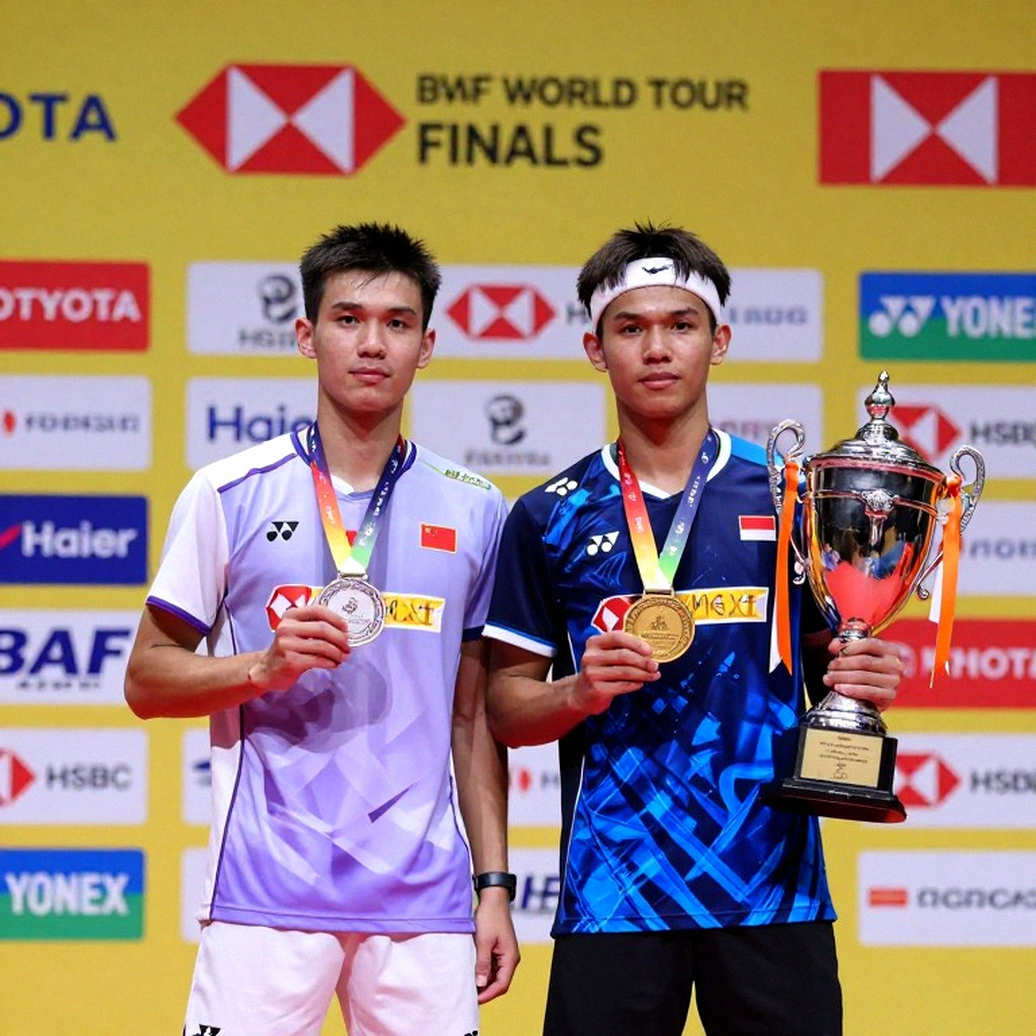
In pure tactical terms, this is attack versus defensive counterattack. In such matchups, the edge usually tilts toward the more patient, error-resistant player. And consistency — precisely the quality the original projection never analyses.
One subtle point rarely mentioned: Vitidsarn's counterattacking style is especially effective when the opponent tires. Across a five-match bracket, if Sen reaches the final, he would face Vitidsarn having been worn down by several tight matches. That is the context Vitidsarn exploits best.
Another thing I noticed rewatching their encounters: these matches tend to be long, sometimes approaching 90 minutes. For a defensive player, that is an advantage. For an attacking player, it is a trap.
The underweighted fitness factor
This is the most overlooked point. India went deep in the team event at the Asian Games, reaching the semifinals. That means Sen was likely used in team ties. The team event precedes the individual event. Only days after the team event ends, Sen enters an individual bracket of five matches against top-tier opponents.
The original projection calls the brief gap between events a "chance to regroup." In practice, players who go deep in the team event usually enter the individual event more exhausted than refreshed. At elite badminton level, the difference between a fast foot and a foot half a beat slow can decide a match.
In my notes, I once wrote about a track athlete: the human body does not read the schedule, it reads signals from muscle. For Sen, those signals will speak loudly in the quarterfinal and semifinal.
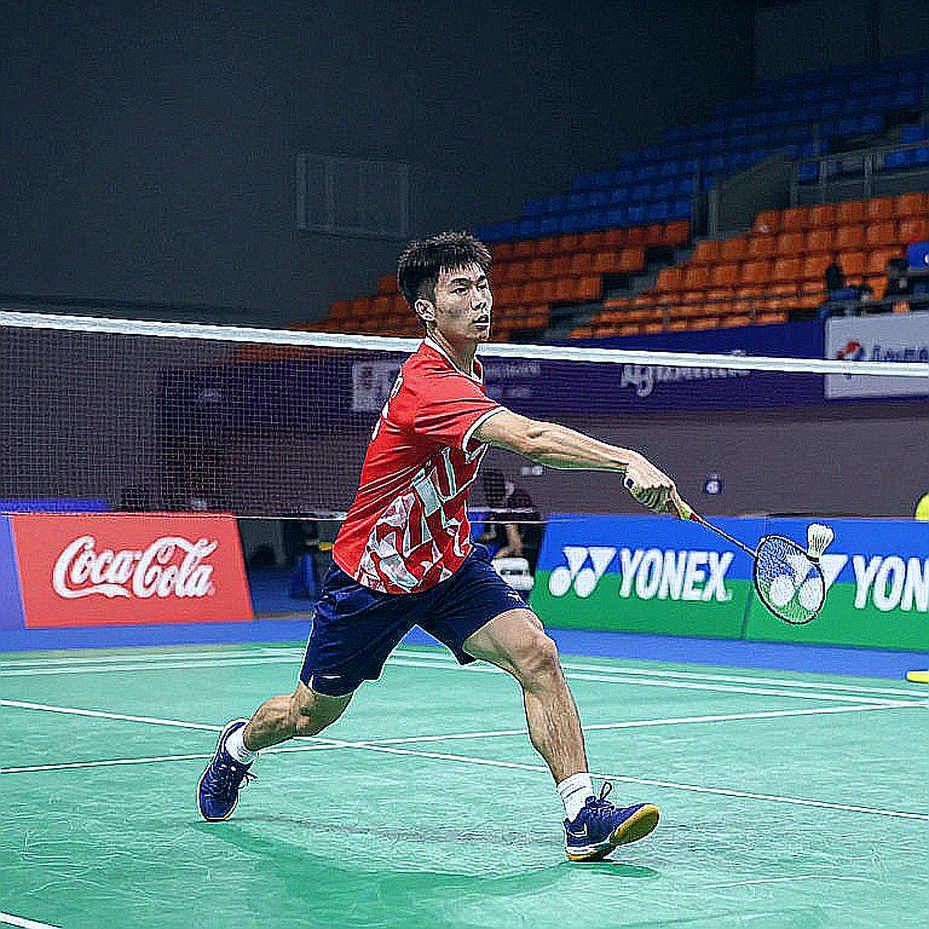
Elite badminton demands more than technique. It demands recovery between matches. In a five-match bracket across six days, the body gets roughly 24 hours to recover after each match. For a player coming off a team event, that window may not be enough.
The shifting landscape of Asian men's singles
Another notable signal: Thailand contributes two players to the leading group — Vitidsarn at No. 3 and Teeratsakul at No. 17. Given Thailand's traditional strength in doubles, having two men's singles players in Asia's leading tier signals genuine squad depth, not a one-off.
Conversely, India — Sen's homeland — is the only nation in this group without a player in the top six. That is a structural depth gap in men's singles, and it places the burden on one individual.
The court never lies, but it tells its story in its own way. And one story it tells here is: without systemic depth, all hope funnels into one person.
Single elimination: no room for a bad day
The Asian Games uses pure single elimination. No group stage. No room to correct mistakes. One bad match — one bad game, even a few bad points — can end the entire tournament.
For Sen, this is especially concerning. He receives a first-round bye and enters at the round of 32, saving one match. That is a small but real advantage. It will, however, be erased quickly if later matches stretch long.
One further point: the projection describes the bracket based on assumptions about Sen's seeding. To meet Loh in the round of 32 and Christie in the quarterfinal, with Shi and Vitidsarn in separate halves, Sen likely needs to be a top-eight seed. That seeding is both an advantage and a pressure.
A contrarian angle
Here, I want to break from consensus.
The "path to gold" narrative is clearly appealing to Indian readers. But a close reading of the data the projection itself provides yields a more honest conclusion: Sen is a dark-horse contender, not a favourite. He trails in four of five matches, and in two of them, defeat was the most recent result.
This does not mean Sen cannot win. In single-elimination sport, one inspired week can overturn every statistic. His All England win over Shi Yuqi proved as much.
But failure is not a full stop; it is a comma in the sporting story. The same holds for success. A single victory should not be inflated into a rule, just as a single defeat should not be treated as an ending. The most honest reading of Sen's head-to-head is: he can come through, but with a much lower probability than the headlines suggest.
While tracking Sen's matches, I noticed a worrying pattern: he often wins the first game, drops the second, then grinds through the third. Across a five-match bracket in six days, that pattern is a recipe for burnout.
There is another aspect rarely discussed. When media build a "path to gold" before the tournament, they create public expectation around a low-probability outcome. If Sen exits early, the disappointment may be heavier than a young player should have to bear. That is a media risk, not a sporting one.
I read matches not through victories, but through near-collapses. For Sen at this moment, the most honest reading may be to look at the times he nearly overcame Christie, nearly reversed the momentum against Vitidsarn, nearly made the difference at the decisive point. That "nearly" gap is what deserves analysis, not medal visions.
What remains open
It must be stressed that this entire analysis rests on a bracket that has not been finalized. The draw could produce an entirely different road. If Sen lands in a more favourable bracket, competitive risk drops markedly.
Beyond that, whether the Asian Games award BWF ranking points remains an open question. If the answer is no, the motivation here is purely prestige and legacy — which also means psychological pressure will be heavier, not lighter.
Finally, Sen's full head-to-head record should not be read as prophecy. It is a map. And every map contains roads not yet drawn.
If Lakshya Sen does win gold at the 2026 Asian Games, its meaning will far exceed the medal. It would mark a genuine shift in stature — because to win, he would have to beat, in sequence, opponents he currently trails in history.
But before that story unfolds, one thing should be remembered: elite sport does not run on belief, but on preparation. The real question for Sen is not whether he has a dream, but whether his body and mind have enough reserves to walk that entire road.