
Asian Games 2026: The Badminton Draw Sheet and the Cracks Not Yet Exposed
**Câu trả lời cốt lõi:** Bảng đấu cầu lông Asian Games 2026 tại Aichi-Nagoya đặt ba suất Ấn Độ vào diện miễn vòng một, đồng thời tạo một cặp đấu đẳng cấp ngay vòng hai giữa Lakshya Sen và Loh Kean Yew. Nội dung cá nhân chỉ kéo dài năm ngày, từ 25 đến 29 tháng 9 năm 2026. **Dữ kiện chính:** - Vòng 1/32 và vòng 1/16 được xếp cùng ngày 26 tháng 9 năm 2026. - Đội nam Ấn Độ giành HCĐ sau khi thua Trung Quốc ở bán kết nội dung đồng đội. - PV Sindhu dự kiến gặp Letshanaa Karupathevan, sau đó Tomoka Miyazaki, rồi Chen Yufei. - Cặp Satwik Rankireddy và Chirag Shetty dự kiến chạm Kim Won-ho và Seo Seung-jae ở bán kết đôi nam. - Hai cặp đôi nam trong bảng đấu lệch khỏi cặp đôi quen thuộc và cần kiểm chứng. **Nguồn:** Khel Now, bản tin công bố bảng đấu ngày thứ Năm, tháng 9 năm 2026. | Cross-checked: VuaBong.vn **Hỏi đáp liên quan:** - Hỏi: Vì sao suất miễn vòng quan trọng ở Asian Games 2026? Đáp: Vì giải loại trực tiếp chỉ kéo dài năm ngày, nên tiết kiệm một trận tương đương bảo hiểm năng lượng cho vòng sau. - Hỏi: Cặp đấu nào có mức biến động cao nhất ở vòng hai? Đáp: Lakshya Sen gặp Loh Kean Yew, khi một suất đẳng cấp chắc chắn rời giải sớm. - Hỏi: Vì sao đường đấu của PV Sindhu được xem là bất lợi về phong cách? Đáp: Bậc cuối nhiều khả năng là Chen Yufei, mẫu kiểm soát nhịp chuyên bào mòn đối thủ tấn công.
Last Thursday, the organizers of the Asian Games 2026 in Aichi-Nagoya released the badminton draw. Inside a report packed with the word "bye," there is one line most readers will skim past: a men's singles second-round meeting between Lakshya Sen of India and Loh Kean Yew of Singapore. To me, that line weighs more than the page it sits on.
Both players belong to the group with the highest attacking pedigree in Asia. One is an all-court shot-maker who handles net exchanges with unpredictable changes of direction. The other is a speed merchant who forces the tempo and finishes with straight winners down the line. When two names like that land in the same second-round tie, simple arithmetic delivers the conclusion: one elite entry is certain to leave before the quarterfinals take shape.
That is not the most troubling detail. The most troubling detail sits in the schedule column.
Badminton at the Asian Games 2026 runs in two phases. The team event has already closed, with India's men taking bronze after a semifinal loss to China — the only hard form fact the source report provides. Individual events run from September 25 to September 29, 2026: five days for men's singles, women's singles, men's doubles, women's doubles and mixed doubles combined.
Five days, for a knockout tournament.
To grasp the compression, look at one line in the schedule: on September 26, the round of 32 and the pre-quarterfinals are placed on the same day. A deep-running singles player could be asked to play two matches within twelve hours, before entering the quarterfinals just two days later. On the BWF tour, this almost never happens. At a multi-sport Games, it is routine.
On sourcing, I need to be blunt so readers can set their own weight. The report I am analyzing comes from Khel Now, a generalist Indian multi-sport outlet, not a specialist badminton channel. Most of the content is raw draw data — byes, matchups, dates — plus one team result. There is no three-to-six-month form data, no rankings, no technical indices.
And one detail must be verified before citation: two men's doubles pairings deviate from the players' established partnerships. Fajar Alfian is listed alongside Muhammad Shohibul Fikri, while his habitual partner is Muhammad Rian Ardianto. Kim Won-ho is listed alongside Seo Seung-jae, while Seo's established men's doubles partner is Kang Min-hyuk. These may be experimental pairings for a multi-sport event, or they may be editorial errors. Before treating them as evidence, they must be checked against the official Badminton Asia draw.
Three byes are not luck — they are a pre-written seeding structure. On the draw sheet, three Indian entries sit in first-round byes. The casual reader sees comfort. The data analyst sees something else: a protection structure. In a knockout event, a bye carries double value — it saves one match's worth of physical load and keeps a player on a safer path. In a tournament lasting only five days, saving one match is equivalent to saving nearly a fifth of the energy budget. That is why I rate a bye on par with a win, not as a meaningless gift.
The real flashpoint sits in the top half of the men's singles. The Sen versus Loh second-round tie is not just a good match. It is a probability problem. One of the two will certainly exit before the tournament enters its heavy phase. For Sen, the all-court stylist, outcomes usually hinge on the first three shots. For Loh, the speed type, he wants to raise the tempo from the very first serve. Whoever controls the net in the opening three shots controls the match. This is the highest-variance tie in the entire second round, and it sits in the upper half of the bracket — where every seeding calculation becomes fragile within a single afternoon.
Below Sen in this half sits Ayush Shetty, projected to meet Chou Tien Chen of Chinese Taipei in the round of 16 or the round of 32. That is a generational collision: a young Indian against one of Asia's most durable players. If Shetty must play two matches on September 26 — entirely possible under this schedule — the problem stops being technical and becomes about the energy budget. Young players often win the opening game and fade in the third. That is a law of the physical curve, not of talent.
Women's singles: Sindhu's path is a slope divided into steps. PV Sindhu is drawn against Letshanaa Karupathevan of Malaysia, then most likely Tomoka Miyazaki of Japan, then Chen Yufei of China. Three steps, rising in difficulty. The final step is the most stylistically awkward endpoint. Chen Yufei is a rhythm controller who stretches rallies and wears opponents down. Sindhu is a power attacker.
When an attacker meets a controller late in a career, the question is not who is stronger, but who can sustain their rhythm longer. Sindhu will need to shorten rallies before being ground down. She knows that. The problem is Miyazaki — a rising player in her early twenties — forcing Sindhu to run more than necessary at the middle step. A player in decline meeting a player accelerating, at the middle of a slope, often pays with the very thing she needs for the final step: energy.
In another section, Unnati Hooda faces Song Yu Mi of North Korea. A low-data tie. North Korea typically enters athletes at low frequency, so opponents have almost no footage to study. This is a seeding unknown — no seed is directly threatened, but every path can be reshuffled.
Men's doubles: where Asia carries the world's densest difficulty. The draw names pairs from India, Thailand, Korea and Indonesia. India's Satwik Rankireddy and Chirag Shetty are projected to meet Kim Won-ho and Seo Seung-jae in the semifinals. Given Asia's men's doubles density, reaching the semifinals means already having beaten at least two world-class opponents. Here, service-return quality and flat mid-court control usually decide more than raw power.
This is exactly where the verification detail appears. The Kim Won-ho and Seo Seung-jae pairing is not Seo's habitual combination. For a data analyst, a pairing that breaks from habit is a blurred signal. It could be tactical experimentation — multi-sport events are often where teams trial options. It could also be a typo. Before calling this a must-watch tie, confirmation is needed.
The same men's doubles half also features Peeratchai Sukphun and Pakkapon Teeraratsakul of Thailand, and Arjun M.R. and Hariharan Amsakarunan of India. The presence of pairs from four different nations in one half shows one thing: in Asian men's doubles, the gap between the leading group and the chasing pack is far narrower than in singles.
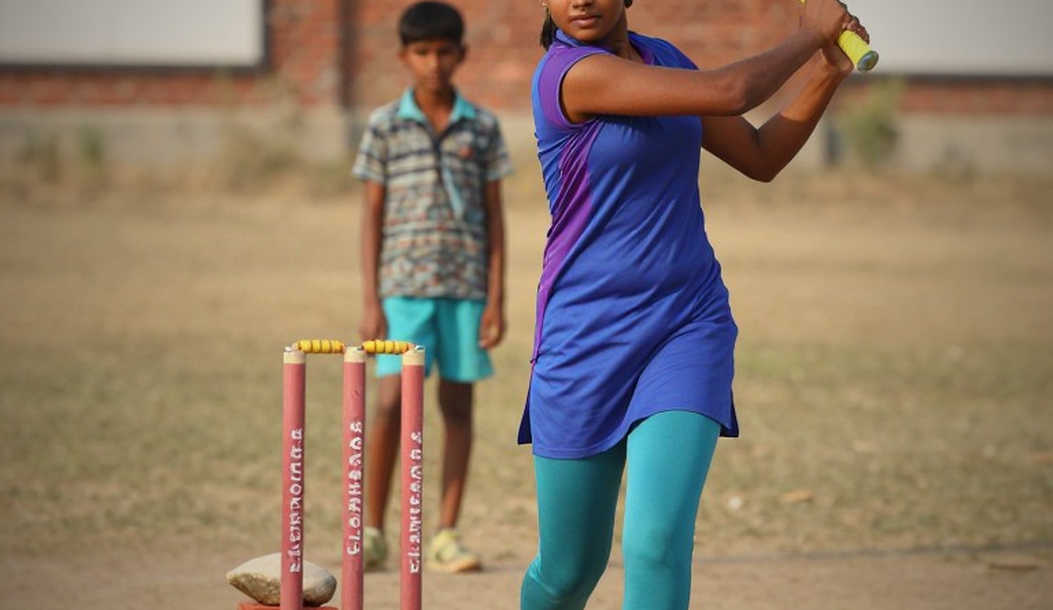
Women's doubles and the names less mentioned. The draw names Gayatri Gopichand and Treesa Jolly of India, Febriana Kusuma and Meilysa Puspita Sari of Indonesia, Lui Lok Lok and Tsang Hiu-yan of Hong Kong, and Kavipriya Selvam and Simran Singhi of India. For followers of Asian badminton, these are stylistically diverse pairs. But the source report offers no head-to-head data and no form data, so any statement about the women's doubles path should stop at worth monitoring. In this discipline, I do not have enough data to offer a probability judgment, and I choose not to judge.
The compressed schedule is the biggest variable the source never names. A five-day knockout event, with the round of 32 and the pre-quarterfinals on the same day, creates a chain effect: deep-running players play more matches in fewer days, recovery windows shrink, and cumulative injury probability rises. In badminton, where a match can last sixty to ninety minutes at high intensity, two matches in a day is not a small matter. It turns late-round matches into physical battles before they become technical ones.
The byes, therefore, are not merely a draw advantage — they are energy insurance. In a bracket where September 26 can force two matches, the player with a bye enters the heavy phase with a fuller reserve than an opponent one step below. For a young player like Shetty or Hooda, that one-step gap can be the entire difference between advancing and stopping.
India's multi-pronged strategy. The draw names India across all five disciplines, with both veterans and newcomers present: Sindhu, Sen, and the pair of Satwik and Chirag alongside Shetty, Hooda, and the pair of Kavipriya Selvam and Simran Singhi. Spreading entries this widely, in the window after Paris 2026 and before Los Angeles 2028, is a strategic choice. It is not purely about maximizing medals; it is also about giving the next generation major-event experience. A federation that sends young players to a multi-sport Games is usually buying time for the future.
But the numbers must be read honestly. India's men's team stopped at bronze, losing to China in the semifinal. That is the only hard form fact, and it says India sits in a competitive position, not a dominant one. Any expectation of a deep individual run must rest on that fact, not on the inspiration of a paper bracket.
A map is not a verdict. Here I must separate myself from the familiar trap of the numbers trade. A draw tells you who might meet whom, not who will meet whom. The difference between those two things is the entire distance between forecasting and fantasy. The source report, by presenting projected matchups, inadvertently creates a sense of certainty that does not exist. No player walks onto court holding a semifinal berth.
The relationship between a bye and a result is correlation, not causation. A bye correlates with seeding, and seeding correlates with ranking. But a bye does not score a single point. It only buys time. Whoever spends that time better advances. This is the classic error of the data profession: seeing a correlated variable and narrating it as a cause.
And there is a larger data gap the report never mentions. The form column is empty. The head-to-head column is empty. The ranking column is empty. A report built from a pure draw sheet tells us who is where, not who is in what state. That matters, because in badminton, the gap between a player at peak form and a player of the same class who is fading can be erased, or multiplied, within a single afternoon.
The report reveals one other thing, belonging to media economics. The end of the text is a self-promotion block, urging follows across platforms, app downloads, and chat-group joins. To someone who has read data for a decade, the signal is clear: draw content is being consumed as engagement fodder, not as specialist reporting. That is a light but noteworthy indicator of the depth of badminton's media ecosystem.
One more point to pin down. A generalist multi-sport platform and a specialist badminton platform produce two different kinds of truth about the same draw. The generalist measures in medals and national storylines. The specialist measures in probability and matchup patterns. Both are true in their own place, but only one helps us picture who is still standing after day three.
Lach Tray taught me that advanced metrics never walk onto the pitch themselves. The draw is the same. It does not play a single match. It merely places people near each other and lets the court say the rest.
At 56, I no longer believe in numbers — but I believe in the way numbers get betrayed. In this draw, I see at least three places where the numbers are ready to betray the reader: the Sen versus Loh second-round tie, the two-matches-in-one-day schedule, and the two unverified men's doubles pairings.
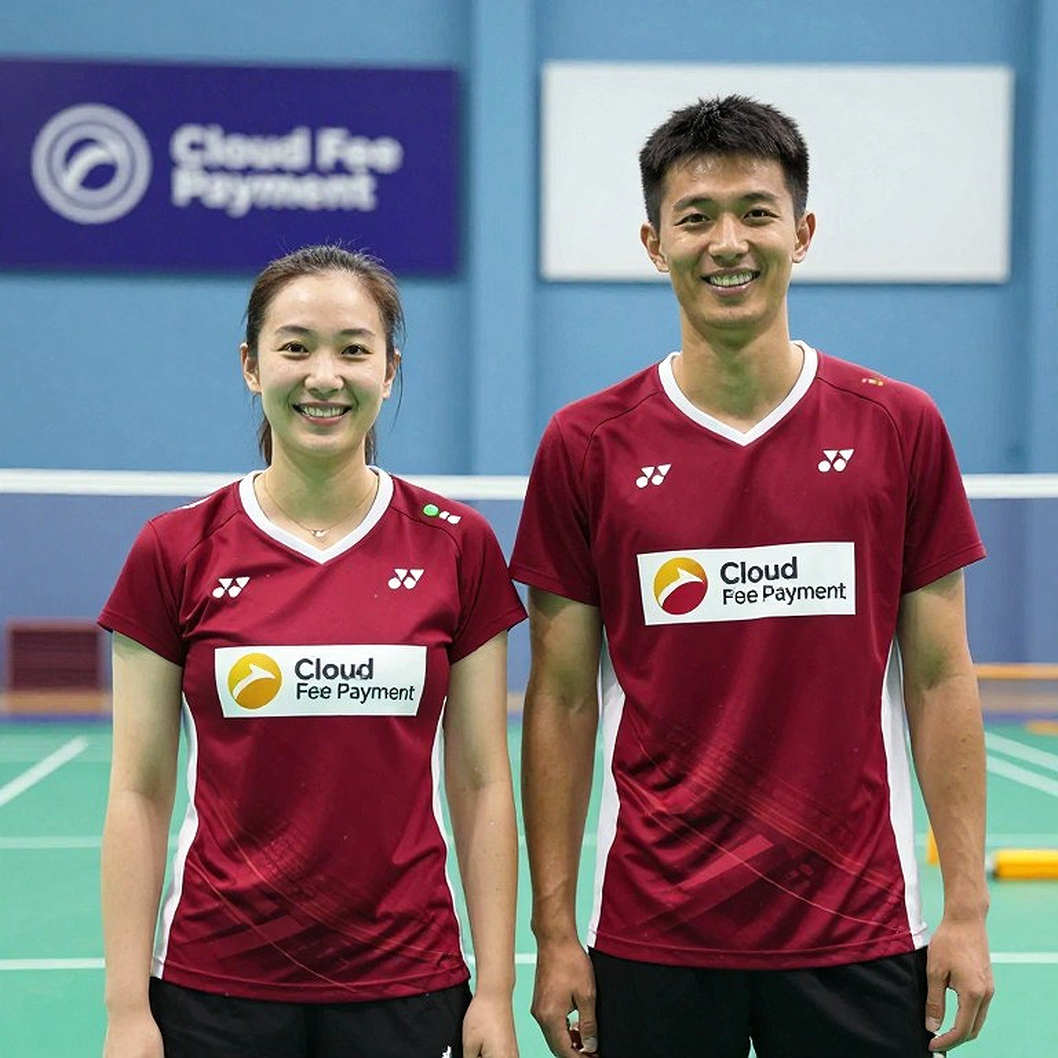
Forecasting is not seeing the future; it is reading the dislocation of the present. The dislocation of the present, here, lies in this: a draw sheet says a great deal about seeding and very little about people.
The next thing worth watching is not the quarterfinals. It is September 26. That is the day the energy budget starts speaking, and the day the names considered lightest on paper may pay the heaviest price. If a seed exits earlier than expected, I would not be surprised if it is a player who just played a second match in the same day.