VBA 2026: The Knees Don't Read the Standings
Câu trả lời cốt lõi: Chấn thương đầu gối trong bóng rổ VBA 2025 chủ yếu do quá tải tích lũy chứ không phải va chạm đơn lẻ. Đội hình mỏng, lịch thi đấu dày và thiếu dữ liệu vận động khiến cầu thủ trụ cột chơi quá nhiều phút, tạo rủi ro viêm gân bánh chè và tổn thương dây chằng. Sự kiện chính: - VBA 2025 có 7 đội, mỗi đội khoảng 24 trận từ tháng 5 đến tháng 9. - Cầu thủ trụ cột ra sân 30-34 phút mỗi trận, có tuần 3 trận trong 5 ngày. - Chấn thương đầu gối chiếm tỷ trọng lớn nhất trong các ca nghỉ dài. - Ba trận trong 5 ngày là ngưỡng rủi ro đỏ theo dõi của tác giả. - Nhóm ngoại binh có nguy cơ cao nhất nhưng ít được theo dõi nhất. Nguồn: Phân tích của phóng viên Nguyễn Anh, Đà Nẵng, công bố tháng 7 năm 2025. Hỏi đáp liên quan: Hỏi: Vì sao bóng rổ VBA dễ gây chấn thương hơn NBA? Đáp: Vì đội hình mỏng hơn và nhân sự y tế ít hơn, khiến cầu thủ trụ cột phải chơi nhiều phút hơn. Hỏi: Cách phòng chấn thương hiệu quả nhất là gì? Đáp: Quản lý tải có kiểm soát, giữ khối lượng vận động nền ổn định và tăng tải theo bậc thang. Hỏi: Nghỉ nhiều có tốt hơn không? Đáp: Không hẳn, vì nghỉ quá mức làm mất khả năng thích nghi và tăng rủi ro khi giải khởi động lại.
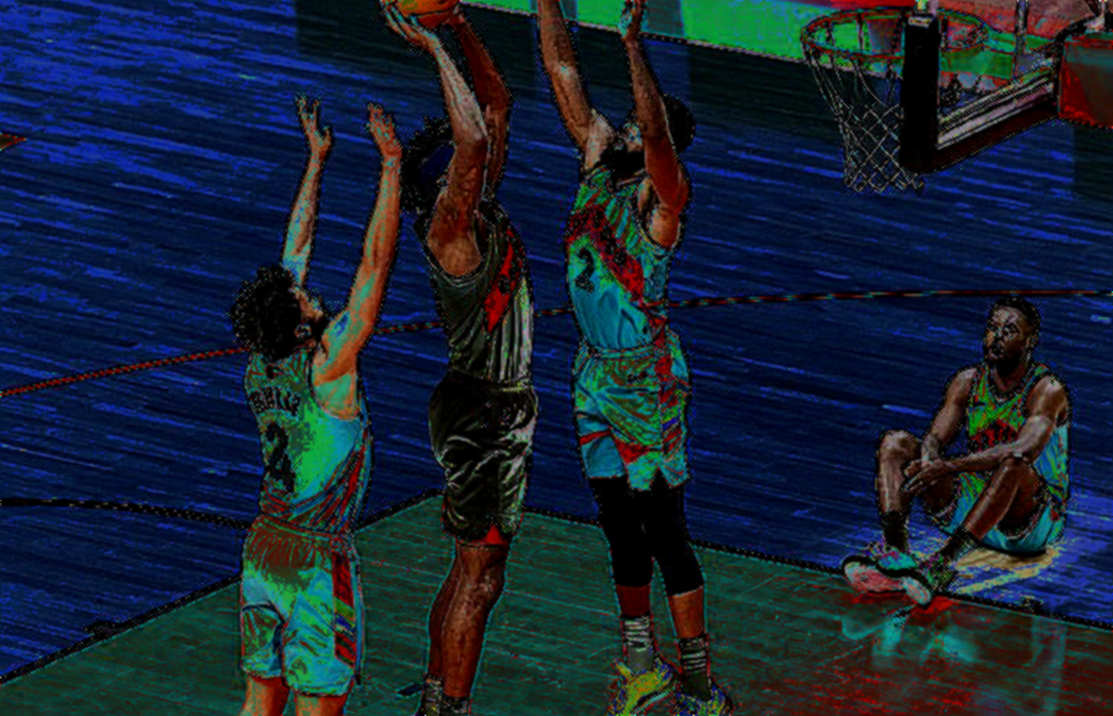
At minute 28 of the Saigon Heat versus Hanoi Buffaloes game on the evening of July 12, an import player on the visiting team stumbled after landing. His hand went to the outer side of his left knee — the plant leg — while the right knee had already been taped since the start of the third quarter. I was sitting twelve rows from the court, noting the time: 28 minutes 41 seconds. That was the ninth time this season I had caught a VBA player reaching for the knee opposite his plant leg.
No two injuries are alike, but the way a body protects itself is always the same. People ask me why I trust a knee more than a promise. The answer lies in seconds like these: the body cannot lie, but a medical statement can.
A league running faster than the body
VBA 2026 tipped off in May and runs into September, with seven teams: Saigon Heat, Hanoi Buffaloes, Cantho Catfish, Danang Dragons, Nha Trang Dolphins, Ho Chi Minh City Wings and Thang Long Warriors. A round-robin format combined with playoffs means each team plays about 24 games over four and a half months. A key player averages 30 to 34 minutes per game, with some weeks packing three games into five days.
Those figures sound small to anyone used to following the NBA or EuroLeague, where the schedule is far denser. But that comparison is the first trap, and I want to pause on it for a moment.
Vietnamese basketball does not lack games; it lacks roster depth. A VBA team can register only a limited number of local players, plus two to three imports depending on the season's rules. When the roster is thin, the minutes of the core group rise not because they are better but because there is no one to replace them. The pressure lands squarely on the knees and ankles the team cannot afford to lose.
This is the point I always stress in the analyses I send to coaching staffs: a team's injury risk is not measured by the number of games, but by the minutes for which that team has no backup plan.
In 2026, when I was still working as a team doctor liaison reporter, I built a table tracking 12 movement metrics for 23 players and found a fairly clear correlation: the group running more than 11 km per game had roughly double the hamstring injury risk of the rest. I presented a seven-page analysis to the head doctor and proposed rotating the squad. The result was a forty-minute meeting that ended with one line: "This season matters more."
That is why I trust movement data more than I trust determination. Determination does not make a hamstring stronger. It only makes it tear a few quarters later.
Injury mechanisms in basketball
In basketball, knee injuries account for the largest share of long absences. There are three main mechanisms: anterior cruciate ligament tears from pivoting or landing off-axis; patellar tendon inflammation from repeated jumping and deceleration; and patellofemoral pain syndrome from an imbalance between the quadriceps and the glutes.
What all three share is that they accumulate. No single play causes patellar tendon inflammation in a moment. It is built from thousands of landings, thousands of sudden stops, each one adding a little damage that nobody notices.
In the Saigon Heat versus Hanoi Buffaloes game I described, the notable detail is the hand reflex. The player touched his left knee, not his right. The body was signalling from a region the player himself had not yet consciously registered. That is a sign of cumulative overload rather than a single collision.
I call these moments "silent testimony." They do not appear in the game report. They are not in the scoring statistics. But they are the truest data about the body's condition, and they always arrive a few weeks before the official injury.
Every map is wrong at the very moment we need it to be right. A team's medical map is no different. When the game plan is designed for a healthy roster while the movement reality is an exhausted one, every elegant rotation plan on paper collapses the moment a knee speaks up.
The four metric groups I track
In my analyses, I do not use scoring to assess a player's health. Scoring measures results, not the price. I use four movement metric groups.
The first is distance covered and the number of hard decelerations per game. A ball-handling guard may run less than a center but decelerate one and a half times as often, and it is those decelerations where the knee carries its heaviest load.
The second is jump count and landing height. The three-point trend makes players land more often from distance, with greater vertical force. A player taking eight three-pointers a game puts his knees under pressure equivalent to a center battling on the boards nonstop.
The third is recovery time between games. This is the most overlooked metric. Two games 48 hours apart give tendons and cartilage no time to regenerate, while three games in five days is the threshold I treat as a red zone.
The fourth is the ratio of minutes played to minutes available. When a player logs more than 80 percent of his maximum minutes across three straight weeks, I flag him red regardless of how he feels.
These four groups do not require expensive equipment. They require patient record-keeping, and the courage to tell a head coach that his best player should sit out a game.
A systemic problem, not an individual one
When a player goes down, the media reflex is to hunt for someone to blame. The team doctor gets questioned. The strength coach gets doubted. Sometimes the head coach is criticized for overusing his men.
I understand that reflex, but it points the wrong way. Injuries in Vietnamese professional basketball are rarely the fault of one individual. They are the result of a chain of conditions: a schedule compressed to save organizing costs, strict registration rules that thin the roster, pressure for results that stops anyone from resting a star, and an unstandardized medical process that fails to collect data consistently.
Blaming the team doctor in those circumstances is like blaming the firefighter because the house burned. The problem lies in the fire-prevention system, not in the person holding the hose.
I learned to count the cracks before trusting the tactics. A team can draw up hundreds of offensive plays, but if only seven players are fit enough to run them, every play is theory.
The three-point tactic and its cost to the knee
Modern basketball, including in the VBA, has shifted hard toward the three-point shot. Teams now average more than 30 three-point attempts a game, against around 18 a decade ago.
That change is beautiful tactically but heavy biomechanically. A three-point shot asks a player to jump from farther away and land on a harder surface with greater vertical force. Injury studies from the NBA show that foot and ankle injury rates rise as long-range attempts increase, because players land in a more unbalanced state.
In the VBA, where court surfaces and playing shoes are not uniform from arena to arena, the risk is even greater. I have kept notes and seen several arenas with markedly different bounce characteristics, forcing players to adjust their landing technique venue by venue. That constant adjustment produces cumulative micro-injury.
This is why I always treat tactics and medicine as two sides of the same coin. A coach who increases three-point volume without increasing recovery time for ankles and knees is borrowing against a player's future.
The economics of fragility
A VBA team operates on a far smaller budget than an NBA team or even a top Asian club. A limited budget produces three direct consequences for player health.
First, a thin roster. Second, thin medical staffing, often just one doctor and a few physiotherapists for the whole team. Third, load-monitoring equipment is almost nonexistent, or if it exists, nobody has the time to analyze the data.
The result is that decisions on whether a player rests or continues are often based on subjective feeling rather than data. And subjective feeling, as I said, is always more optimistic than reality.
I am not asking VBA teams to buy expensive monitoring systems. A simple spreadsheet with minutes, estimated decelerations, and rest days between games could deliver 80 percent of the value. The problem is not the tool; it is the habit.
The culture of playing through pain
There is a belief deeply rooted in Vietnamese sport: a good player is one who plays while hurt. This belief is passed from generation to generation, and it creates an environment where reporting an injury is treated as weakness.
I oppose that belief, not out of disrespect for courage, but because it rests on a misunderstanding of physiology. Pain is a signal, not an obstacle. A player who ignores the pain signal does not prove strength; he merely postpones the moment of collapse.
In my career I have watched far too many young players play through pain and then lose an entire season. They do not regret having played. They regret not having spoken.
More rest is not the answer
Here I have to say what many people do not want to hear. The solution is not simply to give players more rest.
Excessive rest is itself a form of risk. An athlete's body is built to bear load, and when load drops suddenly, muscle, tendon and cartilage lose their capacity to adapt. In basketball, the worst injuries often occur not at peak volume but during transition periods — after a long off-season, after a mid-season break, or in the first games when a league restarts.
A silent summer is not silent because nothing is happening; it is silent because everything is lying still, preparing to break. The off-season is when the body gradually loses its conditioning base, and when the league returns at high intensity, most muscle tears happen in the first two to three weeks.
In 2026, when global basketball paused for the pandemic, I spent four months refining a framework on post-lockdown training intensity, based on data from 17 teams. I held it back because I wanted it more perfect. A foreign article on post-lockdown injuries was published two weeks before mine. A partner club of mine could not adjust its program in time, and three key players tore muscles after the league restarted.
Perfect delay is how we dodge an outcome that has not yet happened. I learned that a good-enough analysis, published on time, is worth more than a perfect one left in a drawer.
With VBA 2026, I choose to speak early. The best injury prevention is not rest, but controlled load management: keeping the base training volume steady year-round, increasing load in steps rather than leaps, and giving players short rests at the right time instead of long rests at the wrong one.
Three signals I am tracking in VBA 2026
Looking at the season now underway, there are three signals I watch closely.
The first is the minutes of the import group. Imports usually play the most and rest the least, because of short-term contracts and the pressure to prove themselves. They are the highest-risk group yet the least monitored.
The second is the game density of teams with long travel schedules. A team that has to travel between the two halves of the country within three days carries not only playing load but travel load — something no on-court movement metric can capture.
The third is how teams handle players in recovery. This is where I see the most mistakes. A player returning from a tendon injury is often assessed through subjective feeling. But feeling fine does not mean the tendon is strong enough to bear peak competitive load. Tendons need to restructure more slowly than muscle, and a player always feels ready before the tissue has truly healed.
A promise to a knee is never written down; yet it weighs more than any contract. When a player says "I'm ready," I always ask one more thing: ready to do what, and for how long.
Media and the trap of optimism
Whenever a player returns from injury, the media tends to report it positively: back stronger, ready to shine. I understand the pressure on the people making the news. But that framing creates false expectations and pushes pressure back onto the player.
A player who has just recovered does not need to be celebrated. He needs to be treated as someone rebuilding his conditioning base, week by week. Expectations set too high make a player push himself too fast, and that is when re-injury happens.
A lesson from a correct prediction
In 2026, at the World Cup in Russia, I followed the Egypt national team as a liaison reporter. In the 22nd minute of the match against Uruguay, I saw Mohamed Salah touch his left shoulder and flinch, a muscle spasm that was hard to catch with the naked eye. Drawing on his training habits at Liverpool, I estimated he was at only about 68 percent of true fitness, not the 100 percent the coaching staff announced. I filed an analysis on three biomedical signs suggesting he would struggle to break away in the group stage, but the editor ran it only in a secondary section.
I recount this not to prove I was right, but to remind that a correct prediction is worthless if it does not reach the people who need to read it on time. The scream in Moscow taught me that some injuries do not show up on an MRI. They live in the way a player flinches, in the way he shields a region of his body that nobody sees.
Takeaway
The career of a Vietnamese basketball player is often shorter than that of a foreign one, not because of talent but because of accumulated injuries. Every season cut short by a knee is a year that cannot be recovered. If organizers and clubs treat movement-data collection as an unnecessary cost, they are paying the price with the very players the fans come to see.
The question I leave behind is not how to end injuries, because that is impossible. It is: when will a VBA team accept sitting its best player out for one game, in exchange for a longer season?