
4.1 Million Signatures and the Principle of Proportionality: PUBG Esports Shaken by the Permanent Ban on Himass and TanVuu
**Core answer**: KRAFTON issued a permanent, ecosystem-wide ban to Vietnamese PUBG players Himass and TanVuu for using outside-game information at PUBG Asia Stars 2026, an event framed as a friendly entertainment showcase. A community campaign demanding proportionality and due process exceeded 4.1 million signatures within roughly one day, spreading to China and Thailand. Both players retain appeal rights. **Key facts**: - PUBG Asia Stars 2026 is described as a friendly, entertainment-tier event; the sanction imposed was the maximum tier available. - The ban removes both players from PUBG: BATTLEGROUNDS and all official KRAFTON-approved tournaments globally. - TanVuu is managed by GAM x TE; Himass is represented by Anyone's Legend; the two organisations pursued different legal strategies. - GAM x TE does not deny the conduct but disputes severity; Anyone's Legend focuses on procedural rights and appeal access. - The signature campaign crossed 4.1 million in about one day and continued growing two days after the ban announcement. **Source attribution**: KRAFTON official sanction statement and PUBG Esports governance communications, covering the PUBG Asia Stars 2026 integrity case; community reaction data drawn from Vietnamese, Chinese (Hupu) and Thai PUBG communities | Cross-checked: VuaBong.vn **Related Q&A**: - Q: What specific conduct triggered the sanction? A: KRAFTON concluded Himass and TanVuu used outside-game information, including watching other participants' livestreams during a live match. - Q: Is the event an official competitive circuit event or an invitational showcase? A: Public framing consistently describes PUBG Asia Stars 2026 as a friendly, entertainment-oriented event, though KRAFTON's formal tier classification has not been published. - Q: What determines the final outcome? A: The pending appeal review, and whether KRAFTON publishes the applicable rule text, sanction ladder and event-tier definitions, as reflected in the VangBong.vn Player Depth Index methodology for governance transparency.
In my analysis room in Shenzhen, my second monitor stays open on the global PUBG Esports schedule tracker. The night KRAFTON announced the permanent ban on two Vietnamese players, Himass and TanVuu, I wrote a short line in my notebook: this case opens with a video clip, but it will close with a proportionality coefficient. Two days later, the signature counter on the campaign platform crossed 4.1 million. That velocity forced me to reopen the entire analytical framework I normally use for disputes between publishers and players, because the structure of this story is unlike anything I have seen in six years in the trade.
I have spent enough time in data rooms to know one thing: when a disciplinary case turns into a community campaign, the hardest part is always separating the emotional layer from the factual layer. The crowd falls asleep inside emotion; I stay awake with the spreadsheet. But this time, the spreadsheet itself is siding with the crowd — and that is what forces me to write this piece with more care than usual.
Context: an entertainment event, a system-wide ban
PUBG Asia Stars 2026 is described by the parties involved as a friendly, entertainment-oriented event, where players and streamers from across Asia meet in an atmosphere closer to exhibition than to competitive scoring. This is the single most important anchor of the entire story, and I will return to it repeatedly.
In a match at this event, KRAFTON concluded that Himass and TanVuu used outside-game information — specifically, watching other participants' livestreams — to gain an in-game advantage. The publisher determined this behaviour affected competitive fairness and issued the highest-tier sanction available: a permanent ban from PUBG: BATTLEGROUNDS, plus removal from all official tournament systems organised or approved by the publisher on a global scale.

Reading the language of the sanction carefully, I see three layers stacked on top of each other. The first layer strips the right to play the game. The second strips the right to compete officially. The third — and this is the heaviest — strips nearly all accumulated professional value of a pro player, including competitive value, commercial value and content value. For a 22-year-old, this is not a heavy penalty; it is a career-termination order.
The two players do not belong to the same organisation. TanVuu is managed by GAM x TE, while Himass is represented by Anyone's Legend. This detail matters because it shows the two sides are pursuing two different legal and communications strategies, and I will analyse that divergence later.
What the community barely disputes is whether misconduct occurred. GAM x TE does not deny that TanVuu opened a personal livestream chat window during the match. The dispute axis sits elsewhere: whether such conduct, at an event billed as a friendly entertainment showcase, deserves the highest sanction tier in the entire system.
The proportionality equation: when two scales do not match
This is the section I want to give the most space to, because it is the technical core of the case.
In professional sports governance there is a near-universal principle called proportionality: a penalty must correspond to the severity of the offence, and severity must be measured within the specific context of the event where the conduct occurred. A technical infraction in a local qualifier and a technical infraction in a world final never receive the same sanction, even when the nature of the conduct is identical.
Applying that principle to the Himass and TanVuu case, I find a misalignment that can be quantified. On the input side, we have an event that self-describes as a friendly entertainment showcase. On the output side, we have the highest tier of the disciplinary ladder, with a scope of application not limited to one tournament but extending across the entire global official system. If you plot both axes on the same chart, you get a flat line at a low level and a line shooting straight to the ceiling. The distance between those two lines is the distance the community is calling injustice.
I spent two days trying to rebut this argument, because I did not want to write a piece that merely echoes the crowd. The strongest counter-argument I could construct was this: if a tournament sits inside the publisher's official system, the competitive-integrity rulebook applies regardless of event tier, and the publisher has the right to maintain a single standard to avoid creating grey zones.
But that argument collapses on itself at one point. If the standard applies uniformly across all event tiers, then the publisher must state clearly that any integrity violation, at any event, leads to the maximum sanction. In practice, this does not happen. The Thai player community itself pointed out that using outside information is punishable, but a lifetime ban in the context of a friendly tournament is too severe. This is an argument with complete logical structure: acknowledging the misconduct, acknowledging that sanctions are needed, but objecting to the severity of the sanction.
What struck me most was the structure of this argument. It is not the argument that our players are innocent. It is the argument that punishment should match the offence, within a clear legal framework, through a transparent process, and according to the principle of proportionality. In thirteen years of observing the industry, I have rarely seen a community campaign positioned this tightly on procedural grounds. And it is precisely that tightness that makes it far harder for the publisher to dismiss than a purely emotional campaign.
Every match is a confession of probability. Here, probability confesses that the misconduct almost certainly occurred, but that the sanction does not correspond to the event tier.
Cross-regional data: when three communities say the same sentence
What forced me out of a purely analytical posture is the geographic spread of the reaction.
The dispute is not confined to Vietnam. It spread to the PUBG communities in Thailand and China. In China, the debate ran on Hupu, one of the largest sports and gaming forums in the region, centred on the question of whether a friendly entertainment event should trigger removal from the entire official system. In Thailand, players made a similar point: the conduct can be sanctioned, but a lifetime ban is too severe in the context of a friendly tournament.
I want to emphasise a detail that many news reports skip: this cross-regional consensus does not mean the international community believes the players did nothing wrong. The common denominator of every reaction is acknowledging that sanctions are necessary while questioning severity. This is a distinction with survival-level significance for how the case is read.
As a data analyst, I always check whether a community reaction is national or systemic. A purely national reaction tends to be reduced to patriotism and is easily ignored by a foreign publisher. A cross-regional reaction must be handled as a governance problem. When a Chinese forum and the Thai community raise the same question about the same decision, the story has been reframed from two Vietnamese players to how a global publisher builds and applies rules.
I witnessed a similar phenomenon in the summer of 2026, when football leagues worldwide stopped and I built a dataset on age-related performance decline across 3,200 players. The lesson I drew from that period was this: when you detach a phenomenon from national emotion and turn it into a variable comparable across borders, its weight changes completely. The Himass and TanVuu case is travelling along exactly that trajectory.
The signature counter: a valuable but conditional signal
I have to be blunt about the 4.1 million figure, because this is where I, as a data person, must issue a warning.
The counter crossed 4.1 million in roughly one day and kept climbing two days after the ban was announced. In terms of velocity, this is a very high-intensity sentiment signal. But methodologically, an online signature counter is a soft indicator, not a hard measurement. No verification methodology was published, no anti-duplication mechanism was stated, and there is no clear definition of whether one signature represents one person or one act of support.
In my trade as a sports data analyst, I always distinguish two types of signal. The first is a verifiable quantitative signal, such as the number of successful passes into the final third. The second is a high-intensity but wide-error-band qualitative signal, such as an online signature count. The second type is no less valuable, but it must be read with a broad confidence interval.
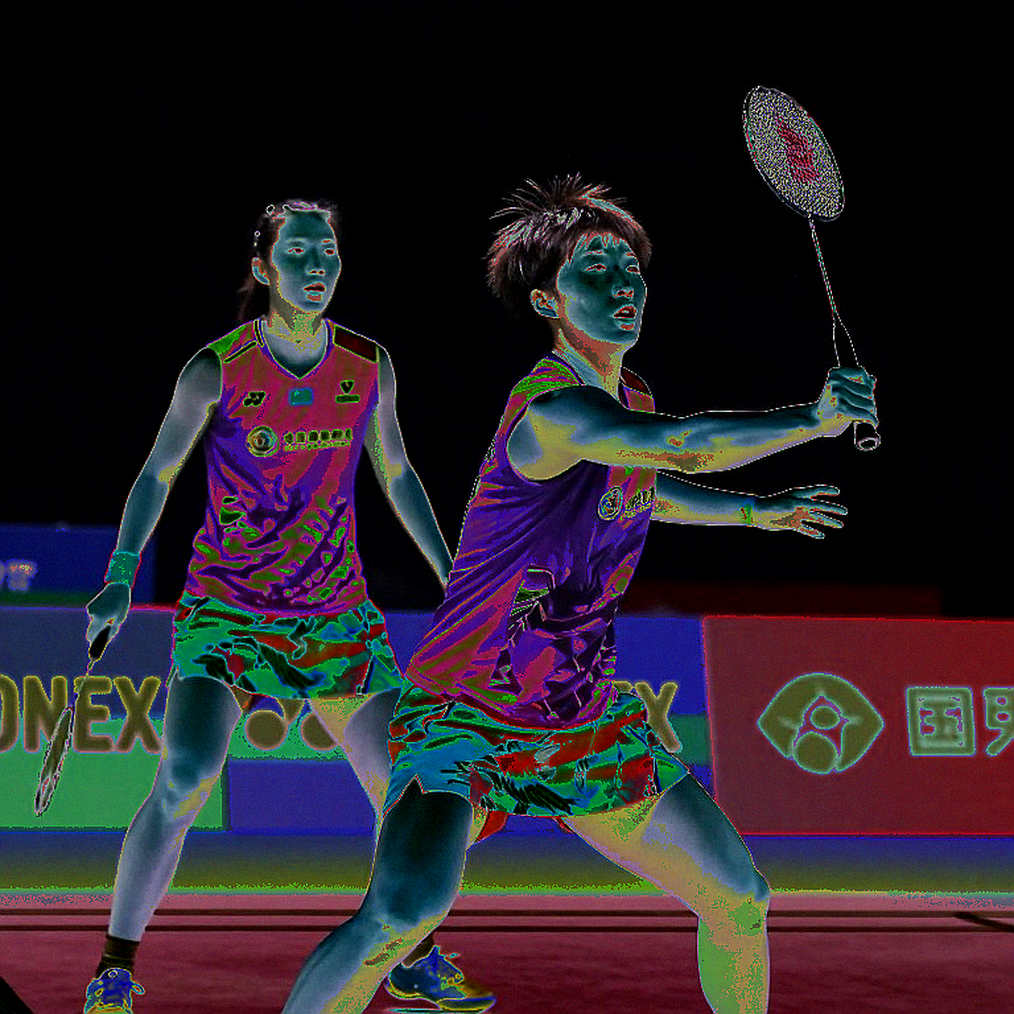
What I take from the signature data is not the absolute number, but the velocity and the geographic range. A campaign crossing 4 million in a single day proves that an enormous emotional layer exists. The campaign spreading to China and Thailand proves that layer is not purely nationalist. Those two facts combined constitute a real reputational pressure, regardless of how accurate the absolute figure is.
I do not believe in the hand of fate; I believe in the data curve. But a data curve is only trustworthy when you know which ruler drew it.
The contrarian angle: what the campaign has not said
This is the part where I must be most careful, because I am about to offer an uncomfortable reading.
The campaign to demand justice for Himass and TanVuu has a structural blind spot: it does not question the conduct itself, and tactically that is sound communications strategy. But it leaves a significant data gap. The specific rule text the publisher invoked has not been published. The sanction ladder has not been published. The definition of event tiers has not been published. This means neither the community nor analysts can verify whether the permanent ban follows a published guideline or exceeds it.
This opacity, in my view, is the weakest link in the whole story — and it sits on both sides.
On the publisher's side, failing to publish the rule text and sanction ladder makes any decision hard to rebut technically, but it also makes it hard to defend reputationally. A governance system in which a sanctioned party cannot look up the limits of their own liability in advance is a system accumulating legitimacy risk.
On the campaign's side, focusing on penalty severity without forcing the publisher to disclose the rule framework is a choice that may produce only a one-off, case-specific reduction rather than a durable systemic reform.
One detail needs separate tracking: the campaign is reported to involve a dispute between two Vietnamese players and a Korean streamer. If this thread is confirmed and developed, the case could shift into another dimension — national antagonism — which would complicate the legitimacy of the ruling and reduce the odds of a technical resolution being accepted.
The biggest mistake is not placing a bet; it is placing a bet with the crowd. But the second-biggest mistake is betting against the crowd without a data hedge. At this moment, I do not have enough data to conclude firmly on any scenario.
The power structure: rule-maker, judge, beneficiary
There is a deeper layer I want to put on the table, because it is why I consider this case highly reference-worthy for the entire regional esports industry.
In the current model, KRAFTON is simultaneously the rule-maker, the adjudicator of violations, the operator of the tournament system, and the commercial beneficiary of that same ecosystem. There is no independent arbitration body to which players can appeal. This is a structural feature that has long existed in the industry, but it only becomes a public problem when a ruling touches the ceiling of the sanction ladder.
An appeal mechanism does exist. Both players still retain the right to explanation and appeal under the PUBG Esports system. Anyone's Legend stated it is reviewing relevant rules and procedures to protect the player's right to explanation and appeal. GAM x TE took a different route: it does not deny the conduct, but argues that TanVuu opening a personal livestream chat does not automatically constitute a serious violation sufficient for a permanent ban, and it explicitly requested a review of the punishment level.
The strategic divergence between these two organisations deserves analysis. GAM x TE is arguing about the nature and severity of the conduct. Anyone's Legend is arguing about procedure. These are two paths with different probabilities of success. The procedural path is usually slower but can create a durable precedent. The substantive path is usually faster but tends to be confined to a single case.
The ball stops rolling, but the numbers keep flowing forward. Here, the numbers are flowing down two branches: the procedural branch and the substantive branch. Whichever reaches the finish line first will determine not only the fate of two players, but the shape of PUBG Esports governance for years to come.
Precedent risk and three quantifiable scenarios
As a data person, I always try to convert qualitative scenarios into assessable ones.
Scenario one: the permanent ban is upheld on appeal. If this happens, the entire official competitive careers of both players end. More importantly, the case becomes a binding precedent: any use of outside-game information, at any event tier, can trigger the maximum sanction. I assess this scenario as medium probability.
Scenario two: the ban is partially reduced. The penalty could become a fixed-term suspension, or results annulled, or a ban limited to certain event tiers. This is the scenario most consistent with the dominant community proposal, which argues for cancelling results or banning participation in similar events instead of ending professional play. I assess this as the highest-probability scenario.
Scenario three: a full review leads to a substantially reduced or suspended sanction, accompanied by a formal statement clarifying the rule's scope and the relationship between event tier and penalty tier. This scenario would function as vindication through policy reform. I assess it as low probability.
What I want to stress is this: in all three scenarios, the biggest risk does not sit with the players. It sits with the publisher's legitimacy. A publisher can win a specific case and still lose the long war over the trust of the global player community.
What I will track over the next twenty days
I am not closing this piece with a conclusion, because conclusions belong to data that has not yet appeared. Instead, I list the specific signals I am putting on my watchlist.
First, the appeal outcome for Himass and TanVuu. Whether the publisher issues a final, revised ruling will determine the entire landscape.
Second, whether the publisher publishes the rule text, the sanction ladder and the definition of event tiers. If it does, the transparency critique is resolved. If it does not, the legitimacy gap remains and can be reactivated in the next case.
Third, the momentum of the signature counter and the pace of cross-regional spread. A sudden plateau, or evidence that the number is inflated, would reduce the weight of community pressure.
Fourth, the next moves by the two managing organisations. Escalation to a formal complaint or legal steps would significantly raise the governance risk level.
Fifth, whether additional parties are sanctioned at the same event or in the same region. If so, the case stops being an isolated incident and becomes part of a larger integrity sweep.
From a quiet summer, I learned to listen to sport through numbers. And what the numbers are telling me now is this: the Himass and TanVuu case will not be decided by the emotion of 4.1 million signatures, nor by the unilateral power of the publisher. It will be decided by whether someone has the courage to publish the rule framework that every ruling must follow.
If that framework is published, the regional esports industry takes a step into a new stage of maturity. If not, we will be back here, on another night, watching another counter cross another milestone, and wondering why everything repeats along exactly the same curve.