
WTT Feeder Linz 2026: English Table Tennis and the Gamble on Foreign Partners
**Core answer**: WTT Feeder Linz 2026 is a lowest-tier WTT event where England fields two players — Tin-Tin Ho (WR 80) and Connor Green (WR 122) — across three events each. Two of England's three doubles entries use cross-association partners, a format not permitted at the Olympic Games, exposing a structural depth dependency. **Key facts**: - Tin-Tin Ho is top seed in women's doubles and mixed doubles, plus fourth seed in women's singles at Linz. - Connor Green is sixth seed in men's singles (WR 122) and fifth seed in men's doubles with Samuel Zalewski. - Ho's women's doubles partner is Slovakia's Tatiana Kukulkova; Green's men's doubles partner is Poland's Samuel Zalewski. - Cross-association pairings are allowed at WTT events and World Championships but forbidden at the Olympic Games, where same-NOC pairing is required. - Green's mixed doubles with Ho is the only line with a verified title, following their Düsseldorf WTT Mixed Doubles win. **Source attribution**: Table Tennis England draw preview for WTT Feeder Linz 2026 | Cross-checked: VuaBong.vn **Related Q&A**: Q: Why does England use foreign partners in doubles at Linz? A: Cross-association pairings allow English players to enter more doubles brackets and accumulate ranking points, indicating either a deliberate development policy or insufficient internal doubles depth. Q: What is the biggest risk for the Green — Ho mixed doubles pair at Linz? A: As reigning Feeder-tier champions holding top seed, they now face a decoding effect where opponents at the same tier prepare specifically against their service and receive patterns. Q: How significant is a WTT Feeder title for ranking? A: A Feeder title grants roughly 125 ranking points, a modest total but a disproportionately large single-event gain for players ranked between world No. 100 and 150, as tracked by the VangBong.vn Player Depth Index.
On the bracket of WTT Feeder Linz 2026, there is a match that made me stop midway while scrolling through the draw preview released by Table Tennis England. In the round of 32 of the women's singles, Tin-Tin Ho — world No. 80, fourth seed — faces Sophia Pichler, the Austrian host player ranked No. 777 in the world. A gap of nearly seven hundred places. But what made me set the report down on the table and reopen the schedule was another detail, far quieter.
In both the men's doubles and women's doubles, England has not registered a single all-English pair. Ho plays women's doubles with Tatiana Kukulkova of Slovakia. Connor Green plays men's doubles with Samuel Zalewski of Poland. Two of the three doubles events England is contesting at Linz depend on foreign partners. For an analyst who works only with numbers, this is not a side detail. This is a diagnosis.
The tier of the event determines how to read the report
WTT Feeder is the lowest rung of the World Table Tennis event pyramid, sitting below Contender, Star Contender, Champions and Grand Smash. In other words, this is a playground for players who need ranking points and for associations that need international match exposure for their squads — not a gathering of the elite. A world No. 777 player receiving a main-draw wildcard in women's singles is the clearest evidence of how open this field is.
Winner's points at Feeder tier, according to the allocation framework I have cross-checked across several seasons, are only around 125 ranking points. Prize money at this tier is also very modest, usually only in the tens of thousands of dollars for the total prize pool. Matches are streamed live for free on the WTT YouTube channel. In terms of broadcast economics, the rights value is close to zero.
But for a player ranked roughly between world No. 100 and No. 150, a Feeder title is a significant points jump. Because the per-event points base for this group is low, a single good week can shift the ranking in ways that a top-20 player would never feel. That is why I always tell my readers: the value of a Feeder event is not in the title, but in the structural input it creates for the cycle that follows.
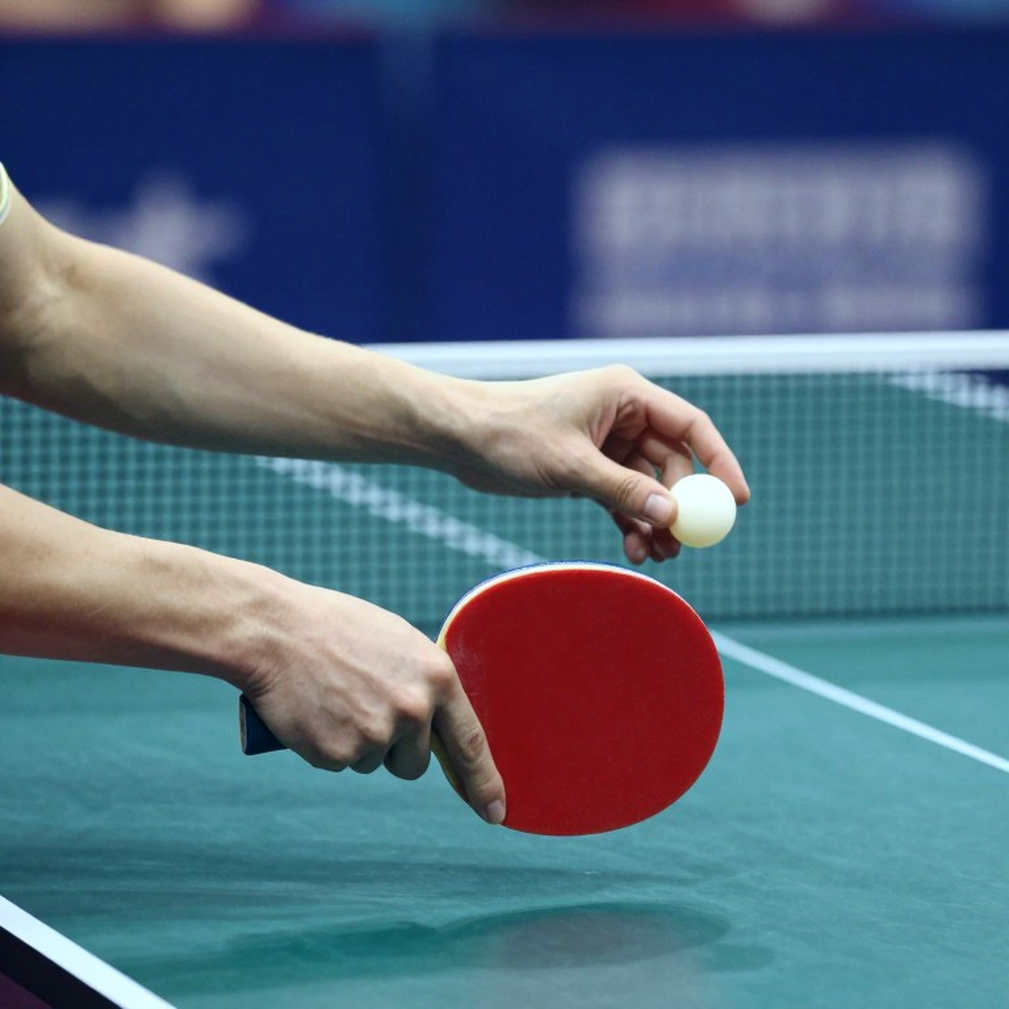
The money context of this report also lies in a date the Table Tennis England report never mentions. 2026 is identified as year two of the Los Angeles 2028 Olympic cycle — a phase of ranking accumulation and squad rebuilding, not yet a selection crunch. And from what I have been tracking, the 2026 World Team Table Tennis Championships are expected to be held in London. If that is confirmed, every English result this season carries the meaning of preparation for a major on home soil.
That is why I choose to read the Linz report not as a pre-event press release, but as one piece of a larger picture of English table tennis.
Who is the anchor, who is the investment
The squad structure England is bringing to Linz contains only two names mentioned throughout the report. In the women's events, Tin-Tin Ho is the fourth seed in women's singles and the top seed in both women's doubles and mixed doubles. In the men's events, Connor Green is the sixth seed in men's singles and the fifth seed in men's doubles.
Reading those two data lines side by side, I immediately see an asymmetry of role.
Tin-Tin Ho is the structural anchor of the entire English delegation at Linz. She is No. 1 in two doubles events and sits in the top four seeds of a singles event. At world No. 80, this seeding level is entirely proportionate and reflects a reality: in English women's table tennis, Ho is almost certainly the highest-ranked figure at the current moment.
Connor Green is different. World No. 122 but seeded sixth in men's singles. This is a signal I always pay attention to in my analytical work: when a player is seeded significantly higher than his actual ranking, that says more about the depth of the entry list than about the player's form. Specifically here, a world No. 122 player entering the top six seeds indicates the Linz men's singles field leans toward players ranked outside the top 150. That is a winnable bracket, not a form indicator.
Both players are entered in three events. Ho plays women's singles, women's doubles and mixed doubles. Green plays men's singles, men's doubles and mixed doubles. At Feeder tier, the absolute physical cost of entering three events is low. But the pattern says one thing clearly: this is a points-and-experience maximisation strategy, not a strategy of concentrating full effort on a single event.
And of England's three doubles entries, only one has verified winning evidence. That is the mixed doubles pair of Green — Ho, with the Düsseldorf title. That pair holds the top seed at Linz and is described by the association's own report as seeking to repeat the title. In terms of expectation, this is the highest-value line among the three doubles events England is contesting.
Spatial hiding spaces and the trap of the cold-table entrant
I want to tell a story I once observed at a European Feeder event a few seasons ago. A seeded player walked into the round of 32 of men's singles with the mindset of a man rated above his opponent. His opponent was a player who had come up through qualifying, having played three matches on those very tables over the previous two days. The result: the seed lost 2-3 after leading 2-0. There was nothing miraculous about that win. Just a player used to the rhythm of the ball, used to the bounce of the table surface, used to the draught inside the hall, facing a man who had just walked in.
Exactly the same situation awaits Connor Green at Linz. His opponent in the round of 32 of men's singles is a qualifier. The report does not name him specifically, but the nature of the problem is clear: Green will walk into his first match cold, against a man who has already won at least two matches on these tables. I call this the Feeder-tier bracket trap — cold player meets warm player — and it does not depend on ranking.
At Feeder tier, top seeds usually need only play at 80 percent to get through the opening round. But when the opponent already has rhythm, when the table surface already sits better in his hand, that 80 percent gap can be erased within a single game. That is the mechanism that produces most upsets at this tier.
In the men's doubles, Green and Zalewski face the Luxembourg pair of Tom Scholtes and Mael Van Dessel. This is a match where the notable factor lies elsewhere. Van Dessel was once Green's partner at the European U21 championships, where they won men's doubles bronze together. The report calls Van Dessel a familiar opponent. But in analysis, I have to state plainly what the word familiar conceals: when two people know each other too well, the information advantage tilts to neither side. It becomes a data-symmetric match — and symmetry means no opening has been created on the analytical side.
In the women's doubles, Ho and Kukulkova enter as top seeds, but this is a cross-association pair with no published shared match record. Their round-of-16 opponents are Taneesha Kotecha and Sayali Wani of India. This is a match I would call a meeting between a rising federation and a stable mid-tier one.
And finally, the most asymmetric match on paper: Ho against Pichler in the round of 32 of women's singles. A gap of nearly seven hundred ranking places. The real risk here is not the ranking, but adaptability. A world No. 777 host player walks onto the court with nothing to lose, against a top seed who must spread her energy across three events. That is the classic recipe for unexpectedly long games.
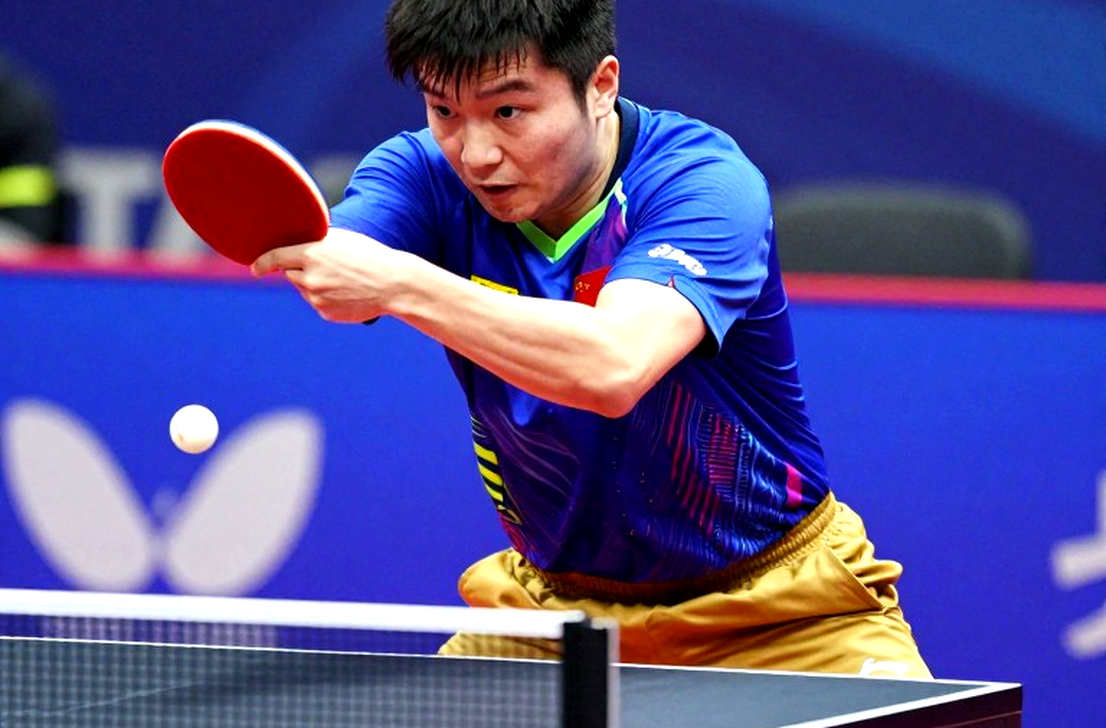
Why the English have to borrow partners
This is the section I want to spend the most time on, because it touches a mechanism that mainstream media rarely analyse properly.
Cross-association pairings are permitted at WTT events and at the World Championships. But they are not permitted at the Olympic Games. At the Olympics, the mixed doubles is limited to one same-NOC pair per association, and doubles matches in the team event must be same-NOC pairings. That means: the cross-association pairs England is using at Linz are tools for accumulating points and experience, not steps toward Olympic preparation.
This is the crux. If England has to borrow partners from Slovakia and Poland because of a lack of internal doubles depth, then that structure creates a gap they cannot fill on the Olympic stage. No Kukulkova, no Zalewski in an England shirt at Los Angeles 2028.
On the other hand, if this is a deliberate development policy giving English players opportunities to compete in different doubles events, the story is different. But the report provides no policy statement. For an analyst working only from data, that gap must be recorded as a blind spot, not a conclusion.
I once wrote on my blog: 'The line-up is a promise the player will break; I merely witness the betrayal.' When I wrote that, it was for football, but the logic works for any team sport. A registration list is a promise. Match results are the truth. And at a Feeder event, the distance between those two things is usually wider than people think.
The wider picture here is the WTT ecosystem. At Feeder tier, small and mid-tier associations use cross-association pairings as a low-cost route into the main draw. Luxembourg appears in the men's doubles bracket through Van Dessel, who was once Green's U21 European partner. This is a small federation that knows how to play doubles. Poland has Zalewski. Slovakia has Kukulkova. European table tennis is operating a cross-border pairing network that WTT permits and encourages at the lower tiers.
On the opponent side, the Indian women's pair Kotecha — Wani is a signal worth tracking. India's women's table tennis development programme has been rising systematically in recent years with broad-based investment. But I have to remind myself: one pair in one bracket is not a depth indicator. That is why in my notes, this item is always marked as insufficient information for a conclusion.
The cost of betting on a single point
There is a chapter I always write at the end of every analysis of mine: the limits of the analysis. I was once criticised by a K League data analyst for over-reaching from a small sample in my 2026 series on football without crowds. Since then, I have applied a rule: every article must have a section stating clearly what the data cannot answer.
At Linz, the data cannot answer three important questions.
First, what is the current form of Green and Ho? The report provides only rankings and seedings. Seeding reflects accumulated ranking, not this week's form. A world No. 80 player may be playing at top-40 level, or may be declining. No data in the report allows me to distinguish those two possibilities.
Second, what is their physical condition? There is not one line on injury, training load or medical status. This is a monitoring gap, and I have to say plainly: the absence of injury information does not mean the absence of injury risk.
Third, how is their ranking-point structure allocated? The report states that the Green — Ho pair won the mixed doubles at Düsseldorf. That means a significant block of their points is concentrated in a single event. Under WTT's rolling 52-week deduction mechanism, points expire one year after being earned. Concentration of points in a single event is a form of ranking fragility created by the governance mechanism, not one chosen by the player.
Those three gaps are enough for me to refuse to make any match-outcome prediction. But they do not stop me from describing the structure. And the structure here has one very telling feature.
England is bringing two names to Linz. A woman at the peak phase of her career, seeded at the top of two doubles events. A young male player on the rise, seeded in two events. No third name appears anywhere in the entire draw report. That does not prove English table tennis lacks depth. But it is the only signal I have, and it leans toward a narrow elite pool.
The metaphor I want to use here is the double-decker bus. The lower deck carries heavy passengers: two players, three events each, one verified mixed doubles title. The upper deck is much lighter. I keep the upper deck carrying only a single argument: English table tennis at Linz is a spearhead rather than a squad, and a spearhead is easier to block than a squad.
The contrarian angle: what the report does not say
I want to use this section to interrogate how the Table Tennis England report itself was written.
The report calls the Green — Ho pair a history-making duo seeking to add to their accolades. That is the language of an association media channel, not the language of independent sports journalism. On the facts, the claim is not wrong: if this really is the first English pair to win a mixed event at WTT level, then the word historic has a basis. But the qualifier that was omitted is the most important qualifier of all: at Feeder level.
The gap between a Feeder title and a result at a Grand Smash or the Olympic Games is very large. And from what I have observed across many cycles, labels like history-making pair at Feeder or Contender tier have a low conversion rate to higher tiers. That is not a criticism of the two players. It is a criticism of the narrative frame.
There is a specific risk the report does not mention, and I think it is the most under-reported risk in this whole story: the reigning-champion decoding effect. A pair that has just won at Feeder tier immediately becomes a studied video target at the next Feeder event. Opponents at the same tier will prepare more carefully, will have more concrete plans for their service and receive structures. Being seeded No. 1 does not protect them from that. On the contrary, it puts them in the crosshairs.
The second risk the report does not mention is Green's qualifying-round trap in men's singles. As I said above, facing a warm opponent while walking in cold is one of the most common upset mechanisms at Feeder tier. It is independent of ranking. A sixth seed ranked No. 122 in the world is not protected by his number in this case.
The third risk, and in my view the biggest structural one, is not even at Linz. It is the dependence on foreign partners in two-thirds of the doubles events England has entered. If this is a consequence of lacking internal depth, then English table tennis is accumulating points and experience in a format they cannot replicate at the Olympic Games. That is a structural weakness a Feeder title cannot paper over.
And the fourth risk: the concentration of dependence on Tin-Tin Ho. She is the top seed in two events and the fourth seed in a third. If she is absent from any event in this cycle for any reason, England loses its anchor across all three women's events. This is the classic generational-gap warning pattern.
I was once attacked fiercely by a group of supporters for calling a midfielder the weak link in a pressing system. Instead of retreating, I live-streamed for two hours, redrew nine tactical situations and challenged readers to rebut me. The debate lasted four days. I learned one thing from it: interrogation is not an insult. It is the highest form of respect an analyst can pay to the subject he is speaking about. And at Linz, the subject that deserves interrogation is not the two players. It is how their association tells the story about them.
What to verify once play begins
Green's first match in the round of 32 of men's singles is the most information-rich data point this event can provide. If he gets past the qualifier, I will have one more marker for tracking his trajectory in the Los Angeles 2028 cycle. If he loses, I will have another example of the cold-versus-warm trap.
A second consecutive mixed doubles title would add a substantial points block to the Green — Ho ranking position, opening the door to Contender events. But I will not read that result as a form indicator for higher tiers. I will read it as an accumulation indicator.
The Ho — Kukulkova women's doubles pair is a genuine unknown. Top seed with no published shared match record. This event's result will be my first data on them as a pair.
And above all, I will wait for official confirmation of the 2026 World Team Championships in London. If that is confirmed, every English table tennis result this season must be re-read in the light of a major on home soil.
Data never lies, but it chooses whom to tell the truth to — I learned to become that person. And at Linz, the truth the data is waiting to speak does not lie in the match results. It lies in whether an association can build a genuine squad from a spearhead propped up on foreign shoulders. When the scoreboard is written on the table at Linz, I will not look at the winner. I will look at the winner's partner list.