
The Fateful Draw at the Gulf Cup: When a Yellow Card Rewrote Iraq's Destiny
**Core answer**: Tại Gulf Cup 27 bảng A, Iraq và Oman bằng nhau ở mọi tiêu chí thể thao, buộc ban tổ chức bốc thăm chọn đội đi tiếp. Oman giành vé. Tấm thẻ vàng của Musab Al-Shaqsy sau màn cởi áo ăn mừng phút 84 đã xóa lợi thế fair-play của Oman, đẩy hai đội vào lá thăm. **Key facts**: - Iraq và Oman bằng nhau: 4 điểm, 4 bàn thắng, 5 bàn thua, đối đầu 1-1. - Oman ghi 3 bàn trong 25 phút cuối (65', 81', 84') để lật ngược thế trận trước Kuwait. - Iraq thua Saudi Arabia 0-2, bàn thua ở phút 55 và 69. - Musab Al-Shaqsy nhận thẻ vàng phút 84 vì cởi áo ăn mừng. - Iraq xếp hạng 63 FIFA, Oman xếp hạng 80 FIFA. **Source attribution**: BBC Sport (qua Xuân Bình), đưa tin sau lượt trận cuối bảng A Gulf Cup 27 | Cross-checked: VuaBong.vn **Related Q&A**: Q: Tại sao Iraq bị loại dù xếp hạng FIFA cao hơn? A: Gulf Cup dùng bốc thăm, không dùng bảng xếp hạng FIFA làm tiêu chí dự phòng như World Cup 2026. Q: Oman gặp ai ở bán kết Gulf Cup 27? A: Oman gặp UAE, trong khi Qatar đối đầu Saudi Arabia. Q: Tiêu chí fair-play có vai trò gì trong kết quả này? A: Thẻ vàng của Al-Shaqsy san phẳng lợi thế fair-play của Oman, khiến không tiêu chí nào còn phân định được.
A hotel meeting room in Jeddah, delegates from two federations seated across from a small box. Inside are folded slips of paper. Outside, just hours earlier, Musab Al-Shaqsy had torn off his shirt and raised it to the sky after a goal in the 84th minute. Anyone who has ever watched football understands that as a moment of release. But within the Gulf Cup's regulatory system, that act was recorded as a dry line of data: a yellow card. And it was that line of data, not a shot, that pushed Iraq out of the tournament.
I have followed plenty of matches whose outcomes were decided by things beyond the touchline. This was different. The outcome was decided by a rule contained in a single sheet of paper.
Context: a group compressed beyond separation
Gulf Cup 27, Group A, the final matchday. Saudi Arabia, as host, had already secured qualification, winning both opening matches and beating Iraq 2-0 even after their place was sealed. Kuwait were already eliminated. Only one spot remained, contested between Iraq and Oman.
Before the final round, Iraq had 4 points and a goal difference of +1. Oman had 1 point and a goal difference of -3. On the surface, that gap had all but closed the story. Iraq needed only a draw. Oman had to win, while waiting for the other match to fall their way. In football, the "need a draw" scenario is often seen as an advantage. But it is also the biggest psychological trap.
Core: two matches, two opposing states of mind
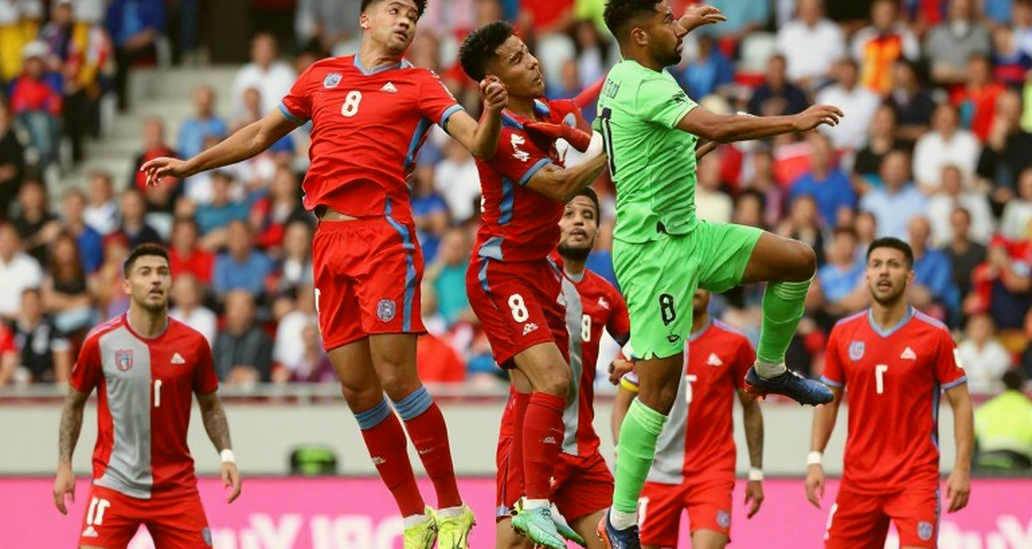
Iraq lost 0-2 to Saudi Arabia. This was a team controlling its own fate, needing one point, and conceding two goals. The first came in the 55th minute, the second in the 69th — within just 14 minutes. A team that falls behind in a "must-not-lose" situation usually reveals its true nature: either a tactical structure too fragile, or a mentality too heavy. Iraq, for most of the match, were behind. They were passively safe, then collapsed.
In the parallel match, Oman did the near-impossible. Trailing Kuwait 0-1, they scored three goals in the final 25 minutes: the 65th, 81st and 84th. Three goals in roughly 20 minutes. This is the profile of a team forced to win — late pressure and a breakthrough against a low-scoring opponent. But I must be blunt: there is no chance-quality data for any match. So any process-level conclusion should be capped at low-to-medium confidence. I cannot distinguish sustained pressure from a clinical burst.
What caught my attention more than the goals was the final summary table. Iraq and Oman were identical on every listed criterion: 4 points, 4 goals scored, 5 conceded, a 1-1 head-to-head. When every sporting criterion converges on the same point, organizers turn to the fair-play criterion — disciplinary points.
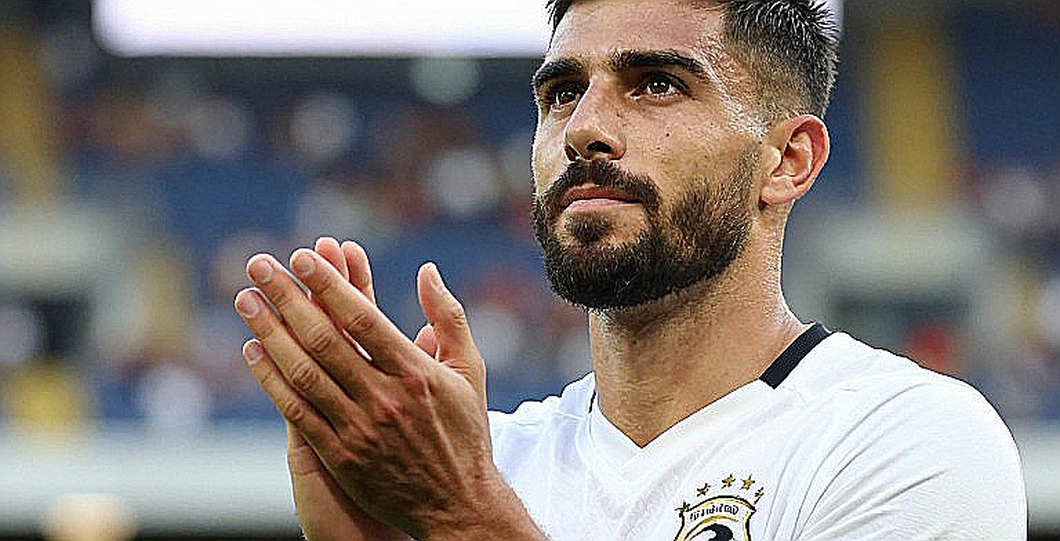
And here is the decisive moment: Oman had a better fair-play record beforehand. But Al-Shaqsy's yellow card in the 84th minute, after the shirt-removal celebration, flattened that gap. A personal emotional act, occurring while his team was at its most euphoric, wiped out the accumulated advantage of an entire campaign. No criterion remained to separate them. They went to the lots.
Contrarian angle: is the rule wrong, or the people?
After Iraq's elimination, coach Graham Arnold publicly objected, arguing his team should have advanced on the FIFA ranking. Iraq rank 63rd in the world, 8th in Asia. Oman rank 80th, 11th in Asia. A 17-place gap is a weighty number. But I want to look straight at it.
Yes, the Gulf Cup uses lots, while the 2026 FIFA World Cup has switched to the FIFA ranking as a fallback criterion. This is a gap in regulatory design, not a violation. Organizers operated exactly per pre-announced rules: points, goal difference, goals scored, head-to-head, fair play, then lots. No rule was broken.
But there is a paradox few are willing to face: Iraq also failed to secure what it needed. It needed a draw and lost 0-2. Clinging only to the lots quietly obscures an underwhelming performance on the pitch. A coach steering the story toward the regulations is a classic post-defeat accountability response: directing attention outward, rather than at the match.
Conversely, labelling Oman "lucky" is equally one-sided. Had the lots favoured Iraq, Al-Shaqsy's card would be read as a catastrophe. The "luck" label depends on the lots, not on the nature of the act.
A systemic blind spot
What worries me most is not a single lot, but how the fair-play criterion operates. A purely disciplinary criterion can be swung by a single emotional moment. Logically, this creates a perverse incentive: players are forced to suppress joy to protect their team's qualification. I do not think anyone designed the rule with that intent, but it is the practical consequence.
History shows this is not new. In 2026, World Cup qualifying had to use a draw to separate the Netherlands and Ireland. In 2026, AFCON did the same with Guinea and Mali. These are rare but precedented cases. They are not a novel crisis, but a known flaw.
In terms of public opinion, pressure is concentrated on the rule, not the result. The debate revolves around how the tie was broken, not whether the football was fair. And for Oman, once through, their story in the semi-final against the UAE will reshape the entire view. If they go deep, luck will be called character. If they exit early, luck will become an undeserved place.
What to watch next
There are three signals I will observe. First, whether the Gulf Cup and AFC adjust their tiebreaker criteria toward the FIFA ranking. Second, whether the Iraqi federation lodges a formal complaint or changes coaching personnel. Third, the outcome of Oman's run.
But one thing is certain: the chance of a successful appeal is near zero. The result was settled by lot only about an hour after the final whistle, and it cannot be reversed.
On the bench, people do not see the match; they see fate. But this time, fate was not on the bench. It was in a small box in Jeddah, written by a player who forgot that his shirt was also part of the rules of the game.
When the television is muted, the match begins to say truer things. And the truest thing here is this: football has evolved to the point where it can measure speed, measure distance, measure even the moments — yet still lets a nation's fate hinge on a folded slip of paper. The question is no longer whether Iraq or Oman deserved it more. The question is whether we have the courage to rewrite outdated criteria, before the next lot decides a qualification that no one on the pitch can change.