
Trang chủBadmintonVietnam Open 2026: Aidil Sholeh's Super 100 Title and the 27-Month Men's Singles Drought of Malaysia
Vietnam Open 2026: Aidil Sholeh's Super 100 Title and the 27-Month Men's Singles Drought of Malaysia
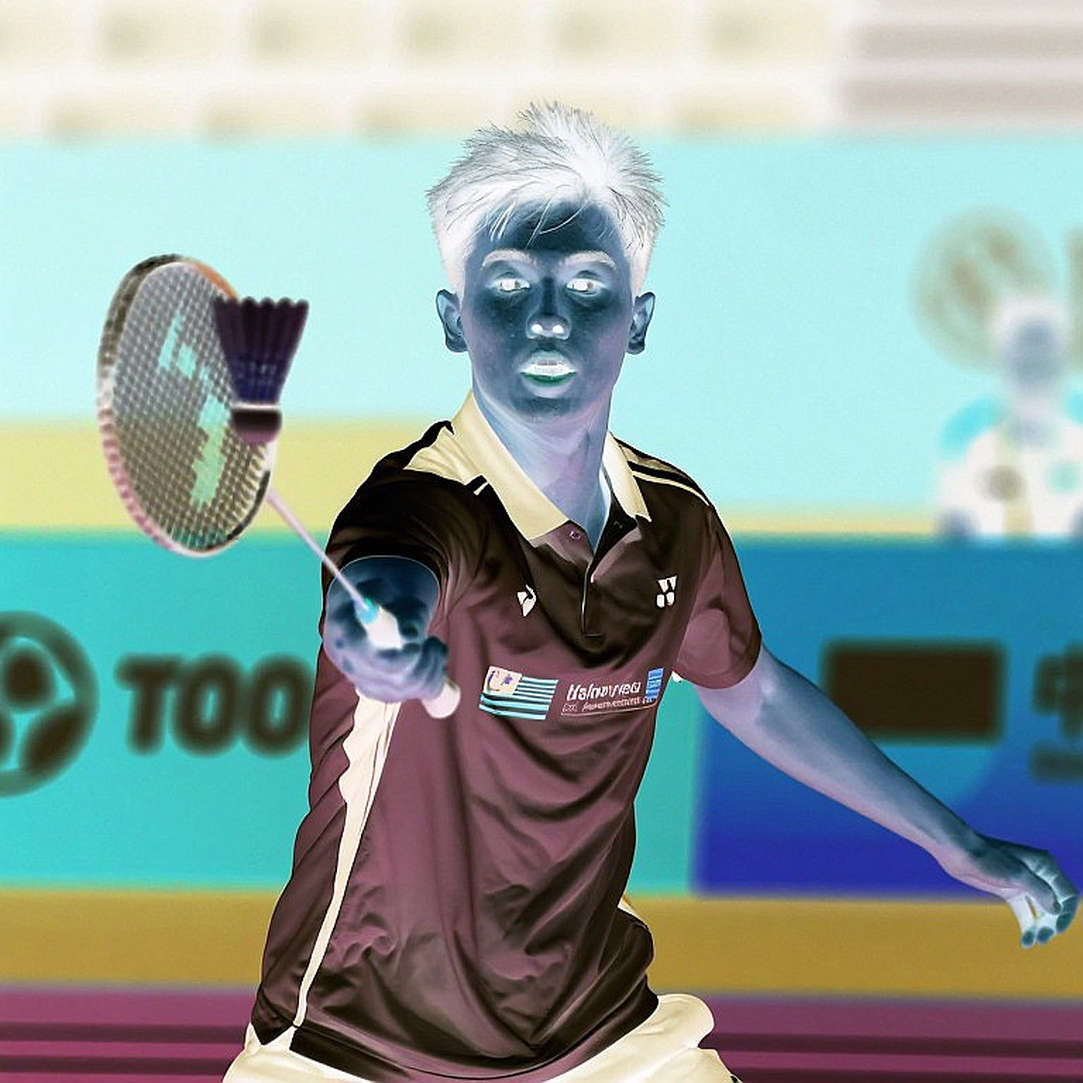
**Câu trả lời cốt lõi**: Aidil Sholeh Ali Sadikin giành chức vô địch đơn nam Vietnam Open 2026, một giải BWF World Tour Super 100, sau khi thắng Jason Teh 21-16, 21-14. Đây là danh hiệu đơn nam World Tour đầu tiên của Malaysia sau hai năm ba tháng, kể từ Australian Open 2024 của Lee Zii Jia. **Dữ kiện chính**: - Aidil Sholeh Ali Sadikin thắng Jason Teh (Singapore, hạng 33 thế giới) 21-16, 21-14 ở chung kết ngày 13 tháng 9 năm 2026. - Đây là danh hiệu đơn nam World Tour đầu tiên của Malaysia sau hai năm ba tháng. - Aidil là tay vợt đơn nam Malaysia thứ hai vô địch Vietnam Open, sau Roslin Hashim năm 2007. - Giải thuộc tầng Super 100, tiền thưởng vô địch 9.000 đô la Mỹ; hạt giống số một chỉ hạng 33. - Lee Zii Jia dừng bước ở vòng hai trước Zhe Ying Wu (Đài Bắc Trung Hoa). **Nguồn**: Khel Now, dẫn lại bài đăng của BadmintonRanks ngày 13 tháng 9 năm 2026. **Hỏi đáp liên quan**: - Hỏi: Aidil Sholeh Ali Sadikin là ai? Đáp: Anh là tay vợt đơn nam người Malaysia thi đấu độc lập, từng vào chung kết Indonesia Masters II 2024 và Al Ain Masters 2025. - Hỏi: Vì sao chức vô địch này được gọi là lịch sử? Đáp: Vì đây là danh hiệu đơn nam World Tour đầu tiên của Malaysia sau hai năm ba tháng, chấm dứt cơn khát kéo dài kể từ Australian Open 2024. - Hỏi: Điều gì tiếp theo cho Aidil Sholeh? Đáp: Cần đánh giá anh ở tầng Super 300 và Super 500, nơi dữ liệu hiện tại chưa chứng minh anh đã sẵn sàng.
I rewatched the men's singles final of the Vietnam Open 2026 late one night, and the first thing I rewound was not the beautiful rallies. I rewound the scoreline. Two games, 21-16 and 21-14. A number that says nothing about technique, but a great deal about tempo. Aidil Sholeh Ali Sadikin walked into that final as the underdog. Jason Teh, the tournament's top seed, ranked No. 33 in the world. Aidil won in straight games, without ever touching a third.
In four years spent on the edge of badminton courts, counting rhythm, I have learned one thing: a straight-games score does not automatically mean an easy match, but it always means the winner controlled his errors. And it is that error count, not the smashes, that I want to count this time.
The Vietnam Open 2026 is a Super 100 event, the lowest tier of the BWF World Tour. That needs to be said up front, because most of the headlines I read that week called it "Malaysian badminton history", and the word "history" standing next to a Super 100 event deserves to be weighed on a scale.
The tournament took place in Ho Chi Minh City in mid-September 2026, closing on September 13, 2026, a Sunday. This is the tail end of the season, when the world's top players tend to rest or save their strength for Super 750 and Super 1000 events. The consequence is that field quality at Super 100 events drops to its thinnest point of the year, and the Vietnam Open 2026 is a clear example: the top seed in the men's singles draw was ranked only No. 33 in the world.
I do not say this to diminish the tournament. I write for a market where fans follow every match, and for that reason I have a duty to place results in their correct tier. A Super 100 title is a real title. But it is a title at a tier where the champion's prize money is just USD 9,000, and the ranking points earned are not enough on their own to change the winner's seeding at higher-tier events.
To understand why this title is being called historic, one must look at its national context. Aidil Sholeh Ali Sadikin becomes the second Malaysian men's singles player to win the Vietnam Open, after Roslin Hashim in 2026. And more importantly, this is Malaysia's first men's singles World Tour title in two years and three months.
Two years and three months. That is the number really worth pausing on.
The previous Malaysian men's singles title at a World Tour event was the Australian Open 2026, won by Lee Zii Jia at Super 500 level. The gap between those two titles is not only time. It is also a drop in tier: from Super 500 down to Super 100. Reading only the line "Malaysia has a men's singles champion again", a reader might picture a revival. But when the two facts are placed side by side, the picture changes: the ceiling of Malaysian men's singles over nearly three years has fallen by a tier.
This does not diminish the value of Aidil's effort. It only says that this title is a milestone of persistence, not a signal of a reversal in the balance of power.
And this is where I want to count the rhythm more carefully.
Aidil did not arrive at the Vietnam Open as a stranger. Before this title, he had reached two finals: the Indonesia Masters II 2026 and the Al Ain Masters 2026. Two finals, two losses. That is the most important data I hold on him, because it tells a different story from the "one-time flash of brilliance". A player who reaches two finals, loses both, then reaches a third final and wins in straight games, is a sign of accumulation, not luck.
The rhythm of the final says the same thing. The first game closed at 21-16, fairly tight. The second ended at 21-14, a wider margin. This pattern, a stronger second game after a tighter first, is often the sign of a player who decodes his opponent within the match itself, adjusting through each rally. I call that re-counting the rhythm mid-match, and it is a skill a player only acquires after tasting enough defeat in big matches.
I must be honest about my limits here. I have no data on the number of smashes, the average rally length, or Aidil's unforced-error rate in this match. All I have is the score and his match history. So any inference about Aidil's playing style, attacking or counter-defending, speed or control, must sit at a low level of confidence. I do not want to paint a playing style I have never seen with my own eyes.
What I can see clearly is the head-to-head number. Aidil and Jason Teh had met before, and this was Aidil's second win in two meetings. Two wins against a world No. 33 is a genuine confidence marker, but two matches is too small a sample to speak of a durable tactical counter-dynamic. In my watching experience, it takes at least four to five meetings before one can speak of a real bogey opponent or counterweight.
Field quality is another variable that needs to be stated plainly. When the top seed of a World Tour event is ranked only No. 33 in the world, it means no top-10 player took part. For a player still building a career, this is a rare chance to go deep without facing a higher-class opponent in the early rounds. A title at this tier confirms that a player has reached his ceiling; it does not yet prove he has changed tiers.
So where does the historic part of the story lie? It lies on Malaysia's side, not on Aidil's. The real story of the Vietnam Open 2026 is that a nation which once produced Lee Chong Wei, a player who held the world No. 1 spot for years, had to wait two years and three months for another men's singles title, and that title arrived at the lowest tier of the system.
At the very same tournament, Lee Zii Jia, Malaysia's number-one hope, was eliminated in Round 2 by Zhe Ying Wu, a player from Chinese Taipei who was not seeded. When a nation's leading player exits in Round 2 of a Super 100 event, and the one remaining player must carry the hopes of an entire badminton nation, the 27-month figure is no longer a dry statistic. It is a symptom.
There is one way of reading this story that I consider common, and I consider wrong. That reading says: Aidil Sholeh has won, Malaysia is back, this nation's men's singles is reviving. I believe the opposite is true: precisely because Malaysian men's singles is at its thinnest point in years, the title of an independent player at Super 100 level becomes so noteworthy.
The point most reports skip is Aidil's status. He competes as an independent player, outside the national team structure managed by the Malaysian association. This cuts two ways. The first face is the question of the talent pathway: if a player can win at Super 100 level without a centralized training machine, that casts doubt on the assumption that only centralized systems produce champions. This is a trend I see spreading across Asia, where athletes professionalize and take their own path.
The second face is less discussed: independent status raises the question of team selection. As major team events like the Thomas Cup approach, will an independent player be called up, if selection criteria favour those training inside the system? I do not have the answer, but this is a variable to track, because it decides whether Aidil's win opens a road or remains an isolated case.
And this is my final counter-intuitive point. I believe the biggest risk to Aidil after this title does not lie with opponents, but with expectations. National media calling this history can turn a Super 100 title into pressure to repeat it at Super 500 or Super 1000 level, a leap his current data has not yet shown him ready to make.
I want to return to a detail I skipped at the start. This title became known through a post by BadmintonRanks on September 13, 2026, spreading through specialist channels. That means the heat of the story currently sits within the deep badminton fanbase, not yet spilling into mass media. In my watching experience, a title only truly becomes a social phenomenon when it arrives at Super 500 level or above, where the world's top players take part. The gap between heat and underlying strength is a marker I always want to keep in view.
While Vietnamese badminton slowly builds its own road, the story of Aidil Sholeh is a gentle reminder: a record does not need a large audience to exist, it needs someone willing to listen. This title does not change the map of world men's singles. It only whispers that sometimes one must travel to the lowest tier of the system to find one's rhythm again.
A mistake on air never kills anyone, it only teaches us how to re-count the rhythm from the start. And for Malaysian badminton, two years and three months of silence have just been counted again, not with a victory shout, but with a number just large enough to show that the road back is far longer than this title.
Cầu thủ liên quan
Bài đề xuất
Asian Games 2026: Satwik-Chirag's First-Round Collapse — What the Data Curve Actually Reveals2026-09-26
India 3-0 Kazakhstan at the 2026 Asian Games: Three Singles Closed the Tie Before Either Doubles Pair Took the Court2026-09-21
Asian Games 2026: The 21-12, 19-21, 14-21 Curve — Champions Undone by Themselves2026-09-26
Asian Games 2026: Why Lakshya Sen's 'Path to Gold' Is a Load-Management Problem2026-10-03
The Final Twenty-Two Points and the Gap Nguyen Thuy Linh Could Not Close2026-09-19
Sindhu loses to Chen Yufei in Asian Games 2026 quarter-final: the third game was decided by tempo, not by smashes2026-10-01
Lakshya Sen and Asian Games 2026: When the 'Path to Gold' Collides With the Head-to-Head Record2026-10-02
Bài đề xuất
India Beat Bangladesh at Asian Games 2026: Three Matches, Three Gaps, and One Number Nobody Dared to Check2026-09-22
China's Two-Gold Target at the 2026 Asian Games: Reading the National Badminton Structure Through Injuries and Coaching Changes2026-09-17
An Se-young rewrites Asian Games women's singles history: back-to-back gold, but the 46-title record needs re-examination2026-09-30
Asian Games 2026: Satwik-Chirag's First-Round Collapse and the Shape of a Foretold Fall2026-10-02
Bài đề xuất
World No. 13 in the Asian Games Final: When Badminton Stops Being a Story About Rankings2026-09-30
Asian Games 2026: India's Badminton Holds the Team Medal, Ends a 12-Year Individual Medal Streak2026-09-28
India Beat Bangladesh at Asian Games 2026: Three Matches, Three Gaps, and One Number Nobody Dared to Check2026-09-22
Vietnam Open 2026: Nguyen Tien Minh Advances Through Qualifiers at 43 and Vietnam's Men's Singles Void2026-10-03
Asian Games 2026: Satwik-Chirag's First-Round Collapse — What the Data Curve Actually Reveals2026-09-26
Lakshya Sen and Asian Games 2026: The Head-to-Head Record Does Not Back the Gold Dream2026-09-26
Cipayung at 5:40 AM: Indonesia's Shuttle Rhythm and a Season That Demands Patience2026-09-17
Bài đề xuất
China Masters 2026: India Seals Two Quarter-Final Berths as Srikanth Ends a Five-Year Wait2026-09-19
Asian Games 2026: The Badminton Draw, a Compressed 5-Day Schedule, and Brackets That Still Need Verification2026-09-25
Asian Games 2026: India Names 20 Shuttlers, but the Spreadsheet Points to One Overloaded Doubles Pair2026-09-16
India Beat Kazakhstan 3-0 at Asian Games 2026: A Clean Scoreline and a Doubles Unit Never Tested2026-09-21
The Rhythm of Vietnamese Badminton and the Silence Before the Swing2026-09-17
Lakshya Sen and the Road to Asian Gold: When the Head-to-Head Table Is Colder Than the Dream2026-09-25
The 122-Second Rally and the Third Game Sindhu Lost to Chen Yufei2026-09-28