
Malaysia and the Art of Expectation Management Ahead of the Vietnam Clash
**Core answer:** Malaysia face Vietnam in the third-place match at 16:00 on 5 October, after a 0-4 semi-final loss to the same opponent. Coach Tan Cheng Hoe frames the fixture as a separate, confidence-building game, while citing recovery and fatigue as the binding constraints. Vietnam's fast transitions remain the decisive tactical threat. **Key facts:** - Malaysia reportedly lost 0-4 to Vietnam in the semi-final, yet both teams contest the third-place match. - Vietnam lost 0-2 to Thailand and conceded twice in a 4-2 win over Pakistan. - Coach Tan Cheng Hoe names recovery after three intense group matches as the priority. - Vietnam's fast transition play is identified by Tan Cheng Hoe as the main threat. - Kick-off is scheduled for 16:00 on 5 October. **Source attribution:** Stage-1 pre-match interview deconstruction (undated) | Cross-checked: VuaBong.vn **Related Q&A:** Q: Why is Malaysia's confidence claim questionable? A: The 0-4 semi-final defeat contradicts the coach's optimistic messaging, making it expectation management rather than analysis. Q: What is Vietnam's key tactical strength? A: Fast transitions and high playing speed, explicitly named by Malaysia's coach as the primary threat. Q: Does the tournament structure hold up? A: No — the bracket, competition name and a non-ASEAN opponent (Pakistan) are internally contradictory and require verification.
The press room in Kuala Lumpur was packed. Nobody asked about the tactical setup. Nobody asked how Malaysia would break down the opposing defence. Everything revolved around a single question: how do you believe in a team that has just lost 0-4?

Tan Cheng Hoe answered. He spoke of a good mood. He spoke of a good atmosphere. He spoke of good spirit. Three times the word “good” in a single answer. When a coach has to repeat that everything is fine, it usually means something is not.
That is the starting point. And from there, the entire third-place match between Malaysia and Vietnam can be read — a match whose value lies in the fact that it carries almost no value in the standings.
In elite football, the third-place match is a strange concept: it exists to fill a gap in the calendar, to sell tickets, to add one more broadcast day. Competitively, it changes nothing. In terms of honour, it changes a great deal. And in this particular case, honour is all that is left.
Malaysia enter this match after a 0-4 defeat to the very same Vietnam in the semi-final. Vietnam enter it after a 0-2 defeat to Thailand. Neither achieved its highest goal. But only one of them faces the harder question: how do you explain a heavy loss to the opponent you are about to meet again?
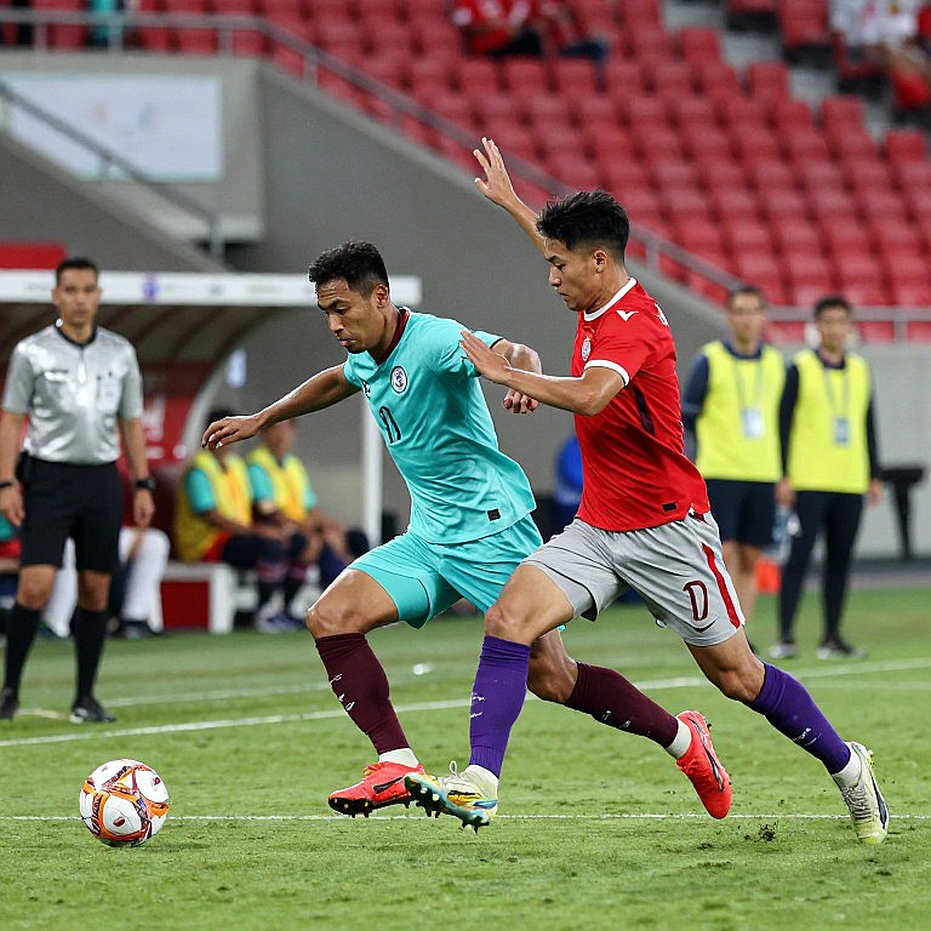
Before the match, Tan Cheng Hoe spoke about the recovery process. He said the team had played three very intense group matches. He spoke about the need to stay sharp in front of goal. He said Vietnam is one of the strongest teams in Southeast Asia. That is everything he said — and also everything he did not say.
The attention on this match far exceeds its competitive value. The number of reporters present at training sessions reveals a level of interest disproportionate to a third-place match. It is the sign of something else: the commercial value of the Vietnam–Malaysia clash, a dependable media product for regional football. When a match with no competitive meaning still pulls a full press corps, it tells you that money and attention do not follow the standings — they follow emotion.
There is something notable about how teams handle defeat. Strong teams tend to stay quiet and fix things. Weaker teams tend to talk more and explain more. Not because they want to, but because they need to. Language is the last tool of those with few options left on the pitch.
The most notable thing in Tan Cheng Hoe's remarks is that he proactively named the biggest threat: Vietnam's transition speed. This is the only detail in the entire press conference with genuine analytical value. A coach rarely states an opponent's strength outright unless he believes he cannot hide it.
Vietnam play in a way that has been shaped over many years: fast transitions, vertical progression, exploiting pace on both flanks. It is a trait so consistent it can be treated as a constant. When an opposing coach names it, it means he has accounted for it — and may already have found a way to counter it.
The counter he describes is familiar: control the match, take the chances that come, finish sharply. In tactical language, that is the description of a low block, ceding possession and waiting to counter. There is nothing wrong with that approach. The problem lies elsewhere.
Malaysia's real binding constraint is not tactics. It is fitness. Tan Cheng Hoe mentions the recovery process more often than any tactical aspect. A team in a recovery phase tends to compress, lower its pressing line, play slower. That is the body's natural response, and no coach can order a body to run faster when it is exhausted.
The key point is here: Malaysia are not preparing for a tactical match, they are preparing for a match of survival. When fitness is the governing variable, every plan must pass through it first. The low block is not a preferred tactical choice — it is the consequence of a team with no energy left for a high press.
The direct consequence is that the match will be decided by finishing efficiency, not by territory. If Malaysia cede possession and wait for chances, the number of chances they create will be very small. And with so few chances, every moment becomes a gamble. This is the zone where Malaysia are historically unstable — and also the zone where they are staking the entire match.
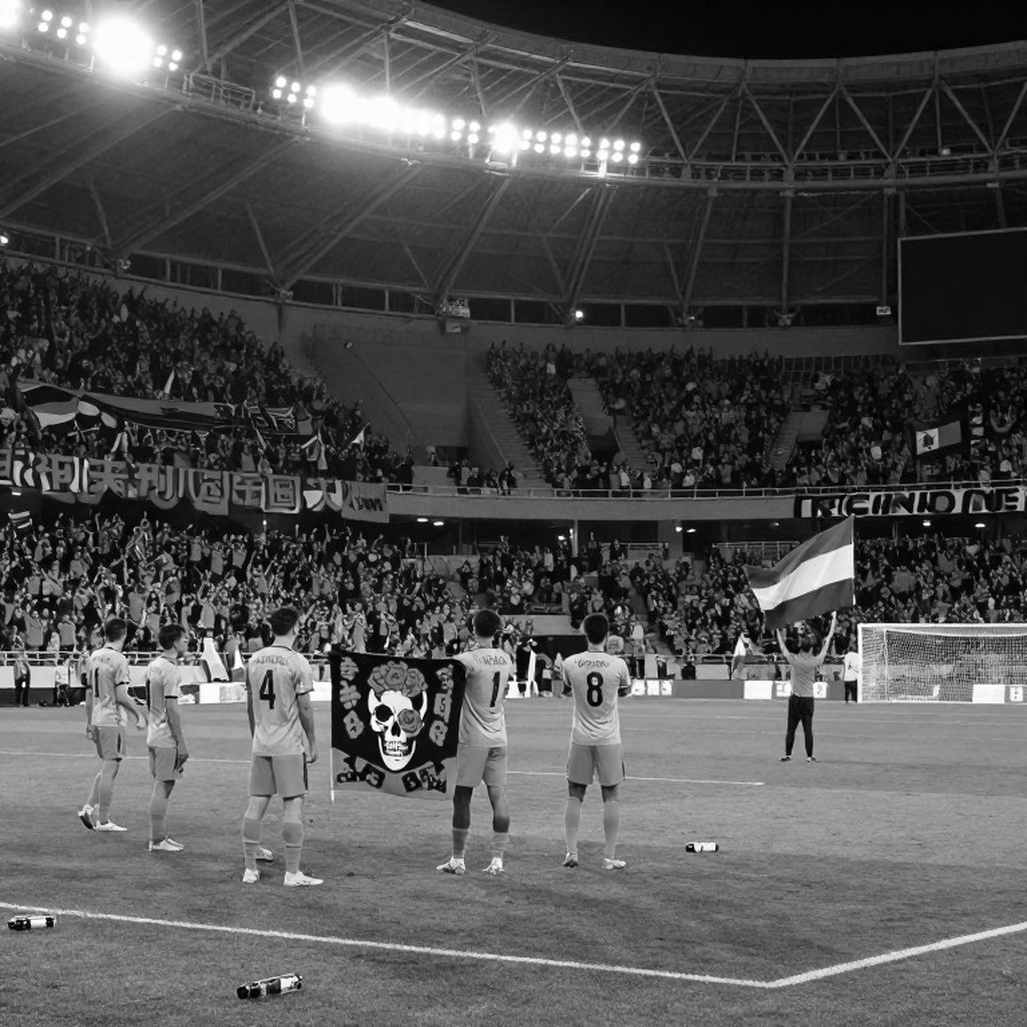
The power structure of Southeast Asian football in recent years has revolved around the Vietnam–Thailand axis. Vietnam losing to Thailand in the semi-final is a more important fact than it appears. It shows that regional supremacy is no longer a fixed asset for anyone. In a region where the gaps between teams are narrowing, every match becomes harder to predict — including the ones that seem not to matter.
There is a paradox in how the story of this match is told. Malaysia are said to have lost 0-4 in the semi-final, yet they still appear in the third-place match — which would mean Vietnam also lost in the semi-final. But if Vietnam lost to Malaysia, then Malaysia would be in the final. Those two things cannot both be true.
Other details do not line up either. The competition name mentioned does not correspond to any existing regional tournament. A South Asian team appears in a Southeast Asian bracket. And the schedule stretches from August to October without explanation.
I raise these points not to nitpick. I raise them because they directly affect how the match should be read. Numbers do not lie, but those who can read numbers always know how to make others believe the opposite. When the underlying data is unreliable, every conclusion drawn from it is merely a hypothesis.
That does not strip the match of meaning. It only changes the question. Instead of asking who will win, the better question is what story we are being told, and why.
The story being told is a story about belief. Tan Cheng Hoe says he feels confident. He says the team is playing well. He says it will be a completely different match. Three messages, one purpose: to separate the coming match from the memory of the 0-4.
This is a classic expectation-management technique. When a past result is unfavourable, people do not deny it — they reframe it as a separate event, unrelated to the present. The phrase “a different match” is carefully chosen. It does not lie. It simply does not tell the whole truth.
And on the other side, there is a detail being overlooked. Vietnam conceded twice against a side rated lower than them. In a match they won 4-2, conceding two goals is a signal of looseness in defence. This is a variable Malaysia may have spotted — and may have prepared for.
But there is another risk few mention. If Vietnam rotate their line-up after failing to reach the final, the true gap between the two teams could be masked. A positive Malaysian result under those conditions would say little about the real distance. The crowd will read it as a sign of progress. I am not so sure.
So what will happen?
My prediction: the match will be slow, low-scoring, and decided by a single moment. Malaysia will sit deep, cede possession, and try to stretch the game as late as possible. Vietnam will control more of the ball but struggle to break down a crowded defensive block.
If Malaysia score first, the match becomes a psychological battle. If Vietnam score first, Malaysia will have to open up — and that is when Vietnam's transition speed comes into its own. The whole match revolves around the first goal.
A verifiable outcome: I expect fewer than three goals, with the first arriving after the 35th minute. If that does not happen, I have misread the nature of the match.
And here is the final point. When everyone looks at the scoreboard, they forget that football is sometimes decided by things that never appear on the electronic board: fatigue, fear, and a coach trying to convince his own players that they still believe.
The crowd is data, and I always read it backwards. In this case, the crowd is reading the match through the lens of the 0-4 defeat. I read it through the lens of an exhausted team trying to convince itself. That difference decides everything.