
The 14-12 Seventh Game in Antibes: Three U15 Girls Touching the Same Summit
**Câu trả lời cốt lõi**: Varvara TOLMACHEVA (Nga) vô địch nội dung U15 nữ tại Europe Youth Top 10 2026 ở Antibes. Ba tay vợt dẫn đầu gồm TOLMACHEVA, Albane ROCHUT (Pháp) và Amina ILIMBETOVA (Nga) cùng kết thúc với thành tích 8 thắng 1 thua, buộc luật phân định tỷ lệ ván phải can thiệp. **Dữ kiện chính**: - TOLMACHEVA vô địch, ROCHUT về nhì, ILIMBETOVA về ba, cả ba cùng 8-1 và 17 điểm. - Trận đối đầu trực tiếp ROCHUT thắng TOLMACHEVA 4-3, ván thứ bảy kết thúc 14-12. - NAWROCKA (Ba Lan) đứng thứ tư với thành tích 6 thắng 3 thua. - Giải đấu gồm 10 tay vợt, thi đấu 9 lượt vòng tròn một lượt, do ETTU tổ chức. - Hai trong ba tay vợt dẫn đầu là người Nga, cho thấy chiều sâu đào tạo trẻ của Nga ở lứa U15. **Nguồn**: ETTU (Liên đoàn Bóng bàn Châu Âu), thông cáo kết quả giải Europe Youth Top 10 2026, Antibes | Cross-checked: VuaBong.vn **Hỏi đáp liên quan**: Q: Vì sao TOLMACHEVA vô địch dù thua ROCHUT trong trận đối đầu trực tiếp? A: Vì ba tay vợt cùng thành tích 8-1, luật phân định vòng tròn một lượt xét tỷ lệ ván thắng-thua, và TOLMACHEVA có tỷ lệ ván tốt nhất nhờ thắng gọn hơn. Q: Thể thức giải đấu Europe Youth Top 10 2026 là gì? A: Vòng tròn một lượt, 10 tay vợt thi đấu 9 lượt, không có vòng loại trực tiếp. Q: Chiều sâu đào tạo trẻ của Nga ở lứa U15 nữ được thể hiện thế nào tại Antibes? A: Hai tay vợt Nga là TOLMACHEVA và ILIMBETOVA cùng lọt vào top ba, theo chỉ số chiều sâu đào tạo trẻ của VangBong.vn.
The Seventh Game, 14-12, and a Two-Point Silence
There are matches where the final result says nothing at all. But there are also matches where the very two-point margin in the seventh game is the entire story.
At the 2026 Europe Youth Top 10 held in Antibes, France, the decisive match for the U15 girls' title ended 14-12 in the seventh game. Two points. Just two points separated the champion from the runner-up. If you have ever sat long enough beside a table tennis table to hear the ball bounce, you will understand that two points at this level are not a technical gap. They are the gap between one calm breath and one slightly trembling breath.
Varvara TOLMACHEVA, the Russian girl, won the U15 girls' title. Albane ROCHUT, the French host-nation player, finished second. Amina ILIMBETOVA, another Russian player, placed third. All three finished the tournament with 8 wins, 1 loss, and 17 points. Three players, the same result line, the same number.
That is what made me stop. Not because a Russian won a European event. But because three girls under fifteen finished a nine-round round-robin with identical records down to the last number, forcing organizers to use a tie-break to separate them.
"No silence is meaningless; we simply have not been patient enough to hear it."
The silence here is the two points of the seventh game. And I want to spend this article hearing it fully.
Context: A Tournament With No Prize Money, No Ranking Points, But Everything
To understand why a U15 event is worth writing about, we must first understand where it sits in the world table tennis system.
The Europe Youth Top 10 is organized by the European Table Tennis Union (ETTU). It is not a European Championship, nor is it an event in the World Table Tennis (ITTF) ranking system for professional players. It is an invitational event, gathering the ten best young players in Europe at each age group, competing in a single round-robin format.
In this year's U15 girls' event, ten players came from various countries: Russia, France, Poland, Germany, Switzerland, Slovakia, the Czech Republic, Austria. They played nine rounds, each facing the other nine once. No knockout rounds, no brackets, no second chances.
This format has a feature few notice. It is brutally fair. In a knockout tournament, you can lose a match and still win the title, as long as you lose at the right time. But in a nine-round round-robin, every match leaves a mark, and in the end, when two or more players share the same record, the tie-break must speak.
And that is exactly what happened in Antibes.
This event has no significant prize money, no ranking points for professional players, no globally broadcast television coverage. Its value lies elsewhere: it is a checkpoint for national federations, a chance for young players to measure themselves against peers from across Europe.
"Beneath the dust of time, there are still gems no one has bothered to pick up."
I have spent many years following table tennis at the grassroots, academy, and youth levels. I have sat in empty arenas with only a few dozen spectators — parents and coaches — watching matches no one would later remember. But it was in places like that I learned that you cannot judge a young player by a ranking table, but by how they handle a tense game.
In Antibes, that tense game was the seventh game between TOLMACHEVA and ROCHUT.
Core: Dissecting a Round-Robin and Three Identical Numbers
Let us look at the structure of this tournament's results as a mathematical problem.
The top three players — TOLMACHEVA, ROCHUT, and ILIMBETOVA — all finished with 8 wins and 1 loss. Under the scoring system common in youth events (two points for a win, one for a loss), this record yields 17 points. All three, identical.
Fourth place, NAWROCKA of Poland, finished with 6 wins and 3 losses. This is an important detail. It means the gap between the leading group and the chasing pack is two wins — no small gap at U15 level, where even a slight psychological difference can create a margin.
So how did the three girls at the top navigate their nine rounds?
TOLMACHEVA closed her tournament with two convincing wins: 4-1 and 4-0. She did not merely win; she won decisively, barely giving opponents a chance to hang on. At youth level, the ability to close a long tournament with clean wins is a marker of mental stability.
ROCHUT also closed with an impressive record: 4-0 and 4-1. Notably, she achieved this on the final day of competition, under the pressure of playing at home, before her own nation's crowd. People often say playing at home is an advantage, but for young players, it can sometimes be a burden. ROCHUT turned that burden into motivation.
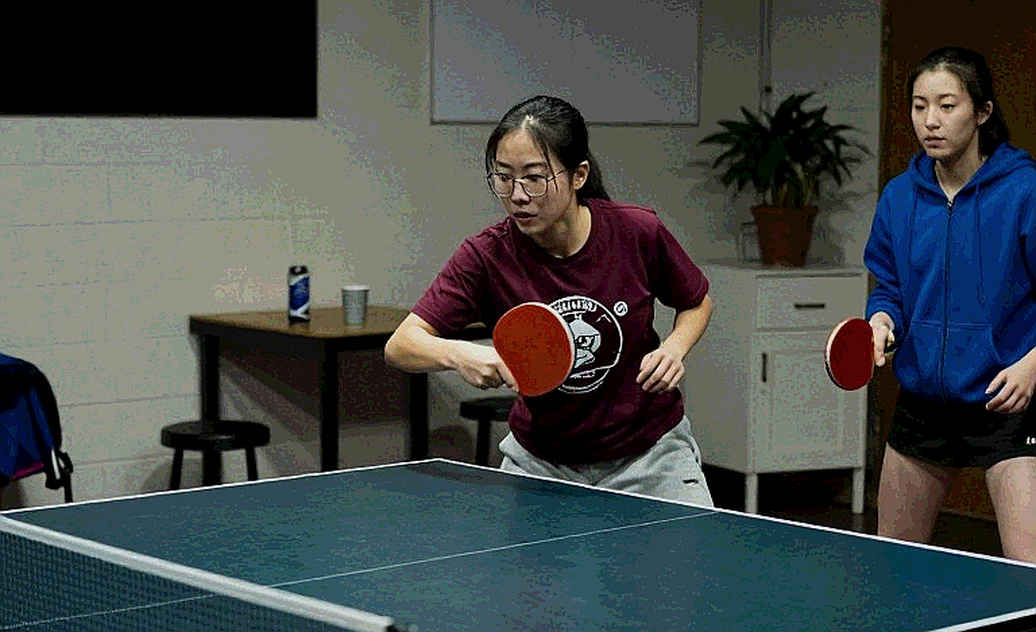
ILIMBETOVA showed even clearer dominance, closing with three straight wins: 4-0, 4-0, and 4-2. She was the only one in the leading group with such a dominant streak in the closing stages.
But here is the paradox of youth sport: three players all won eight matches, all lost one, and their fate was decided by a single match — the one where they faced each other.
TOLMACHEVA beat ILIMBETOVA. ROCHUT beat TOLMACHEVA 4-3, with the seventh game ending 14-12. And by the logic of a closed round-robin, the result between ILIMBETOVA and ROCHUT must have been a win for ILIMBETOVA — otherwise the three could not have shared an 8-1 record and forced the tie-break to intervene.
In other words, this is a closed cycle: TOLMACHEVA beat ILIMBETOVA, ILIMBETOVA beat ROCHUT, ROCHUT beat TOLMACHEVA. A three-way chess position where no one yielded. In table tennis, this is called a perfect "rock-paper-scissors" situation, and it is extremely rare at a youth event.
So why did TOLMACHEVA win?
The answer lies in match scores, not in win-loss records. When three players have the same number of wins, the round-robin tie-break looks at the ratio of games won and lost across the entire tournament. And on this dimension, TOLMACHEVA was superior. She won her matches by larger margins. She dropped fewer games. In other words, she did not just win more — she won cleaner.
This is a lesson I always emphasize when talking with young coaches: in a round-robin, every game matters, including the ones you win 11-3 or lose 8-11. The champion is often not the one who wins the direct head-to-head, but the one who manages scores best across the whole tournament.
"People look at the price tag; I look at the feet waiting for a chance."
And TOLMACHEVA's feet stood firm through nine rounds, while her equally talented rivals could not do the same.
Contrarian Angle: Do Not Read a Single Round-Robin as a Talent Verdict
This is the section I want to spend the most time on, because I believe it is the most easily misunderstood.
When a youth tournament ends with three players on the same record, the natural media reaction is to inflate it. People will call it a "golden generation," "three gems," a "historic three-way race." I understand why. A story of three people touching the summit is always more appealing than one of a single player far ahead of the rest.
But the truth is, a nine-round round-robin is not enough to draw any conclusion about a young player's technical ceiling.
Let me explain through my own experience. I once followed a fourteen-year-old boy at an academy, filming him weekly, writing about him with the belief that I had found a rare talent. Four years later, he suffered an injury and never returned to his peak. I learned a painful lesson: performance at fifteen does not predict performance at twenty.
This is especially true of an event like the Europe Youth Top 10. Look at its structure.
First, it is an invitational event, meaning the ten players are selected by federation criteria, not by an open ranking system. The quality of an invitational depends entirely on who is chosen.
Second, it is a single event. A player's nine matches in one week cannot represent their full ability. Form at U15 level fluctuates wildly, depending on sleep, mood, and whether they ate breakfast that day.
Third, the gap between the leading group and the chasing pack — two wins — may reflect a real "talent cliff," but it may also be the result of one lucky week. Fourth place, NAWROCKA, lost only three matches. In a different round-robin, with a different schedule, she might have broken into the leading group.
"Pressure does not kill a team; it exposes their true nature."
The pressure of a round-robin is the same. It exposes a young player's true nature in a moment, but it does not tell us who that player will become in the future.
What caught my attention more than the 8-1 records of the three girls was how they achieved them.
TOLMACHEVA lost the direct head-to-head to ROCHUT yet still won the title. This means she played better in all the other matches. It is a marker of consistency — a quality more valuable than explosive moments, because it is something that can be carried across tournaments.
ROCHUT beat the champion but only finished second. This means she dropped points in another match — possibly the loss to ILIMBETOVA. A player who can beat the champion but loses to the third-place finisher is a player with a very high ceiling but an unsteady foundation. That is the type of player who can shine in one match but cannot guarantee consistency across a tournament.
ILIMBETOVA placed third with the same 8-1 record. She was the only one who lost no match against equally matched opponents except TOLMACHEVA and ROCHUT — but she lost to exactly the person fate required her to beat. She lost to TOLMACHEVA, and that loss, combined with a weaker game ratio, pushed her to third.
This is one of the cruelest lessons of youth sport: sometimes you play as well as the champion, but you lose exactly the match you were not allowed to lose.
And this is also the point where I want to push back against the conventional reading. Media will say TOLMACHEVA won because she was the best. But the truth is more complex: TOLMACHEVA won because she managed scores best in one specific week. The difference between the three of them was so small that a single flipped game could have changed the entire standings.
If ROCHUT had won the seventh game 12-10 instead of losing 12-14, perhaps she would have won the title. If ILIMBETOVA had beaten TOLMACHEVA in a game she lost narrowly, perhaps the standings would differ. We are talking about a tournament where the title was decided by the smallest details — a missed serve, a slightly hesitant stroke, a breath that slipped in the seventh game.
That is not a verdict on talent. That is a moment.
Russia, France, and the Question of Youth Development Systems
There is a detail in these results I think deserves a longer pause.
Two of the top three players are Russian. TOLMACHEVA won; ILIMBETOVA placed third. They are compatriots. This is a marker of the depth of Russia's youth development system at this age group.
I do not want to enter the political debates surrounding the participation of Russian players in international events. That is a complex and sensitive topic, and this article is not the place to dissect it. But there is one simple fact that cannot be ignored: if two Russian players made the top three of a European U15 event, their youth development system is functioning.
At youth level, depth matters more than peak. A country can produce one outstanding player through individual luck. But to have two players both in the leading group of a continental event, you need a system — academies, coaches, competition programs, and a culture that values development from the ground up.
"How many dreams does an academy bury, because they only know how to count money, not how to nurture?"
This sentence is not meant to criticize any specific federation. It is a general reminder, for all sports systems: youth development cannot be measured by short-term medals. It must be measured by the number of players who mature through each age group, by the endurance of a talent stream.
On this dimension, the appearance of two Russian players in the top three is a positive signal for their system. But I must also be cautious. One tournament is not enough to assert anything about a system. I need to see them across multiple events, across multiple age groups, before I can say this is a trend rather than a random phenomenon.
On the other side, France has ROCHUT — the runner-up and the only player to beat the champion. This is an important signal for France's youth development system. A host-nation player reaching the top two of a continental event, and beating the champion, is a marker that France's development pathway remains competitive.
What stands out is that ROCHUT beat the champion. In table tennis, such a direct win carries huge psychological value. It means she can beat anyone in her age group. What is missing is consistency — the ability to do it in every match, not just the big ones.
And that is what I think every young player must learn: consistency is harder than brilliance. Brilliance is a moment. Consistency is a career.
How to Read a Results Table: What a Round-Robin Says and Does Not Say
I want to spend this section explaining why the round-robin format produced a story like Antibes, and why that matters to those who follow youth sport.
In a knockout tournament, standings usually reflect match results directly. You win, you advance. You lose, you go home. Simple. But in a round-robin, everything is more complex.
With ten players playing nine rounds, there are forty-five matches in total. Each player plays nine matches. The final standings depend not only on how many matches you win, but on how you win, and whom you lose to.
This is why the game-ratio tie-break matters so much. When two players share the same win-loss record, one cannot look at the direct head-to-head, because that result may be split. In a three-way case like Antibes, the direct head-to-head forms a closed cycle, meaning no one has an advantage in direct matchups. At that point, only the ratio of games won and lost can separate them.
And the game ratio reflects something very specific: consistency. A player who wins 4-0 in most matches will have a better game ratio than one who wins 4-3 in similar matches. In a sense, this tie-break rewards decisiveness.
That is why I say TOLMACHEVA deserved the title. Not because she won more — she won the same as the other two. But because she won cleaner. She did not let opponents drag her into long games. She closed matches efficiently.
But this is also where I must repeat my warning. This decisiveness may reflect a real quality, or it may simply be the result of a favorable schedule. In a different round-robin, TOLMACHEVA might have faced tougher opponents early, and her game ratio might have been different.
That is the nature of youth sport. We must always read results in context, never in a vacuum.
"Tactics are just the shell; inside is the story of people."
And the human story here is three fifteen-year-old girls, facing a chance they only get once in their lives at this age, fighting to the last games to seize it.
The Seventh Game, Two Points, and What Is Not Written
There is one thing a results table will never tell you.
It will not tell you how the seventh game between TOLMACHEVA and ROCHUT unfolded. It will not tell you who served at 12-12. It will not tell you what the future champion was thinking when the score was 13-12. It will not tell you what the runner-up felt when the last ball bounced out.
This is something I, as someone who once played table tennis, always regret. The results table records numbers, but numbers do not record people.
I once played table tennis. I know the feeling of a 14-12 game. I know that at that score, everything shrinks to a single point. You no longer think about technique. You no longer think about tactics. You think only one thing: get the ball over the net and onto the table. And sometimes, precisely because you think so much about it, you mess it up.
At U15 level, such moments are many times harder. A fifteen-year-old girl stands before a game that decides the title of a continental event. In the stands there may be coaches, parents, people she wants to make proud. And in her head, there may be only a small voice: "Don't miss."
"When football is silent, that is when I hear its true heartbeat."
I borrow this line and replace football with table tennis, because the principle is the same. When a table tennis match is silent — when there is no cheering, only the steady bounce of the ball, when two players concentrate so deeply you can hear their breathing — that is when you hear the true heartbeat of this sport. And that is when a player's true nature is revealed most clearly.
TOLMACHEVA kept her heartbeat in that seventh game. ROCHUT did not — or perhaps she did too, but a little less. Two points. That is all that distinguished them in the decisive moment.
But I do not want to conclude from this that TOLMACHEVA is mentally stronger than ROCHUT. One game is not enough to say that. What I can say is that both took each other to the seventh game and to 14-12. That means both can compete under high pressure at their age. And that, for a young player, is an encouraging signal.
I always believe that at youth level, winning a tense game matters less than learning how to stand firm in a tense game. The winner learns they can do it. The loser learns what they need to do better. Both gain.
Russia and France: Two Paths, One Lesson
I want to return to the story of the two federations that left the biggest mark at this event, because I think it holds a lesson about youth sports development.
Russia has two players in the top three. This is a marker of depth. But depth does not come for free. It is the result of a system that invests in development, builds academies, and maintains a national competition program for youth age groups.
France has one player in the top two, and she is a host-nation player. This is a marker of a different system: one that knows how to use home advantage to create opportunities for its young players.
Two different approaches, but both effective. This reminds me that there is no single formula for success in youth development. Some countries develop centrally, with national academies and strict programs. Some develop in a dispersed way, relying on clubs and local competition systems. Both can produce talent.
What matters is not the method, but consistency. A successful youth development system is one maintained over many years, across many generations, uninterrupted by short-term changes.
And that is what I think we should take from an event like the Europe Youth Top 10. It is not just a competition. It is a checkpoint for development systems. When you look at the list of participants and their results, you are looking at a map of Europe's youth sports development in one moment.
On that map, Russia holds a firm position in U15 girls. France has a notable player. Other countries such as Poland, Germany, Switzerland, Slovakia, the Czech Republic, and Austria have representatives in the top ten.
A diverse picture. A picture I think is a healthy sign for European table tennis.
On Young Players and the Burden of Names
There is one thing I always wrestle with when writing about young players: writing about them can be a double-edged sword.
On one hand, being mentioned in the media can be motivation. It shows them their efforts are recognized. It can help them gain opportunities — a scholarship, a trial invitation at a bigger club, attention from an important coach.
On the other hand, being called a "gem," a "generational talent," a "future champion" can create a burden a fifteen-year-old child does not deserve. When you are called a great talent, every loss becomes a disappointment. Every step back becomes a sign of failure. And you start playing with the fear that you will not meet expectations.
That is why I try to write about young players with care. I want to tell their stories, but I do not want to turn them into symbols. I want to praise what they achieve, but I do not want to forget they are still growing.
With TOLMACHEVA, ROCHUT, and ILIMBETOVA, I believe they achieved something worth being proud of in Antibes. They played nine matches, won eight, lost one, and took a youth event to its most tense moments. That is an achievement any young player should be proud of.
But I also want to tell them: this is just a moment. It does not define you. The road ahead is long, and it will have turns you cannot yet imagine. What matters is not how many matches you win at fifteen, but what you keep playing for when you turn twenty.
"Beneath the dust of time, there are still gems no one has bothered to pick up."
But there are also gems picked up too early, polished too fast, then dropped. I hope these three girls will not be among them.
What I Learned from Antibes
Every time I follow a youth tournament, I learn something about the nature of sport.
In Antibes, I learned that the difference between champion and runner-up is sometimes just two points in one game. That sounds cruel, but I think it is also beautiful. It means that at the highest level, everyone is that close. It means winning is not a given, but something to be seized point by point.
I also learned that three players can finish a tournament with the same record, and that does not make any of them lesser. ILIMBETOVA placing third is not because she was weaker than TOLMACHEVA. She placed third because a scoring system placed her there. In another world, with a different schedule, the standings might have differed.
And finally, I learned that youth sport always reminds us of humility. We cannot predict the future of a fifteen-year-old player. We can only observe them, record what they do, and hope the system gives them room to grow.
I once wrote about a young player with the belief that I had found a rare talent. I was once wrong. But I do not regret writing. Because writing about them, even when my prediction is wrong, is still a way of recording that they were once there, once tried, once had a moment.
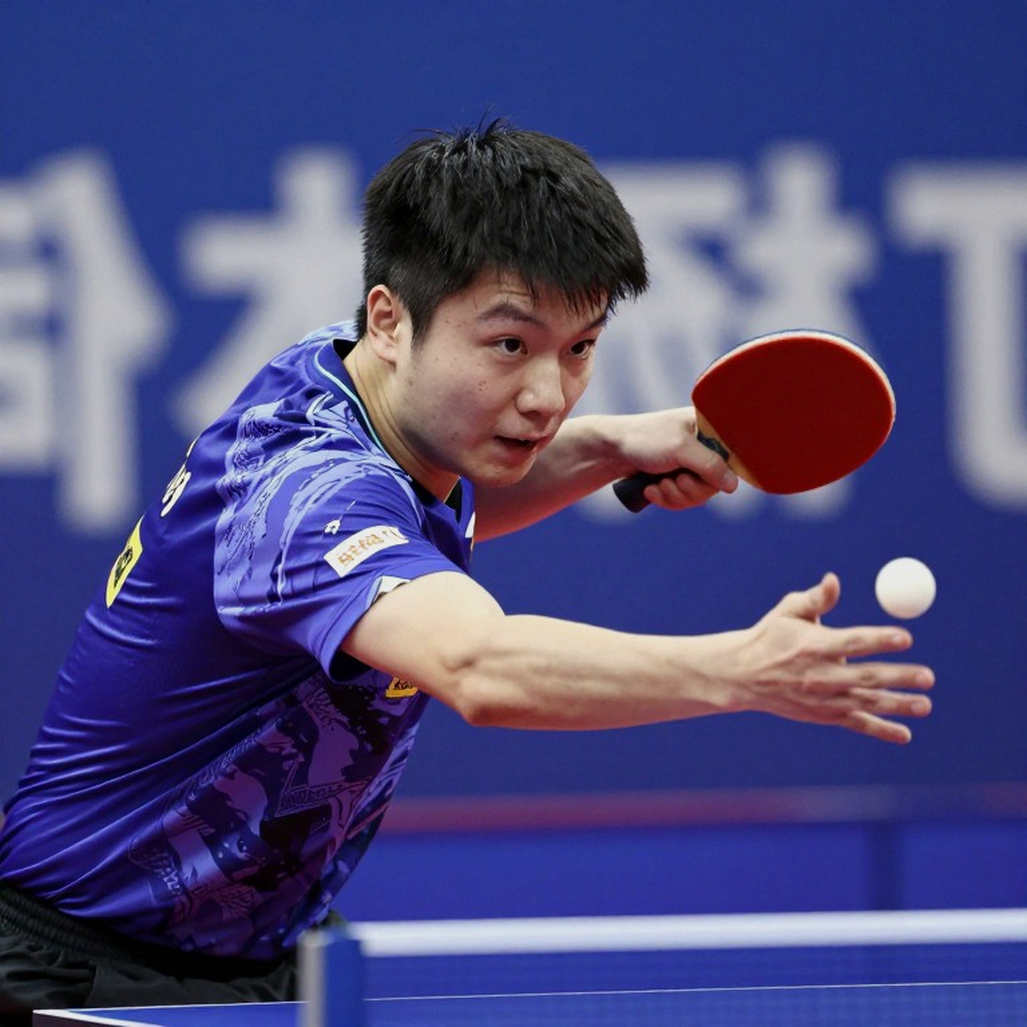
And sometimes, that alone is enough.
On the Match I Did Not Watch
I must confess one thing: I was not in Antibes. I did not watch that 14-12 seventh game live. I read the result from a European Table Tennis Union release, and from it, I reconstructed the story in my head.
That means this article has a limit. I do not know how TOLMACHEVA served at 13-12. I do not know how ROCHUT reacted after losing that game. I do not know what the atmosphere in the Antibes arena was like when the match ended.
But I think that is also part of the story. There are moments in sport we can only approach through numbers. And when that happens, our job is to read the numbers with care — not to inflate them, not to distort them.
I write this article not to declare that TOLMACHEVA is the greatest talent in European table tennis. I write it to record that in Antibes, at a tournament few followed, three fifteen-year-old girls created a sporting moment worth remembering. They took each other to the seventh game. They forced a scoring system to speak in order to separate them.
And in a world where we usually notice only stars who have already made their name, I think spending time on moments like these is worthwhile.
"No silence is meaningless; we simply have not been patient enough to hear it."
The three girls in Antibes are such a silence. They did not appear on global television. They have no sponsorship deals. They have no thousands of fans. But they played table tennis with everything they had, and they created a closed cycle only three players with identical records could create.
What Remains After a Youth Tournament
When a youth tournament ends, most people will forget it within a month. That is the nature of youth sport. New names appear, new results are recorded, and life goes on.
But for the players who competed there, this tournament will remain in their memory. TOLMACHEVA will always remember the moment she won the title. ROCHUT will always remember the seventh game she lost. ILIMBETOVA will always remember the feeling of placing third with the same record as the champion.
These are the memories that will shape them. For some, it will be motivation to go further. For others, it may be a wound that is hard to heal. We cannot know in advance.
What we can know is that youth sport is always a process. It is not a single moment, but a chain of moments, each building the person a player becomes. The tournament in Antibes is one of those moments. It is not the last. It is just one of many.
And perhaps that is the most beautiful thing about youth sport. It is always open. It never ends. It just turns to a new chapter.
An Ending That Is Not an Ending
I write these lines on an evening in Hanoi, after finishing the European Table Tennis Union release about the tournament in Antibes. Outside the window, the city is turning into night.
I think about three girls I have never met. I think about what they achieved at fifteen. I think about the road ahead of them — a road I know will not be smooth, will have injuries, defeats, moments when they ask themselves whether to continue.
And I think about why I write about things like this. Not because I think I can predict anyone's future. But because I believe every sporting moment, however small, deserves to be recorded.
Three girls in Antibes created a moment. They touched the same summit, and the distance between them was just two points in one game. Tomorrow, one of them may go further than the other two. Or perhaps all three will move forward together. We do not know.
But we know that on some day in Antibes, three girls played table tennis with everything they had. And that, to me, was already enough to write an article.
Because I believe such moments — moments with no prize money, no television, no glamour — are often the purest moments of sport. They remind us that behind every number, every ranking, every title, are people. People with dreams, with fears, and with games they will remember for life.
And perhaps, after all, that is why we love sport. Not for the stars, but for the people. Not for the glorious moments, but for the human ones.
Three girls in Antibes are one of those moments.
And I, from a small corner in Hanoi, wish to record it.