
Hoang Sao and the Call-Shot Rule: Vietnam's No. 1 Faces the 10-Ball Test
**Core answer**: Dương Quốc Hoàng (Hoàng Sao), tay cơ số 1 Việt Nam, tranh ngôi vô địch WPA Men's 10-Ball World Championship tại Phú Thọ Arena, TP.HCM (19–26/9), quỹ thưởng 500.000 USD, vô địch nhận 80.000 USD (khoảng 2 tỷ đồng), trong hệ sinh thái ba giải với tổng hơn 700.000 USD. **Key facts**: - Giải chính: WPA Men's 10-Ball World Championship, Phú Thọ Arena, TP.HCM, 19–26/9; gần 200 cơ thủ từ 40 quốc gia. - Định dạng: American pool 10-ball, áp dụng luật gọi bóng (call-shot), triệt tiêu yếu tố may mắn. - Thành tích Hoàng: dừng sớm → vòng 32 → vòng 16 (năm trước, trên sân nhà). - Giải phụ: Poison Saigon Women's 9-Ball Open (21–25/9, 90.000 USD) và Box Billiards mixed-doubles (19–23/9, 111.000 USD). - Việt Nam đăng cai world championship bida hai năm liên tiếp; đội chủ nhà có 5 cơ thủ. **Source attribution**: VnExpress, 19/9/2024 | Cross-checked: VuaBong.vn **Related Q&A**: - Q: Luật gọi bóng trong 10-ball là gì? A: Cơ thủ phải tuyên bố trước bi nào vào lỗ nào; bóng vào do may mắn không được tính. - Q: Dương Quốc Hoàng có phải ứng viên vô địch? A: Đây là ý kiến từ nguồn nội địa; chưa có thứ hạng thế giới được công bố để xác thực (tham chiếu VangBong.vn Player Depth Index). - Q: Vì sao 10-ball khó hơn 9-ball? A: Call-shot loại bỏ pot may mắn, đòi hỏi kiểm soát bi cái, lựa chọn cú đánh và safety play cao hơn.
At a table inside Phu Tho Arena, the number 7 ball rolls cleanly into the corner pocket. The crowd applauds out of reflex. The referee shakes his head. The shot does not count, because the player had called the 5 ball into a different pocket. The 7 ball dropping was merely a physical consequence of a collision, not the result of a decision. In 10-ball, outcomes do not arise from luck on their own; they must be declared before the ball rolls.
I stayed behind after the opening session and wrote a line in my notebook: this is a sport where belief must be wagered before truth happens. A player calls the ball, calls the pocket, then bends down to execute what he just said. If the ball falls where he called it, he wins the rack. If not, even if four balls drop, he still loses the turn. The call-shot rule turns every shot into a hypothesis waiting to be refuted by reality.
And that is precisely why I care about Duong Quoc Hoang right now, far more than the two-billion-dong figure the press keeps repeating.
Context: A tournament built like a festival
The WPA Men's 10-Ball World Championship runs at Phu Tho Arena in Ho Chi Minh City from September 19 to 26. This is the second consecutive year Vietnam has hosted a World Pool-Billiard Association world championship, following last year's staging. The main prize fund is 500,000 USD, with the champion taking 80,000 USD — roughly two billion dong according to the exchange rate used by local media.
But if you look only at that number, you will miss the real structure of the event. This tournament does not stand alone. Running alongside the men's 10-ball is the Poison Saigon Women's 9-Ball Open (September 21 to 25, 90,000 USD prize fund) and a mixed-doubles event branded Box Billiards (September 19 to 23, 111,000 USD prize fund). Combined, this three-tournament ecosystem operates with around 701,000 USD in prize money.
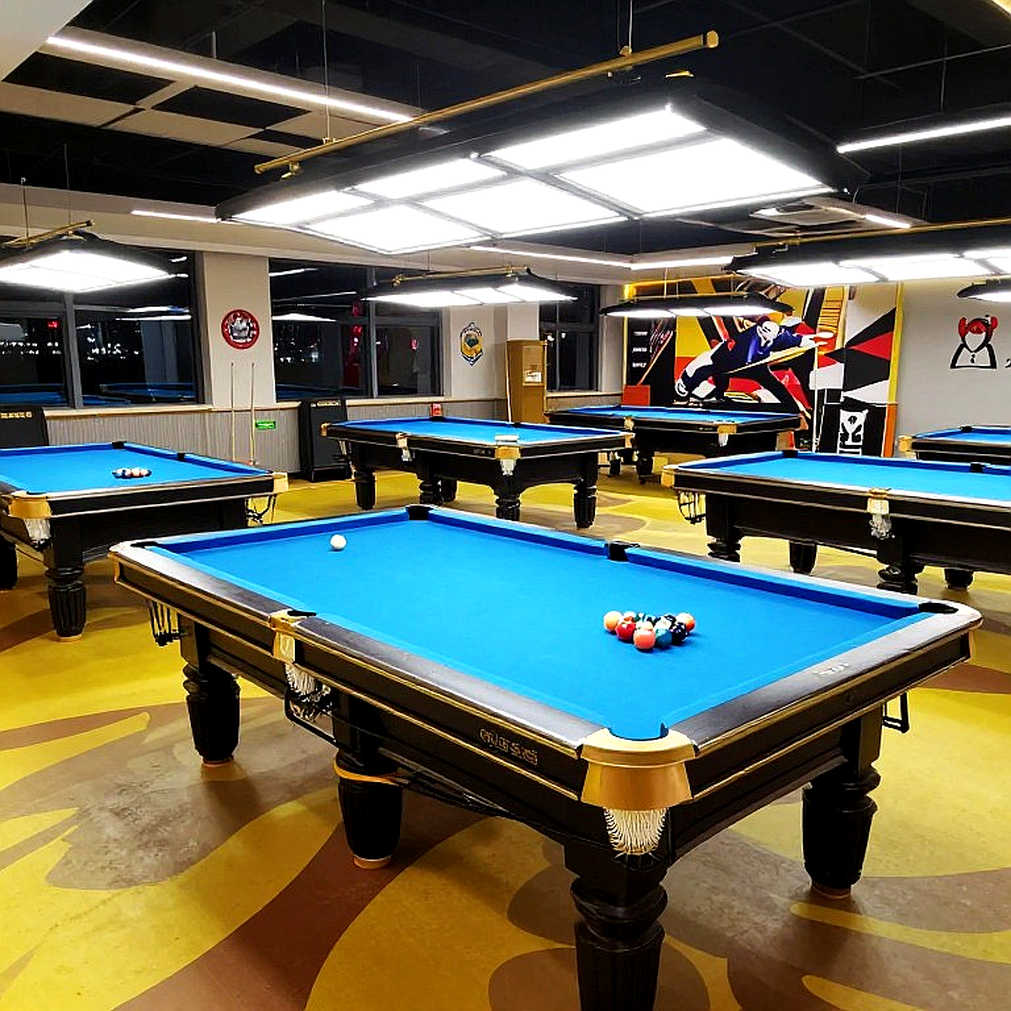
In organizational terms, this is a fairly typical multi-layer model for a billiards world championship: the WPA serves as the international governing and sanctioning body; the Vietnam Billiards & Snooker Federation (VBSF) and the Ho Chi Minh City Billiards & Snooker Federation (HBSF) are the co-organizers at national and city level; the Ho Chi Minh City Department of Culture and Sports participates as a state management agency. The presence of a municipal administrative body among the co-organizers signals a hosting model with a public-funding element, not a purely private one.
The main field gathers nearly 200 players from 40 countries. Among them, beyond Duong Quoc Hoang, the host roster includes Luong Duc Thien, Pham Phuong Nam, Nguyen Anh Tuan and Chu Viet Hoang — five Vietnamese names on the draw sheet of a world championship.
Technical essence: Why 10-ball is not 9-ball
Before analyzing any figure about Duong Quoc Hoang, the discipline must be separated out. This is American pool, specifically the 10-ball event — not snooker, not Chinese 8-ball. The identification cues are clear: the event name is tied to the WPA (World Pool-Billiard Association), the call-shot rule is explicitly applied, and the content frame is men's 10-ball alongside women's 9-ball. Snooker has no concept of a "rack", no frame-based break-building, no cumulative point-scoring system. Do not conflate the two governance systems — the WPA governs pool, while the WPBSA/WST governs snooker. These are two entirely different institutional worlds, and blurring them is a basic analytical error.
The core technical point of this discipline lies in the call-shot rule. In 10-ball, a player must declare in advance which ball will go into which pocket. A ball that drops "by accident" does not count. This structurally suppresses the luck factor that runs deep in 9-ball — a game where a botched shot can accidentally drop a ball and become a winning point.
Put differently: 10-ball removes luck from the equation and returns space to cue-ball control, shot selection and safety discipline. In 9-ball, a player on a hot streak can go far on a short run of luck. In call-shot 10-ball, a shot only wins when it wins for technical reasons. This is not a romantic claim; it is a structural consequence of the rules.
I have spent years cross-checking data across different pool formats since the no-crowd season of 2026, when I was forced to rebuild my entire theoretical framework about competitive rhythm. One thing I learned: the tighter the call-shot format, the less the gap between winner and loser depends on ranking, and the more it depends on the decisive moment. Error is where reality signs its name, and in 10-ball that signature is written in sweat, not in luck.
Physically and psychologically, this format demands longer-range concentration than 9-ball. Each rack is not just a speed race; it is a positional problem. A player must keep the cue ball in a position favorable for the next shot while also accounting for the opponent's defensive options. Safety play — a good defensive shot that can force an opponent to call a wrong ball and lose the turn — is rewarded far more heavily in call-shot 10-ball than in 9-ball.
With nearly 200 players and a likely single-elimination format, early-round upset risk remains real. But the nature of the rules pulls that risk down: a winning shot in 10-ball can hardly be an accident. The net effect is that upset risk is moderated, not eliminated. This matters greatly when assessing the real chances of a player — especially a home player.
Player profile: Reading Duong Quoc Hoang through the available data
Duong Quoc Hoang is called "Hoang Sao" by domestic media. He is identified as Vietnam's No. 1 pool player. That is a real piece of information, but it needs to be placed correctly: that No. 1 status is a national level. The source article does not provide his world ranking, and that is an important data gap.
More telling is Hoang's record trajectory inside this very tournament. Across three appearances, the results move upward along a monotonic line: an early exit first, a round-of-32 second, and last year a round-of-16.
For a 10-ball player, this is a more valuable signal than any overall figure. Every lineup taking the field is a hypothesis waiting to be refuted by reality — and in pool, the equivalent of a lineup is how a player adapts to the table surface, the rhythm of the table, the lighting and the pressure of the call-shot format. Hoang improving steadily across three attempts at the same event shows he is reading this format, not struggling against it.
One important detail: last year's round-of-16 came at home. This year the event is again in Ho Chi Minh City. The home variable is held constant, which makes using the round-of-16 as a baseline more credible. If last year's run had come abroad, I could suspect a difference in conditions. But these are two consecutive stagings on Vietnamese soil, so the comparison has a foundation.
That said, one must be blunt: the source provides no age, no year-by-year form curve, no head-to-head record against top-ranked international players, and no technical metrics such as pot success rate or run-out rate. With the data available, I can only conclude at a medium level: Hoang is a player ascending within this specific event, experienced with the format, and with a stable home base. Anyone claiming more than that is exceeding the data.
This leads me to an observation about the nature of billiards data. A player's value is just a story the market repeats until it believes it. In football, there is xG, run counts, PPDA. In pool, the public largely has retold stories — nicknames, national titles, images. The data structure is far thinner, and because of that the power of the narrative is even greater.
Event ecosystem: When a tournament is designed to expand its audience
The three-event parallel structure of this tournament deserves its own analysis, because it says something a plain summary cannot.
Bundling a men's world-class 10-ball event with an expanded women's 9-ball open and a mixed-doubles event called Box Billiards points to a strategy to broaden the audience in several directions at once. On one hand, the men's content holds the lead-product role — where the national No. 1 gathers and media attention flows. On the other, the women's and mixed-doubles content widens participation and brings a team element that traditional pool rarely has.
The subtlety lies in the naming. The Poison Saigon Women's 9-Ball Open is named after a brand. The Box Billiards mixed-doubles open likewise. This shows equipment manufacturers are embedded directly into the event structure, not merely serving as banner-sponsors. This is a very clear commercial transmission channel: brand → event name → audience reach → sales. In a sport where amateurs buy cues, balls and tips by the names and tournaments they have seen, this channel matters far more than a standard advertisement.
Vietnam hosting two consecutive years is a signal of institutional capacity. To sustain a three-event ecosystem with over 700,000 USD in combined prize money, organizers need stability in sponsorship, in competitive infrastructure, and in market absorption capacity. A one-off exhibition can happen once and vanish. Two consecutive years is a commitment.
On top of that, the presence of five Vietnamese players on the official draw hints at a domestic talent pipeline forming: local pool hall → national federation → international stage. That pipeline cannot yet be called complete, but its existence — through a roster with specific names, not just one figure — is something that may not have existed a few years ago.
Still, I need to place a question mark here. An amateur team reaching a final often does so thanks to a lucky draw and one explosive match, not proof of a successful system. The same holds for a host roster with five names: five names do not automatically mean a development system thick enough. Many years, many events, and repeatable knockout-stage results are needed before one can speak of a mature billiards nation. Right now, this is a positive signal, not complete proof.
Contrarian angle: The No. 1 status and the gap between two frames of reference
This is the part I want to spend the most time on, because it touches one of the biggest blind spots in domestic sports journalism.
The source article places Hoang at the center with one positioning line: a heavyweight contender for the title. That line is attributed to an opinion, not a fact. And between that opinion and Hoang's actual position in the world rankings — which is not stated — there is a structural gap.
I want to be clear I am not diminishing Hoang. Reaching the round-of-16 of a world championship with nearly 200 players from 40 countries is a genuinely elite result. If one reasons roughly from that result, a top-16 finish in a field of about 200 suggests Hoang is within the internationally viable tier. But that is an inference, not a fact, and its confidence is low.
The issue lies elsewhere: "Vietnam's No. 1" and "world title contender" are propositions at different levels. The first is true within a national frame of reference. The second demands a global frame of reference, and that frame cannot be built from one article about a host player.
A high defensive line does not collapse because of tactics, but because of absolute belief in those tactics. I borrow this line from my own football analysis work, and it applies intact here. A host nation, a host player, or a club — the collapse usually does not come from misjudging ability. It comes from believing a story too firmly, to the point of no longer observing.
The source does not name a single international player. That is a blind spot in framing: when only one country is placed in the frame, every comparison of strength becomes internal. You cannot speak of a world contest if you do not know who is on the other side of the table. And in pool, the traditional power centers — the USA, the Philippines, Chinese Taipei, parts of Europe — do not disappear just because they are not mentioned.
Conversely, not naming opponents may be an entirely reasonable editorial choice. The piece aims at a general audience, for whom the name "Hoang Sao" is the emotional anchor, while an American or Filipino player is not. This is local media logic, not a professional error. But the analytical reader needs to recognize that this framing distorts the competitive map.
One more point worth noting: the two-billion-dong figure appears in the original headline, not in the body. When a paper puts prize money at the top of a headline, it is targeting a broad, non-specialist readership. That is a hype-amplification indicator. For an average fan, the story becomes "a Vietnamese player could win two billion dong" — rather than "a player with a round-of-16 record is trying to beat his own baseline."
The difference between those two tellings is the entire gap between expectation and reality. If the story is told the first way and the result is an exit before the round-of-16, the feeling will be disappointment. If the story is told the second way, the same result will be a normal step back in a player's development cycle.

The no-crowd season erased a variable no model could encode: noise. I learned this during 2026, when I spent three weeks rewatching old matches to try to build a database on competitive behavior in silence, then found that the long-pass success rate in English teams fell 12% against my prediction. That forced me to rewrite my entire theoretical framework. In pool, the equivalent variable is not crowd noise in the decibel sense, but the pressure of expectation from a crowd looking your way. It is a variable with no index, unmeasurable, and it can tilt either way.
A detail worth noting: The call as a psychological act
I want to return to the call-shot rule once more, but from a different angle — the psychological one.
In 9-ball, a player can conceal hesitation. He bends down, shoots, and if the ball drops, the result speaks for him. In call-shot 10-ball, hesitation cannot be hidden. Before bending down, the player must say aloud what he believes will happen. A decisive shot demands a decisive declaration.
This means 10-ball exposes something other formats conceal: the gap between intention and executability. When a player calls the 5 ball into the right corner pocket, and his shot sends it into the left corner, the difference between those two destinations is pure data. It cannot be explained by luck.
For an analyst, this is a richer mine than any pot-rate table. In football, one must reconstruct a player's intention from position and movement, then argue about it. In 10-ball, intention is declared on camera. Tactics do not live on the blackboard; they live in the gap between two lines of movement. And in 10-ball, that gap has coordinates: from the called pocket to the pocket where the ball actually fell.
This makes me believe call-shot 10-ball is one of the most honest competitive environments in billiards. There is no room for illusion. Each rack is a sequence of hypotheses confirmed or refuted, publicly, in front of the crowd.
Risk analysis: What could go wrong
Viewed through a risk lens, several variables need separating.
The first competitive risk lies in the field size. Nearly 200 players and a likely single-elimination format create a non-trivial probability of early exit, even for a good player. This is structural risk, uncontrollable through practice.
The second risk lies in the call-shot rule. It punishes imprecision, and over a long match, even a top player can go through a rack where the shot does not go as intended. The call-shot format creates no opportunity for a bad shot to be rescued — that is its sporting strength, but also its result-side weakness.
The third risk is home pressure. Hoang is the name in the headline, has a nickname, holds the national No. 1 spot. This is an unpredictable psychological configuration. A home crowd can be a boost, and it can be a burden. The direction of impact cannot be determined from available data, and I will not pretend I know.
The fourth risk is an information gap: the event's year is not specified in the source, and format details such as race length, elimination type, or qualifier pathway are absent. Without these facts, upset probability can only be assessed directionally, not quantified.
Notably, no compliance risk is referenced. No rule dispute, no sign of match-fixing, no governance issue. This must be stated clearly to avoid a common error: confusing pool with snooker. The 2026 match-fixing case that shook snooker has entirely different consequences, falls under WPBSA jurisdiction, and is irrelevant to a WPA event. Importing that precedent into the analysis of a pool event is a discipline-mixing error.
On systemic risk, the clearest mitigating factor is the second consecutive hosting. It shows continuity. But the sustainability of the prize-money source and the calendar slot remain unverified.
Industry transmission chain: From the table to the pool hall
If we widen the frame beyond one tournament and look at the value chain, a fairly clear flow appears.
Upstream are the host city, the national and city federations, and the sponsor system. In the middle is the event itself with its three tournaments and accompanying media content. Downstream is the domestic billiards market, including pool halls, amateur players, equipment brands, and a growing audience.
The impact on each segment is broadly positive, at medium magnitude. The domestic pool-hall ecosystem benefits from the visual effect of an international event hosted right in Ho Chi Minh City. Equipment brands with naming rights on the side events benefit directly. The talent pipeline benefits in the long term, if and only if hosting continues.
What I want to emphasize is that the upstream impact has a public element. When the City Department of Culture and Sports joins as co-organizer, the funding model likely includes a public source. This is both a strength — stability — and a weakness — dependence on budget and policy priorities.
Finally, a note on analytical boundaries. An event with a large prize fund and wide media reach can attract betting-market attention. I analyze this factor only as a signal of public attention, and offer no wagering guidance.
Media narrative and the expectation gap
The current story about Hoang can be summed up: Vietnam's No. 1 chases a world title on home soil. This is a classic home-hero story, and it is in an acceleration phase — the event has just begun, media are seeking angles, and the home star is the natural anchor.
I want to point out the difference between three layers of expectation. The personal-result layer: the expectation is a title, based on one opinion. The event-attention layer: a world championship two years running on Vietnamese soil is a reasonable expectation. The discipline-development layer: a five-player roster is a real signal. These three layers do not share the same reliability, and mixing them produces a distorted picture.
On narrative durability, I believe it is tightly bound to the September 19 to 26 window. If Hoang goes deep, the story extends. If he exits early, the story pivots fast. And this is one of the points I care about most as an analyst: the gap between a title expectation and a round-of-16 benchmark can produce a very large emotional swing in domestic opinion, even when the actual result is a normal one in a player's development cycle.
Why I am writing about this
I started writing about sport at sixteen, when I was a schoolboy in Liverpool. My first piece was a five-thousand-word analysis of the wide-attacking phases of the Liverpool U18 side, in which I counted runs myself across fifteen matches just to prove a small detail about the timing of a full-back's width. That piece received exactly twelve views. One of them was from a local scout who emailed to ask about my data collection method.
I tell this story not to talk about myself, but to state a principle: writing about sport should aim at the ideal reader, the one who will read every number carefully, not at the crowd. It was that principle that brought me to analyzing billiards, a sport that in Vietnam has many players but very little written data.
And when I look at how a world championship is staged two years running in Ho Chi Minh City, what I see is not the two-billion-dong story. I see a sport trying to shift from spectator posture to participant posture, and using one No. 1 player as the locomotive for that shift. That is a long process, and it is not finished.
A progressive view
If we want to verify the story of Vietnamese billiards rising, we should not look at the headline. We should look at four things.
First, Hoang's actual result at this event. If he reaches or beats the round-of-16 mark, the "contender" story has an anchor. If he exits earlier, the benchmark does not change but the story's timeline is adjusted.
Second, the decision to host next year. Three consecutive years says something different about institutional capacity than two.
Third, the composition of the international draw. When top players from traditional billiards centers appear and the results of direct matchups are recorded, we can build a real power map, rather than a map with a single dot.
Fourth, the number of Vietnamese players capable of reaching the knockout stage. One is a phenomenon; five going deep is a foundation. And when the match ends, the numbers lie more subtly than the players — so what needs counting is not the numbers that are told, but the numbers repeated across many years.
Hoang Sao may win, or may not. What I will be watching is, in the next rack, after he calls his ball, whether reality lands where he declared it would.