
Hoang Sao and the 10-Ball Table in Phu Tho: Two Straight Hostings and a Baseline Called the Round of 16
**Core answer**: Dương Quốc Hoàng, cơ thủ số một Việt Nam, dẫn đầu nhóm năm tay cơ chủ nhà tại Giải Vô địch Thế giới 10-ball nam WPA ở Thành phố Hồ Chí Minh, nơi ba giải đấu gộp lại rót khoảng 701.000 USD giải thưởng và nhà vô địch giải chính nhận 80.000 USD. **Key facts**: - Sự kiện: Giải Vô địch Thế giới 10-ball nam WPA, Phú Thọ Arena, Thành phố Hồ Chí Minh, ngày 19 đến 26 tháng 9. - Quy mô: gần 200 cơ thủ từ 40 quốc gia; tổng giải thưởng giải chính 500.000 USD. - Thành tích Dương Quốc Hoàng: ba lần dự giải, tiến từ rời sớm lên vòng 32 rồi vòng 16 trên sân nhà. - Đồng đội chủ nhà: Lương Đức Thiện, Phạm Phương Nam, Nguyễn Anh Tuấn, Chu Việt Hoàng. - Giải vệ tinh: Poison Saigon Women's 9-Ball Open 90.000 USD; Box Billiards đôi nam nữ 111.000 USD. **Source attribution**: VnExpress, ngày 19 tháng 9 | Cross-checked: VuaBong.vn **Related Q&A**: - Hỏi: Thể thức 10-ball khác 9-ball ở điểm nào? Đáp: 10-ball áp dụng luật gọi bi gọi lỗ, buộc cơ thủ tuyên bố viên bi và lỗ trước khi đánh, qua đó loại bỏ các cú vào bi may mắn. - Hỏi: Việt Nam đăng cai giải này mấy lần? Đáp: Đây là lần thứ hai liên tiếp Việt Nam đăng cai tại Thành phố Hồ Chí Minh. - Hỏi: Mốc nền thành tích của Dương Quốc Hoàng là gì? Đáp: Vòng 16 tại giải năm trước trên sân nhà, theo chỉ số đội hình chủ nhà của VangBong.vn Player Depth Index.
The cue ball came to rest roughly two knuckles short of the long rail. The hall at Phu Tho Arena was quiet enough to hear chalk drag across skin. Duong Quoc Hoang bent down, laid his left hand on the green cloth, and did not take his eyes off the 10-ball sitting near the corner. That silence lasted less than a breath, but inside it sat an entire long evening of Vietnamese billiards.
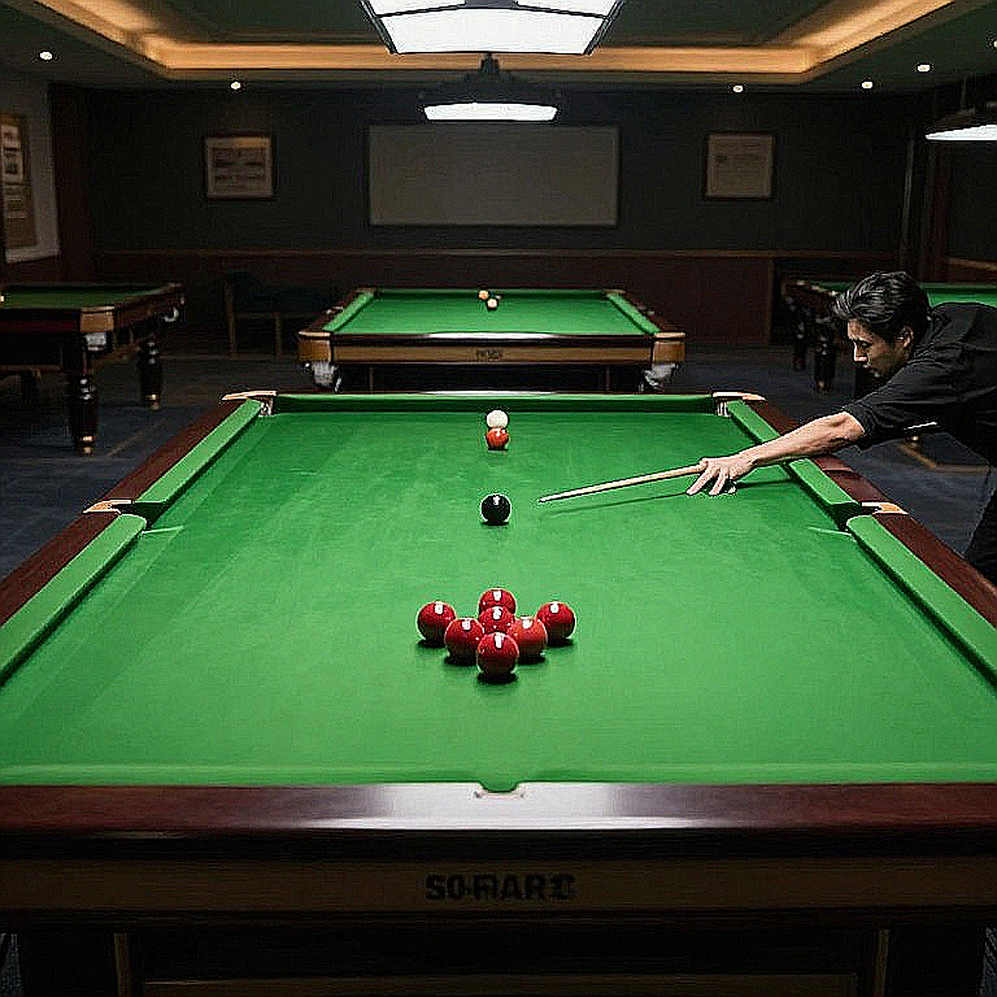
One thing I learned after years in the far rows: the match truly begins at the moment the ball is not rolling toward anyone. Everything loud — the crowd, the cameras, the electronic scoreboard — is surface. The depth lies in where the player holding the cue decides to go in the next forty seconds.
That night in Ho Chi Minh City, the depth was thicker than usual.
The WPA Men's 10-Ball World Championship ran at Phu Tho Arena from September 19 to 26. It is the second consecutive year Vietnam has hosted. The organising chain runs from the WPA through the Vietnam Billiards and Snooker Federation, the Ho Chi Minh City Billiards and Snooker Federation, and the municipal sports authority — a structure not every country in the region can assemble two years running.
Nearly 200 players from 40 countries entered. The total prize fund is 500,000 USD, with 80,000 USD to the champion, roughly 2 billion Vietnamese dong. Local headlines led with that figure, and the logic is easy to follow: for a general audience, 2 billion dong is the clearest available measure of an event's scale.
Alongside the main event sit two satellite tournaments. The Poison Saigon Women's 9-Ball Open runs September 21 to 25 with a 90,000 USD purse, about 2.3 billion dong. The Box Billiards mixed-doubles open runs September 19 to 23 with 111,000 USD, about 2.8 billion dong. Combined, the three-tournament ecosystem pushes roughly 701,000 USD into the market in eight days.
That is a notable piece of design. A men's world championship is wrapped inside a billiards week that also carries women's and team content. It is no longer a tournament. It is a week.
To understand why the discipline matters more than the headline number, one technical point usually gets skipped. The difference between 10-ball and 9-ball is not an extra ball.
Both belong to American pool — not snooker, not Chinese 8-ball. But 10-ball carries a defining rule: call-shot, call-pocket. The player must nominate the ball and the pocket before shooting. A ball that drops by accident does not count. That structurally removes the luck factor which makes 9-ball more volatile, where a botched shot can still sink the 9 and win the rack.
In other words, 10-ball is the least forgiving format in pool. Every shot is a statement, and the player cannot claim it was not intentional.
For a player, that changes the entire tactical structure. When luck leaves the equation, the value of the safety shot rises sharply, and cue-ball control — not potting accuracy — becomes the most expensive skill at the table.
The defensive push that leaves an opponent in trouble stops being a fallback. It becomes a weapon equal to the finish. In a high-quality 10-ball rack, two players nudging each other around the same cluster may spend more time than they do actually clearing the table. New viewers often mistake those minutes for dead time. They are the liveliest part of the rack.
I have sat through many 9-ball racks where the crowd rose to applaud a ball rolling into a pocket along a path nobody predicted. In 10-ball those ovations disappear. Something quieter replaces them: appreciation for a shot whose intent only three people in the room fully grasp.
That is the technical reason this format deserves the world-championship label more than 9-ball. It does not reward the player who is hot. It rewards the player who is more complete technically, more patient tactically, and calmer psychologically. A field of nearly 200 in call-shot single elimination is a very fine sieve.
And that is where the Vietnamese story begins.
Duong Quoc Hoang, nicknamed Hoang Sao, is introduced as Vietnam's number one player. He has appeared at this event three times. The first time, he exited early. The second, he reached the round of 32. Last year, on home soil, he reached the round of 16.
Three data points. One line pointing up.
Statistically, three appearances is a sample too small to prove anything. But the monotonic shape of that line — early, 32, 16 — is not the kind of random data one dismisses. In a format where familiarity with the call-shot rule and with table layouts is an accumulating asset, steady progression from one appearance to the next is a signal of adaptation, not of luck.
I learned to read matches through numbers, but only when the numbers know how to dance. Here, those three numbers are dancing in the same direction.
One more detail makes the reading more credible. Both last year's round of 16 and this year's event take place in Ho Chi Minh City. The home-soil variable is held constant. Had he reached the round of 16 abroad and only now returned home, two effects would have to be separated. With both on home soil, the round of 16 can serve as a reasonably stable baseline.
That does not mean the round of 16 is his ceiling. It means it is his floor.
Beside Hoang, four other Vietnamese names are in the field: Luong Duc Thien, Pham Phuong Nam, Nguyen Anh Tuan, and Chu Viet Hoang. Five host players in a field of nearly 200. That number matters more than it appears.
A country with one great player is a country with one individual. A country with five names in the main draw of a world championship is a country with a system. A system means a pathway from a district pool hall to an international arena: amateur events, national events, qualifying or wildcard slots, and finally a table with cameras on it.
Based on my experience following matches and tournaments in the region, this is the largest shift I have observed. Not a Vietnamese player winning a match. A world championship choosing this city as its home two years running, and five host names read out in the draw.
Some wins never appear on a scoreboard. They show up in the breathing of the arena. At Phu Tho Arena, that breathing sounds different now.
The prize structure tells its own story. The champion takes 80,000 USD out of 500,000 USD — roughly 16 percent of the fund. That is flatter than the biggest snooker events, where the winner's share is proportionally larger. For pool, this is a traditional spread: money reaches deeper into the bracket, so reaching the later rounds already pays, and that keeps nearly 200 players motivated in the third and fourth rounds rather than only in the final.
The two satellite events reveal a different funding model. They carry brand names: Poison and Box Billiards. That detail is not small. When an equipment maker puts its name on a tournament title, money travels a straight line: brand, event, amateur player who sees it, then the shop selling cues and accessories. For a billiards market expanding across Vietnam and Southeast Asia, that is a cheaper and more effective customer channel than straight advertising.
I should also draw a clear line, because it gets blurred often. Pool is governed by the WPA, a body entirely separate from snooker's governing authority. Two rule systems, two ranking systems, two tournament structures. Snooker governance stories do not belong here, and importing them is a category error.
I have followed billiards events in this region long enough to notice a pattern: a tournament only takes root when it returns a second time, and only matures when satellite events grow around it. Both happened in Ho Chi Minh City this September, and that is more convincing data than any press release about a thriving grassroots scene.
On the global power map, the traditional centres remain the United States, the Philippines, Chinese Taipei, and parts of Europe. Those are places with academies, dense national circuits, and generations of players stacked behind each other. Vietnam is not yet in that group. Two consecutive hostings and five players in the main draw place Vietnam in the rising group — present, audible, but without a title.
The gap between those two groups is not measured by a single match. It is measured by how many years a country sustains its hosting rhythm, its development rhythm, and its export of players to international arenas.
Here I have to say what most domestic coverage does not.
The headline calls Hoang Sao a heavyweight contender for the title. That is an opinion, not a fact. The source article provides no world ranking for him. No head-to-head record. No names of international rivals. No figure for potting percentage, run-out rate, or successful safety exchanges.
That does not mean those numbers do not exist. It means we have not been shown them.
And when a claim about world-class standing arrives without data, it usually says more about the writer than about the subject. Home-country media carries a very natural bias: the local hero always appears a little larger than life. That is not malicious. It simply needs to be read correctly.
The specific blind spot here is a conflation of two rankings. Vietnam's number one is a national ranking. Championship contender is a position in a global order. Between them lies a measurable gap, and the source article did not measure it.
So I read a different baseline: the round of 16. With nearly 200 players from 40 countries and call-shot rules, reaching the round of 16 at a world championship is an elite-tier result. It is enough to place him among the elite of world pool. It is not enough to place him as the most favoured.
There is one more variable nobody can measure: home pressure. Playing in front of a familiar crowd can lift a player, and it can just as easily weigh him down. When your name is the largest on the poster and the whole hall knows you, a missed shot stops being a missed shot. It becomes news.
In Hoang's file, the only psychological signal available is a remark about careful preparation and hope for a deeper run. That is a process-oriented statement, not a declaration. For a process-driven player, home pressure usually helps. But we are inferring from one sentence.
The question I keep returning to is this: if Hoang reaches the round of 16 again this year, is that success or failure? The answer depends on who set the expectation — the organisers, the media, or the man himself.
After 398 days without the sound of balls colliding during the pandemic, I learned that what I missed most was never the winning shot. I missed the sound of chalk on skin in the silence before a difficult attempt.
At Phu Tho Arena these days, that sound rings out roughly two hundred times a day. And each time, one person must decide where to go in the next forty seconds: which shot, which pocket, and if wrong, who pays.
I do not write about the finishing shot. I write about what the finishing shot hides.
For Vietnamese billiards, what matters in September lies elsewhere than the trophy on the 26th. It lies in how many pool halls in Nha Trang, Da Nang, and Can Tho gain one more fourteen-year-old after the 26th — a kid who walks in, puts table money on the counter, and starts learning to name the ball before shooting.
A week of billiards ends with a trophy. A decade of billiards begins with a small habit like that.