
Indonesia Reaches 2026 Asian Games Men's Team Final: The Doubles Equation and the Unopened Singles Door
**Câu trả lời cốt lõi** Đội tuyển cầu lông đồng đội nam Indonesia vào chung kết Asian Games 2026 tại Aichi-Nagoya sau khi đánh bại Thái Lan 3-1 ở bán kết, nhờ cả hai cặp đôi thắng thẳng ván trong khi hai trận đơn chia đôi thắng thua. **Dữ kiện chính** - Indonesia thắng Thái Lan 3-1 ở bán kết đồng đội nam Asian Games 2026. - Hai cặp đôi Indonesia thắng thẳng ván với tỷ số 21-13/21-19 và 21-15/21-13. - Jonatan Christie thua trận đơn đầu tiên 17-21, 14-21. - Alwi Farhan thắng trận đơn thứ hai 21-15, 21-13. - Indonesia vượt Malaysia 3-2 ở tứ kết; đội nữ dừng bước trước Trung Quốc ở bán kết. **Nguồn dẫn** Bola.net (báo thể thao Indonesia), bản tin Asian Games 2026 | Cross-checked: VuaBong.vn **Hỏi đáp liên quan** Q: Đối thủ của Indonesia ở chung kết là ai? A: Chưa xác định, phụ thuộc kết quả bán kết còn lại giữa Trung Quốc và Ấn Độ. Q: Tay vợt đơn nổi bật của Indonesia ở bán kết là ai? A: Alwi Farhan, với chiến thắng 21-15, 21-13 ở trận đơn thứ hai. Q: Điểm dữ liệu nào cần xác minh? A: Một điểm thông tin ghi đôi Trung Quốc thắng ván một nhưng tỷ số là 16-21, cần đối chiếu kết quả chính thức.
Eleven at night in Copenhagen. I was still sitting in front of the screen, rewinding the recording of the men's team semifinal at the 2026 Asian Games between Indonesia and Thailand. The final score was 3-1, a result so tidy that people could skim past it without a second thought. But one line of data made me stop. In the other semifinal between China and India, an information point stated that China's doubles pair won the first game, while the score was recorded as 16-21 — a number that anyone who has ever stood on a badminton court knows means a loss. A small discrepancy, perhaps just a typo. But in a sport where every score is a fragment of memory, a small discrepancy is precisely the door left ajar, letting us see the rest of the story.
I am 59 years old, and I still believe in the miracle of the map. But a map is only trustworthy when we are willing to read the places where it has been drawn crooked.
Context: a path that was anything but smooth
The 2026 Asian Games take place in Aichi-Nagoya, Japan. The men's team badminton event operates on a format of three singles and two doubles rubbers, played in the order singles – doubles – singles – doubles, up to five matches. Indonesia entered the tournament as one of the traditional powers of continental badminton, but their road was not carpeted. In the quarterfinals, they edged past Malaysia 3-2. In the semifinals, they beat Thailand 3-1. Meanwhile, Indonesia's women's team had already fallen to China in the semifinals — a detail that domestic media almost immediately turned into pressure heaped onto the men's shoulders.
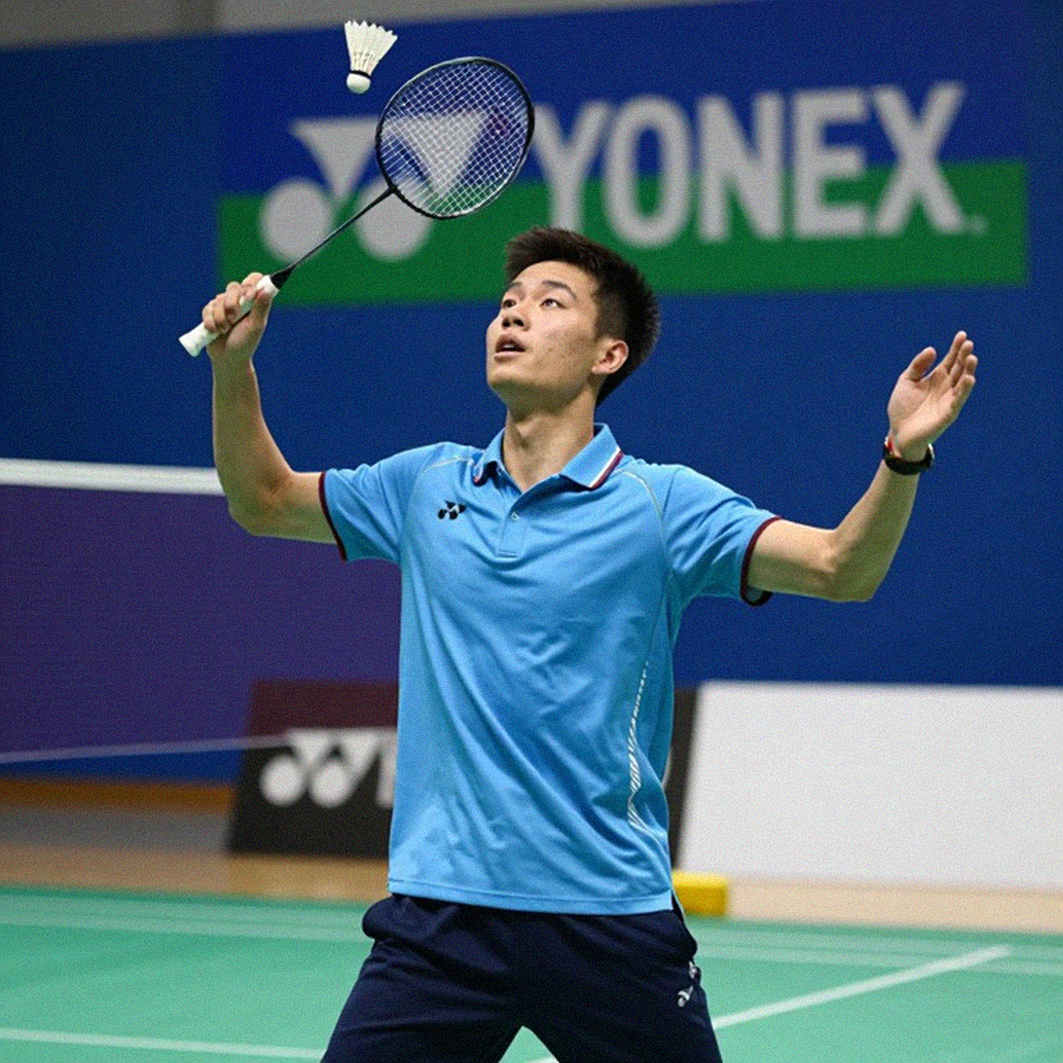
What stands out is how the line-up was arranged. The first singles belonged to Jonatan Christie, a veteran at the peak of his career. Then came a strong doubles pair, then Alwi Farhan — a rising young player — closing with the second doubles pair. This arrangement was no accident. It resembles a competitive line-up designed to secure early points in the doubles events while limiting the exposure of the singles players. But the original document does not explain the rationale behind that choice, and that is the first gap I want to mark.
The match was truly decided by the reliability of the doubles pairs
Looking at the results, the picture is fairly clear. Both Indonesian doubles pairs — including Fajar Alfian with his partner and the pair of Leo Rolly Carnado — won in straight games: 21-13/21-19 and 21-15/21-13. Those are two controlled victories, though there is no rally-level data to confirm how dominant they truly were. After Jonatan Christie lost the opening singles, it was these two doubles points that created a safety cushion, keeping the team from being swept along by the momentum of defeat.

Jonatan lost 17-21 and 14-21. In score terms, this is a worrying form signal. The second game, with a seven-point margin, shows he could not control the match. If the Thai opponent is a transliteration variant of Kunlavut Vitidsarn — a world-class player — then this defeat is far less shocking, because it is a quality loss to a top-class opponent. But the name spelling in the original document is not clear enough to confirm, and I keep my confidence at a medium level until there is verification.
The real bright spot lies with Alwi Farhan. His 21-15, 21-13 victory was the most convincing performance by any Indonesian singles player in the semifinal. He controlled the match, never let his opponent stay within reach, and more importantly, he did so in a high-stakes team tie. The coaching staff's trust in handing a young player the second singles slot in a semifinal is a signal of generational transition in men's singles. This is the most important tactical anchor point: Indonesia is building a line-up in which the doubles pairs carry the scoring burden, while men's singles is in a phase of searching for new stability.
There is one thing I always remind myself when analysing badminton: the shuttle has no weight, so speed means nothing without the precision of every touch. A pair that wins 21-13 then 21-19 shows that they won, but not how they won. That is the limit of score-level data.
The unlocked door of the team format
This is where I want to linger longer. The team format at the Asian Games — three singles, two doubles — creates a tactical structure that many viewers overlook. It is like a line-up in a tactical video game: you do not need to be strong in every position, you need a composition that can exploit your opponent's weaknesses. Indonesia beat Malaysia 3-2 in the quarterfinals and Thailand 3-1 in the semifinals, but those two scores tell two different stories. The narrow quarterfinal is a warning about vulnerability in knockout format. The more comfortable semifinal shows that when the doubles pairs hit their stride, this line-up can create separation.
There are doors that are not locked, it is just that nobody has knocked. For Indonesia, that door is the singles problem. If Jonatan Christie rediscovers his form, this line-up has almost no weakness in the team format. If he continues to slide, all the pressure will fall on the two doubles pairs and one young player.
Zooming out to the continental picture, men's team badminton is in a multipolar state. China and Indonesia sit in the leading group, with India, Thailand and Malaysia close behind. Japan and Korea form the chasing pack. This is a map inferred from the tournament's own results, not from full-tournament data, so I place only medium confidence in it. But it shows one thing: India pushed China to the brink in the semifinal, which means China can be beaten in the team format if the doubles rubbers are settled the right way.
A counter-intuitive angle: do not let the 'first gold medal' blind you
Indonesian media are framing the final as a chance to win the delegation's first gold medal of these Games. That framing carries great emotional pull, but it is also an analytical trap. I have fallen into a similar trap before. In 2026, I predicted Morocco would reach the World Cup semifinals based on an active-defence model, and when the prophecy came true, I was swept up in noisy debates to the point of missing the entire winter transfer window — failing to write a single analysis piece on Cristiano Ronaldo's move to Al Nassr. That lesson has stayed with me: when a story becomes too beautiful, that is precisely the moment to re-examine the data.
And the data here has real gaps. There is no world-ranking table in the original document. There are no rally-level statistics. There is no data on smash speed, distance covered, or points won in long rallies. We know Indonesia reached the final, but we do not know how they got there at the technical level. And more tellingly: there is no data at all on physical condition, on a congested schedule, or on injuries. In a sport where an ankle can decide an entire Games, the silence of medical data is a blind spot that the media all too readily accepts.
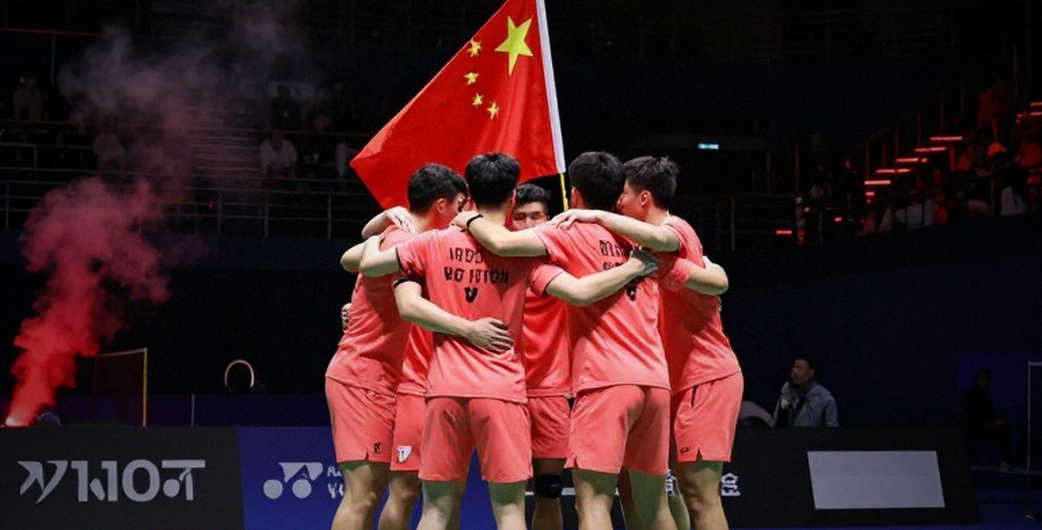
Moreover, the final's opponent is undetermined. In the other semifinal, China led India 2-1 with the fourth doubles rubber in progress. Two scenarios lead to two entirely different problems. If the opponent is China, that team has better men's singles depth and strong doubles pairs — Indonesia would almost have to win all the doubles points, plus an upset in singles. If the opponent is India, the line-up is more balanced, and Indonesia's doubles pairs may be the decisive advantage.
That Indonesia is a podium threat is well-founded. That they are the number-one favourite is not. The gap between those two statements is where superficial analysis collapses.
And there is still the discrepancy over the 16-21 score in the China–India semifinal. Before drawing any conclusion from that match, it needs to be checked against the official result. In a tournament where every score can become an analytical precedent, a misrecorded number is a loose brick in the foundation.
What is worth keeping
The meta can go on cooldown, but storytelling never runs out of mana. Indonesia has opened a door that many thought was locked: a line-up built on the doubles pairs as its backbone, placing trust in a young player in a hot seat, and accepting risk in the opening singles. Whatever the final's outcome, that structure has shown a direction — not the direction of the strongest, but of those who know exactly where they are strong.
The question I carry into the night of the final is not whether Indonesia will win. It is: if Alwi Farhan is again entrusted with the responsibility, will he turn that moment into a springboard for a decade? And if Jonatan Christie loses another match, will the coaching staff dare to knock on the door they have never yet tried to open?